

10 years after Brexit: the study that calculates how much the United Kingdom economy lost due to its departure from the
Analysis showed how much the UK could have grown if it had not left the EU
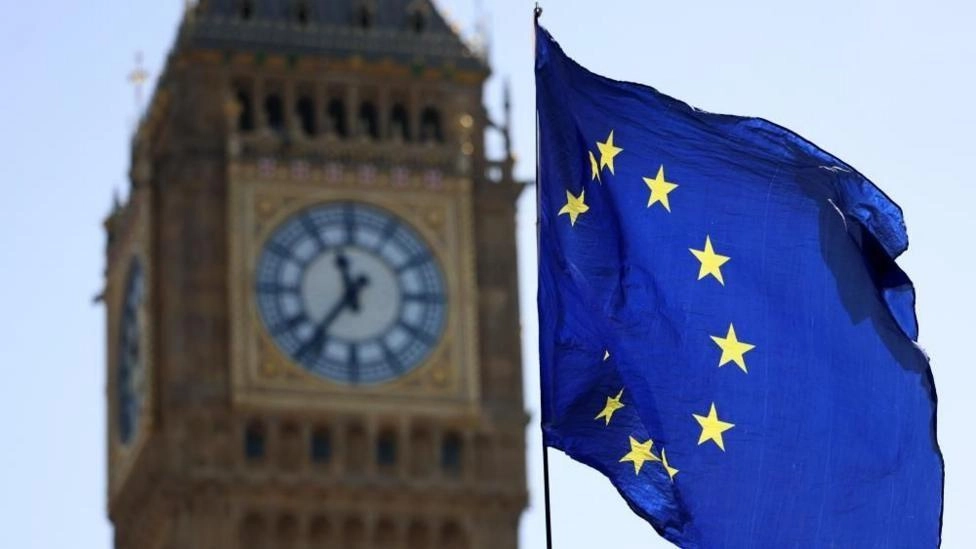

Keir Starmer presented his resignation as British Prime Minister this Monday, June 22, one day before the first 10 years of Brexit, the popular consultation that ended with the departure of the United Kingdom from the European Union.
A few days after the referendum, in July 2016, Brexit caused the resignation of the then Prime Minister David Cameron, beginning a time of political instability in which six leaders have passed through Downing Street, the seat of the country's political power: five conservatives - Cameron, Theresa May, Boris Johnson, Elizabeth Truss and Rishi Sunak - and one from Labour, Starmer.
But the consequences of leaving the EU have not only been political.
According to an analysis carried out by economists with internal data from the Bank of England, the United Kingdom economy suffered a 6% impact on its Gross Domestic Product (GDP) due to the effects of Brexit.
Examining the data the Bank uses to set interest rates, the study analyzed the loss of growth by trying to reconstruct how the UK would have grown if it had not voted to leave the EU.
The study concluded that approximately half of the economic impact was due to the surprise and uncertainty of the post-referendum period, while the rest can be attributed to the increase in trade barriers following the UK's departure from the European customs union and single market in 2021.
However, some critics say the study does not fully take into account the improved performance of the US investment and technology sectors or the European energy crisis of four years ago.
The study's co-author, British professor Nick Bloom of Stanford University, said the United Kingdom was growing rapidly in the years before Brexit and could have, at least partially, maintained the pace of growth of the United States without leaving the EU.
He argued that Bank of England corporate data provided important corroboration of these conclusions.
Their article concludes: “In the case of Brexit, there was a substantial economic impact on the United Kingdom, but this developed gradually over the following decade.”
This study comes at a time when senior officials at the Bank of England are becoming increasingly frank in explaining the economic consequences of Brexit in speeches and interviews.
Recently, the governor of the Bank of England, Andrew Bailey, declared to the press that, as a consequence of Brexit, “the level of activity and growth of the economy was lower.”
“The reason is that by reducing the size of the markets we trade with, that is, by reducing our export markets, this tends to have a negative impact on growth,” he said, adding that productivity and market size were also affected.
However, Bailey noted that while the impact on financial services “was not positive,” it was not “as detrimental as many predicted at the time.”
Some economists have argued that it is difficult to estimate how much Britain would have grown without Brexit, and that such studies overestimate its impact, especially at a time of so many global crises.
The latest version of the study was published just before the 10th anniversary of the referendum.
It used company data along with five more traditional analysis methods. While company-level data points to a 6% GDP loss over 10 years, broader studies suggest an average of 8%.
The study was prepared jointly by Bloom and economists from the Bank of England, who had access to all the institution's data; However, the document includes an official disclaimer stating that “the views expressed do not necessarily represent those of the Bank of England.”
Although a number of attempts have been made to isolate the impact of additional uncertainty and trade barriers with the EU on UK economic growth figures, this study is the first to use key Bank of England data on the UK business sector.
Decision Making Panel data is normally used to inform the setting of interest rates, but was actually created by the Bank of England in 2016 specifically to provide information on the economic impact of Brexit.
The authors used years of responses to track companies' exposure to different aspects of Brexit, the reported impacts and any changes to their financial accounts.
Before announcing his resignation, British Prime Minister Keir Starmer had announced that he would meet his EU counterparts at a summit in July to negotiate agreements on exports of food and agricultural products, as well as on electricity and emissions trading.
Discussions were also expected in other areas of cooperation and alignment.
The BBC contacted British political parties for their comments on the study.
* With economic analysis by Faisal Islam, BBC News Economics Editor