

I am a prisoner of war: Nicolas Maduro appears in New York and rejects narcoterrorism charges
After his capture in Caracas, Nicolas Maduro appeared before Federal Judge Alvin K. Hellerstein in New York, where he pleaded not guilty
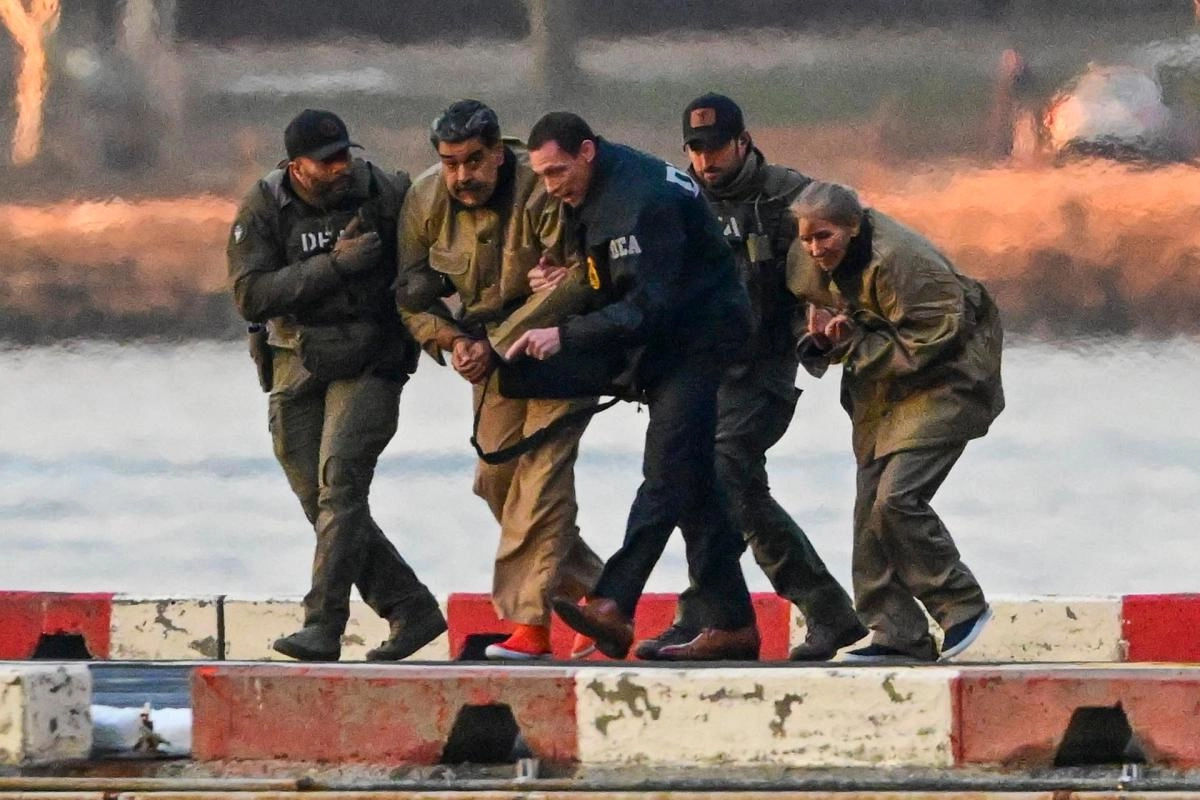

Nicolas Maduro appeared this Monday, January 5, before Federal Judge Alvin K. Hellerstein in New York, where he pleaded not guilty to the narcoterrorism charges that the United States has charged him with. During the hearing, he claimed to be the president of Venezuela, asserted that he had been captured in Caracas, and described himself as a “prisoner of war.” The court set a new hearing for March 17.
He identified himself as president and said he was kidnapped
Minutes after the hearing began in the Southern District Court of New York, Judge Alvin K. Hellerstein asked Nicolas Maduro to identify himself to the court.
“I am the president of the Republic of Venezuela and I have been kidnapped since Saturday, January 3,” Maduro declared in Spanish. “I was captured at my home in Caracas, Venezuela,” he added, in what was his first public appearance before a US court.
The judge explained that he had the right to a free lawyer if he could not afford one and that, under certain conditions, he could request his release before the trial. "I wasn't aware of those rights; now Your Honor has informed me of them," he replied. Maduro, who during his time in power in Venezuela imprisoned thousands of people for political reasons and without transparent legal processes, claimed to be a “prisoner of war” after being challenged by a member of the public present in court. “I abide by the Vienna Convention,” he added. “I am not guilty.” After a summary of the indictment was read, the now former Venezuelan president pleaded not guilty to all charges. “I am not guilty,” Maduro said when the judge asked him how he pleaded. "I am a decent man. I am still the president of my country," he insisted. When Maduro tried to elaborate on his version of events regarding his capture and legal status, Hellerstein interrupted him and indicated that this was not the procedural moment to discuss those matters. limiting the hearing to the identification of the accused and the plea of ??guilt or innocence.
Maduro entered the Manhattan federal court dressed in an orange flannel shirt,a dark shirt over it, beige pants, and matching shoes. He wore headphones to listen to the Spanish translation, according to Reuters reports. His wife, Cilia Flores, sat a few seats away, wearing a similar prison uniform.
The judge informed them both of their right to notify the Venezuelan consulate about their detentions. Both Maduro and Flores requested consular visits.
The hearing lasted approximately 30 minutes.
Defense speaks of “military kidnapping”
Maduro's lawyer, Barry Pollack, predicted that the case would result in “extensive and complex” litigation and described his client's detention as a “military kidnapping.” He indicated that, for now, Maduro is not requesting her release, although he reserves the right to do so in the future.
For her part, Cilia Flores's lawyer, Mark Donnelly, reported that his client suffered significant injuries during her detention, including severe bruising on her ribs, and requested the court to order X-rays and a complete medical examination.
Narcoterrorism Charges
The United States Department of Justice accuses Maduro of four crimes: conspiracy as a narcoterrorist, conspiracy to import and export narcotics, conspiracy to import cocaine, and possession of weapons, including machine guns and destructive devices.
The indictment also includes Cilia Flores, Diosdado Cabello Rondon, and Ramon Rodriguez Chacin, who are accused of being part of a drug trafficking and narcoterrorism network from 1999 to 2025.
According to the prosecution, the The defendants maintained alliances with organizations such as the FARC, the ELN, the Sinaloa Cartel, Los Zetas, and the Tren de Aragua, a group that the United States government considers a terrorist organization.
Closing of the hearing and next court date
At the end of the hearing, Nicolas Maduro collected his documents and briefly looked at the gallery before being escorted out of the courtroom with his wife. At that moment, a man stood up and shouted at him, “You will pay in the name of Venezuela.” Maduro turned to him and replied in Spanish that he was a “kidnapped president” and a “prisoner of war” before being escorted in shackles behind his wife through the back door of the courtroom. “In the name of God, I will be free,” he declared. Judge Alvin Hellerstein set the next hearing in the case for March 17 at 11:00 am in the same federal court in New York.