

Immigrant families leave public housing in Texas for fear of a federal rule: what is known
In Port Isabel, Texas, families left public housing after receiving letters about immigration status. What HUD is Proposing and Who It Could Affect
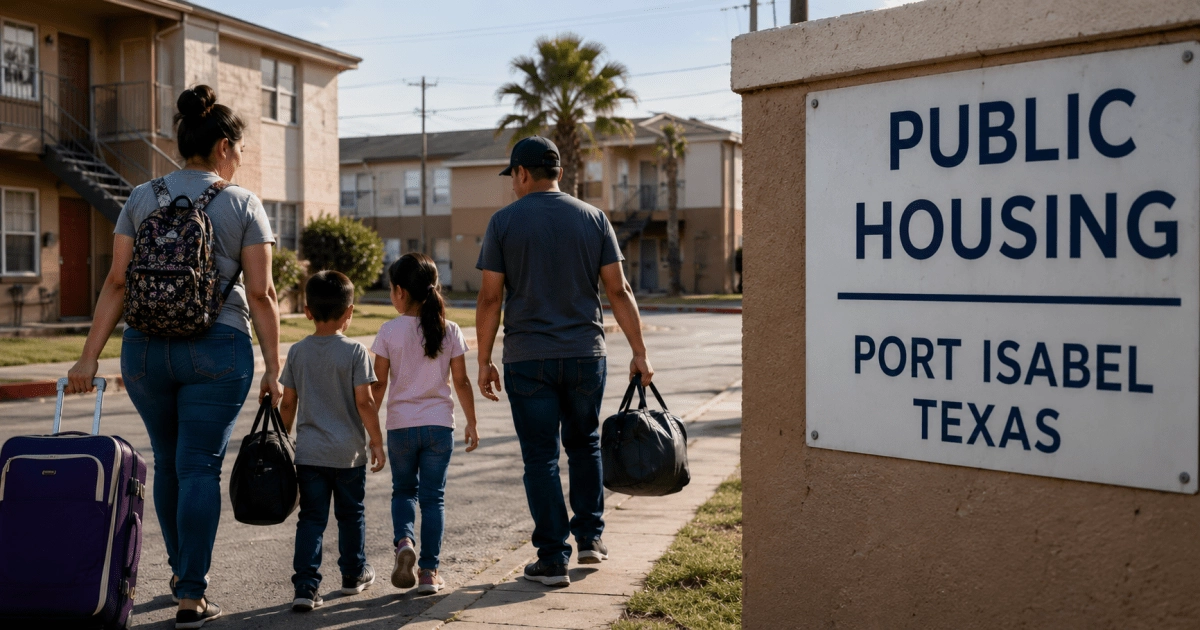

Dozens of families left a public housing community in Port Isabel, Texas, after receiving a warning regarding the immigration status of the household members. The case once again came under national attention because it shows, on a local scale, the impact that a federal proposal could have to change the rules for access to subsidized housing by the United States Department of Housing and Urban Development, known as HUD.
According to an Associated Press report, occupancy in that public housing community fell from 91% in January to 43% in May, after residents received a letter in February that was interpreted as a possible threat of eviction. HUD's federal proposal has not yet taken effect, but fear and confusion has already caused a mass departure of families.
The case is especially sensitive because it involves mixed immigration status households: families where some members are U.S. citizens or immigrants eligible for federal assistance, while others do not have an eligible status under public housing rules.
You can see: Houston reopens public housing waiting lists: dates, requirements and fraud alert
What happened in Port Isabel
The episode began with a letter sent on February 3, 2026 by the Port Isabel local housing authority. According to the AP, the communication told residents that all household members must prove legal status within 30 days or face consequences regarding their housing. Then there were clarifications, but many families had already decided to leave out of fear.
The strongest data is the drop in occupancy: from 91% in January to 43% in May, well below the national average for occupancy in public housing, estimated at 94% in the report cited by AP.
This collapse does not prove that there have been formal evictions in all cases. What it shows is something different: confusing communication, combined with a still-pending federal proposal, caused many families to abandon their homes before there was a final rule.
What HUD Proposes About Mixed-Status Families
HUD published in the Federal Register a proposed rule on February 20, 2026 to modify verification of citizenship or eligible immigration status in assisted living programs. The proposal proposes verifying the status of all applicants and beneficiaries, regardless of age, and changing the treatment of prorated assistance for mixed households.
Under current rules, a mixed-status family can receive reduced or prorated assistance, calculated only for eligible members. That is, ineligible members do not receive federal subsidy, but the family can remain together in the home.
Housing organizations explain that HUD's proposal would make this prorated assistance no longer able to continue indefinitely and would become a temporary condition while the status of all members is verified.
Reuters reported in February that HUD estimated the measure involves about 20,000 mixed-status households and about 24,000 undocumented or ineligible people currently living in federally assisted households.
You can see: Los Angeles leaders call for opposition to HUD proposal on public housing
Who could it affect?
The measure would not only impact adults without eligible immigration status. It could also affect households where children who are US citizens, permanent residents, older adults or family members with different types of status live.
Critics of the proposal argue that many families could face an extreme decision: separate to keep housing assistance or lose subsidy if the household remains together. The National Low Income Housing Coalition warned that the rule could force mixed families to choose between staying together and maintaining housing assistance.
HUD, on the other hand, maintains that the proposal seeks to close regulatory loopholes and ensure that federal funds benefit only US citizens and people with eligible status. In an official statement, the agency stated that the rule aims to prevent ineligible people from residing in publicly funded housing.
The rule is not yet in effect
This point is key: HUD's proposal is not yet a final rule. It was published in February and opened a public comment period. Housing organizations and local authorities have reminded that, while there is no final rule, families should not automatically assume that they must leave their home.
For residents who receive letters or notices from a housing authority, attorneys and advocates recommend not leaving the unit without asking for guidance, saving all documents received, requesting written explanations, and consulting with legal or housing organizations before signing any waiver or handing over keys.