

Military deployment does not provide long-term security
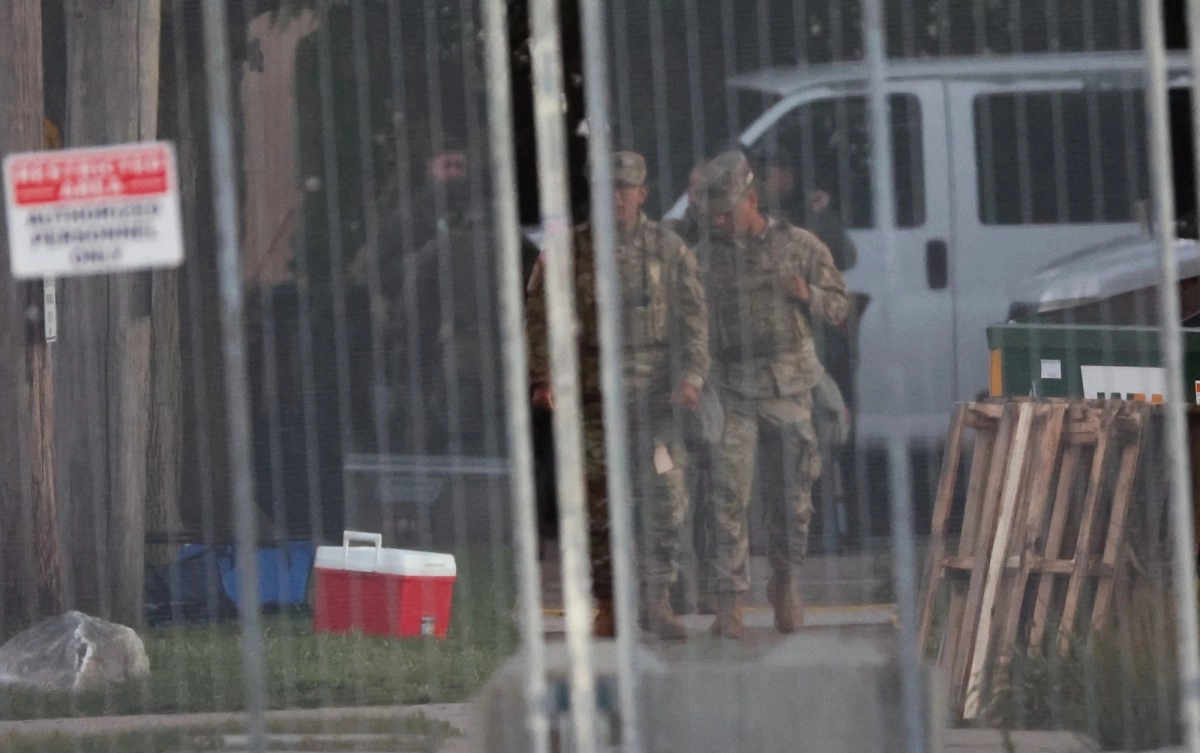
The federal government is deploying military forces in cities run by Democrats under the guise of curbing crime

The most effective methods for reducing crime are those led by local government and police with support from the federal government.
Crime has decreased significantly across the country since the beginning of the COVID-19 pandemic. Last year, the national homicide rate fell by a record 16 percent, and other categories of crime have also declined.
But the federal government is deploying military forces to Democratic-run cities under the guise of curbing crime and in response to protests over immigration raids—tactics that threaten to impose a police state.
In Oregon and Illinois, Governors Tina Kotek and JB Pritzker called the deployment of other states' National Guard without their consent an abuse of power. The Trump administration's attempt to deploy military troops to Portland and Chicago without legal justification was blocked by the courts.
But President Donald Trump has named many other cities as targets in his anti-crime campaign, including the largest, New York City. The courts, Congress, and the public at large must strongly oppose these military incursions into our American cities.
It is true that crime remains high in some cities. But this administration's strategy is not the solution to this problem. History has shown that successful crime prevention efforts require careful planning in response to each city's specific circumstances and needs.
The most effective methods of public safety are those led by local government and police with support from the federal government, not the other way around. This is because local authorities know the real situation in their communities, what generates the conflicts that lead to crime, what resources are available, and who the trusted voices in the community are, among other factors.
Solutions that work well include violence prevention programs that can help stem the escalation of conflicts before a crime occurs, an approach that has contributed to recent reductions in violence in both Newark and Chicago. One program, for example, reduced arrests for shootings and homicides by more than 60 percent among those who participated.
Investments in after-school or summer job programs like those implemented in Boston resulted in a 35 percent reduction in violent crime charges because they keep young people busy and off the streets when they're not in school.
Filling open investigator and detective positions is another step that can ensure more crimes are solved. And recidivism can be reduced through education and job training programs carried out in prisons.
Instead, the federal government is sowing intimidation and chaos in local communities when it deploys soldiers who, under federal law and by long tradition, cannot perform law enforcement duties domestically. This centuries-old principle against this type of military involvement protects our democracy, since a military deployed domestically can be a powerful instrument of oppression.
Now is the time to invest in proven crime prevention strategies and not to weaken local public safety programs through arbitrary budget cuts by the current administration.
It is also the time for public pressure.
The next pretext for using our military forces against the people might not be crime. But one thing needs to be very clear given the upcoming elections: the law categorically prohibits deploying military troops at polling places, as well as any kind of interference with the vote.
President Trump must be made clear that domestic military deployments have a political cost. Overwhelming, peaceful public opposition is urgently needed.