

Northrop reveals the F/A-XX, the US answer to Chinese and Russian fighters
The conceptual fighter aircraft developed by Northrop Grumman stands out for its design and emphasis on stealth
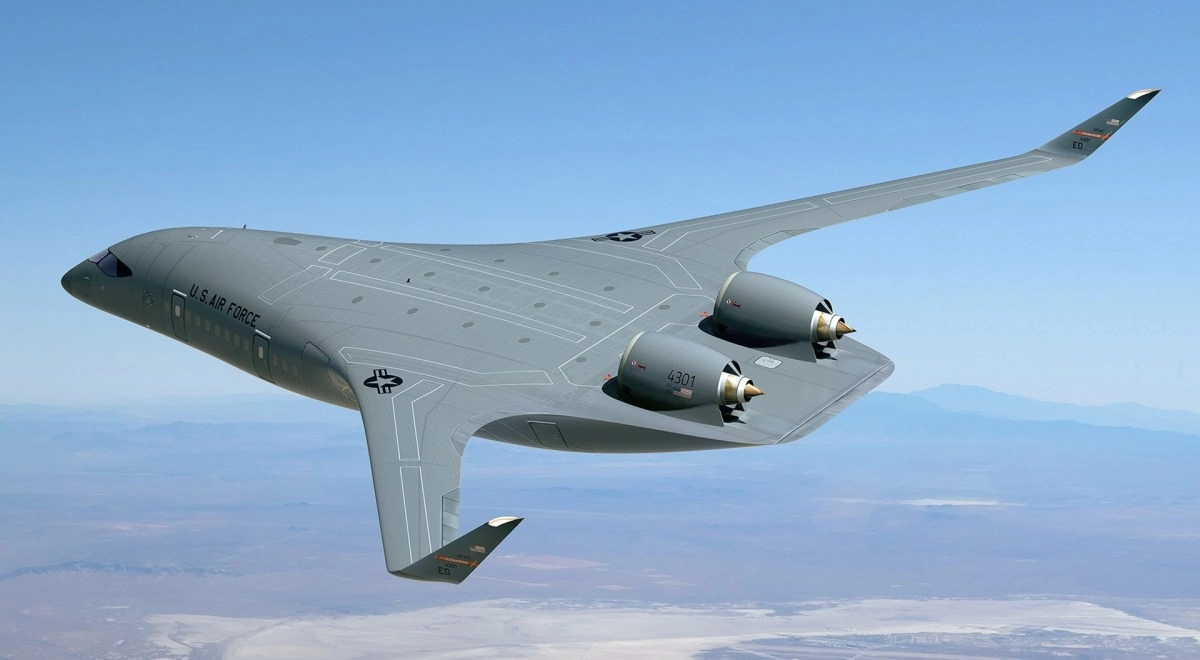

Northrop Grumman has unveiled striking concept art of the F/A-XX that once again paints a picture of how it envisions the next generation of naval fighters. The render shows an aircraft designed to operate in hostile spaces, with an emphasis on stealth. It is, on paper, the industry's proposal to replace the F/A-18E/F Super Hornet and the EA-18G Growler in the US naval fleet.
A bid to replace the Super Hornet and the Growler
The US Navy has been looking for some time for a platform to take over from its F/A-18 and Growler: aircraft that, although still effective, are reaching the middle or end of their operational life.
The F/A-XX is presented as the manned alternative within the naval Next Generation Air Dominance (NGAD) framework. The objective is clear: an aircraft that survives in high-threat environments, goes further, and works as the center of a distributed weapons and sensor system.
For the Navy, replacing the Super Hornet and the Growler is not just about changing models, but about rethinking how missions are conceived from an aircraft carrier. The goal is to create a platform with greater autonomy, a larger internal payload (fuel and weapons), and electronic warfare (EW) capabilities that surpass previous generations. Essentially, the goal is to move from an aircraft that fights alone to one that coordinates and delegates tasks between manned and unmanned allies.
Design and capabilities of the conceptual aircraft
Although this is a sketch and not a functional prototype, the design proposes very specific features: a stealth profile with integrated wing and fuselage, discreet air intakes, and internal volume for weapons and fuel. These elements aim to reduce the radar signature and allow for longer-range operations without sacrificing offensive capability.
One of the most striking aspects of the concept is the idea of ??operating as a network node. The F/A-XX would not only carry advanced sensors to detect threats; it would be designed to orchestrate swarms of collaborating drones, assign them targets, and receive data in real time to improve decision-making.This would entail a heavy reliance on data fusion systems, artificial intelligence for decision support, and secure communications links. The big difference compared to past generations is that the pilot goes from being the sole executor to being the director of a network of platforms.
Another relevant aspect is the possible configuration for missions to suppress enemy defenses and electronic warfare. Replacing the Growler requires cutting-edge EW capabilities: selective jamming, onboard cyber warfare, and passive sensors that allow the degradation of enemy communications networks without exposing oneself. The F/A-XX aims to integrate all of this without losing flexibility for air-to-air or air-to-surface missions.
What it would mean for pilots, drones, and naval doctrine
If the F/A-XX were to materialize according to concept, the way pilots are trained and operations are planned would change radically. Pilots would have to master not only tactical aviation, but also the management of autonomous systems, on-board cybersecurity, and the supervision of sensor networks. It would not be unusual to see crews with specific training in data intelligence and the use of command interfaces that allow them to orchestrate multiple vehicles simultaneously.
On the industrial and economic level, a contract to develop and produce the F/A-XX would involve billions in investment and decades of work: design, testing on aircraft carrier decks, certifications, and finally series production. For Northrop Grumman and its partners, it would be an opportunity to consolidate key technologies—advanced propulsion, composite materials, next-generation avionics—and position themselves against competitors with their own proposals.
Tactically, the integration of drones as extensions of the F/A-XX would modify the risk in combat: the most dangerous elements could be delegated to uninhabited vehicles, reducing the exposure of the pilot and the precious air group. Furthermore, the ability to operate at greater distances and with greater autonomy would allow aircraft carriers to project power without getting too close to high-risk areas, changing the dynamics of naval projection in theaters like the Pacific.