

Pastor turns his church into a food bank for immigrants affected by ICE raids in Minneapolis
The church where Sergio Amezcua, of Mexican origin, has become a huge collection center where volunteers distribute boxes of food
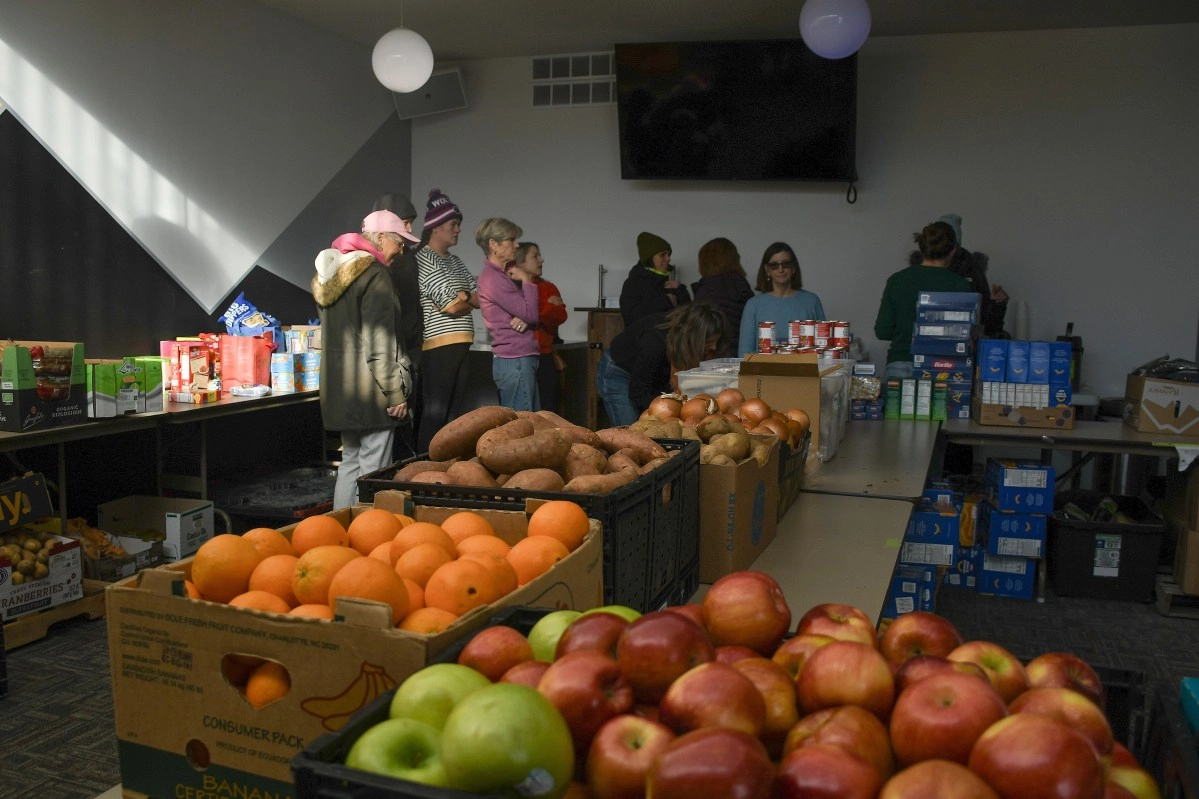

Pastor Sergio Amezcua turned his Christian church in Minneapolis into a food bank that benefits more than 16,000 families, mainly immigrants, affected by the ICE offensive in the city where thousands of volunteers have already joined the initiative.
Thus, the Dios Habla Hoy church, located in south Minneapolis, left From being just a church, it has become a huge collection center. Every day, volunteers arrive to register, pack, and distribute boxes of food, diapers, and medicine destined for families affected by the detention or deportation of one of their members. "When I've gone out to distribute food, I've seen mothers with babies whose parents were deported and don't know how they're going to pay the rent. I've also seen very young children being apprehended. It's a devastating situation," Amezcua told the EFE news agency in an interview. The initiative, which began in late 2015, currently has a network of at least 4,000 volunteers. Many of them don't belong to the congregation or share the same faith. "Our first volunteers were members of the LGBTQ+ community. They arrived when we needed them most," the pastor explained. They have been joined by Muslims, atheists, Hispanics, and even Minneapolis police officers. Donations are coming from multiple sources: small business owners, local residents, and even shipments sent by state politicians and people from other parts of the country. While taking calls from people offering everything from chicken and milk to baby formula, Amezcua acknowledges that the challenge now is logistical and administrative. The pastor believes that the deployment of thousands of federal agents in the city “got out of hand” and has caused profound trauma. He explains that fear has paralyzed the community: many people have stopped going to work, and church attendance has failed by about 80%. Construction workers, bakers, and cleaning staff have lost income, so the organization is also seeking to provide rental assistance.
Every week, the church distributes around a ton of food. This Wednesday alone, some 500 volunteers formed human chains to pack and transport supplies that are then distributed in different neighborhoods.
Although confrontations have decreased after recent acts of violence, community support networks remain active. For Amezcua, the message is clear: this situation should no longer be seen as a political debate, but as what it is, “a humanitarian crisis” that demands immediate and compassionate responses.