

Texas loses thousands of students in public schools: Hispanic families the most affected
Texas registers a sharp drop in public enrollment: more than 76,000 fewer students in one year and 8 out of 10 were Hispanic. The causes
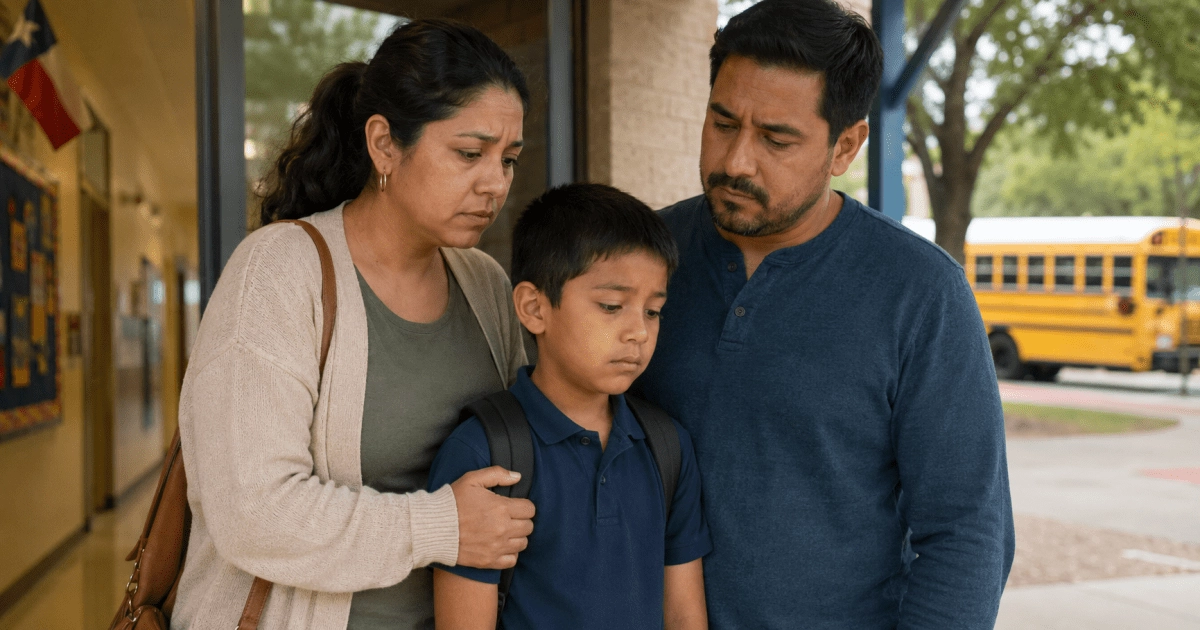

Texas faces a red flag in its public schools. After decades marked by population growth and school expansion, the state recorded a drop of more than 76,000 students in a single year, an unusual drop that is already worrying districts, families and educational authorities.
The most sensitive data is in who concentrates this loss: Hispanic students represented 81% of the state's drop in public enrollment between the 2024-25 and 2025-26 school years, according to a report from Texas 2036, a public policy organization that analyzed school enrollment data in the state. In concrete numbers, Texas lost 76,613 students in public schools, of which 61,781 were Hispanic.
The magnitude of the change is not minor. The report describes the decline as the second-largest annual enrollment drop in the modern history of the Texas public school system and the largest outside of the COVID-19 pandemic period. It also marks the first non-pandemic year-over-year decline in nearly four decades.
The trend especially hits a population that is already central to the Texas educational system. Hispanic students represent more than half of the state's public enrollment: 53.1% in the 2025-26 cycle, according to the report. Therefore, any change in that group has direct consequences on school financing, teacher planning, bilingual programs, and district organization.
Hispanics account for 8 out of every 10 students less
The data that is most worrying is the concentration of the fall. Although public enrollment fell in different groups, the loss among Hispanic students was disproportionate. According to Texas 2036, Hispanic student enrollment fell 2.1% in one year, while the entire public system fell 1.4%.
That point is key: it is not just a general decline distributed evenly. Most of the students who stopped appearing on state public enrollment belong to Hispanic families, a group that includes both American-born households and immigrant families, bilingual students and low-income communities.
The report also shows a sharp decline among so-called emergent bilingual students, that is, students who are learning English and receiving linguistic support at school. That population fell 4.1% in the 2025-26 cycle, a decline much higher than the state average. Texas 2036 also notes that, in the previous cycle, 86% of those students were also Hispanic.
This intersection allows us to understand why the issue is of particular concern to Latino families: when Hispanic and bilingual enrollment drops, not only administrative numbers are reduced. The demand for bilingual teachers, language support programs, resources for newly arrived families, and services designed for students who need additional support in English may also suffer.
The primary, another focus of concern
The decline also has a clear mark by age. According to Texas 2036, nearly 60% of the enrollment loss occurred in the elementary grades, especially between kindergarten and fifth grade. The report recorded 46,180 fewer students in K-5, a data that may anticipate carryover effects in middle and high schools for years to come.
For districts, this matters a lot. If fewer children enter the early grades, schools may face less attendance funding, lower classroom occupancy, staff reorganization and, in some cases, discussions about school closures or consolidations.
This scenario is already observed in some districts. In the Houston area, Spring Branch ISD approved the closure of Northbrook Middle School amid a steep drop in enrollment and a budget shortfall. The decision generated rejection from communities that warn that the closures disproportionately affect working-class and Hispanic areas.
Not all cases have the same cause, but they show the kind of pressure that can grow if enrollment continues to decline: Fewer students can mean less money, fewer programs and difficult decisions for communities already facing inequalities.
What could be behind the decline
Texas 2036 does not attribute the decline to a single cause. The report points to a combination of factors: demographic changes, lower birth rates, moving, growth of educational options outside the traditional system, homeschooling, charter schools, private education and possible effects of immigration policies or the climate of fear in some communities.
That nuance is important. It would be inaccurate to say that the decline is due solely to immigration or raids. But it would also be incomplete to ignore that, in districts with a high immigrant population, fear can have an impact on school attendance and enrollment.
The Texas Tribune reported that English language learners and students from low-income families were among the groups with the steepest declines, citing the context of increased immigration pressure and fear in school communities.
In Houston, the Houston Chronicle reported months ago a sharp drop in immigrant students in HISD amid a climate of concern about federal immigration actions. This experience alone does not explain the entire state decline, but it does help to understand why some educators and families observe the phenomenon with alarm.
What it means for Hispanic families
For many families, school enrollment may seem like a distant fact, but its effects are felt in everyday life. If a school loses students, it can lose funds. If you lose funding, you can reduce staff, merge groups, adjust services, cut programs, or change routes and school zones.
In Hispanic communities, the impact may be greater when the affected programs are bilingual, academic support, family counseling, or services for newly arrived students. It can also increase pressure on parents who already must navigate forms, school changes, transportation, employment and questions about immigration status.
The drop in enrollment does not mean that all those students have abandoned education. Some were able to move on to charter schools, private schools, home schooling or other districts. Others were able to move. But the fact that the public system loses so many Hispanic students in a year forces us to look closely at what is happening and where those children are staying.
You can see: LGBTQ people leave Texas and Seattle evaluates an emergency response for new residents
A sign of change for the Texas school system
Texas continues to have one of the largest public school systems in the country, with nearly 5.5 million students. But the Texas 2036 report warns that the trend may continue: its projections estimate that, by 2030, the system could have around 100,000 fewer students if current conditions remain.
The underlying question is not only how many students Texas lost, but which communities are being most exposed. And, on that point, the data is clear: Hispanic families appear at the center of a decline that can reconfigure schools, budgets and educational programs in the coming years.