

What was Mao Zedong's Cultural Revolution and how it marked the history of China 60 years ago
Millions of young people were mobilized in China to attack the “old ideas”, in a personality cult campaign promoted by Mao Zedong
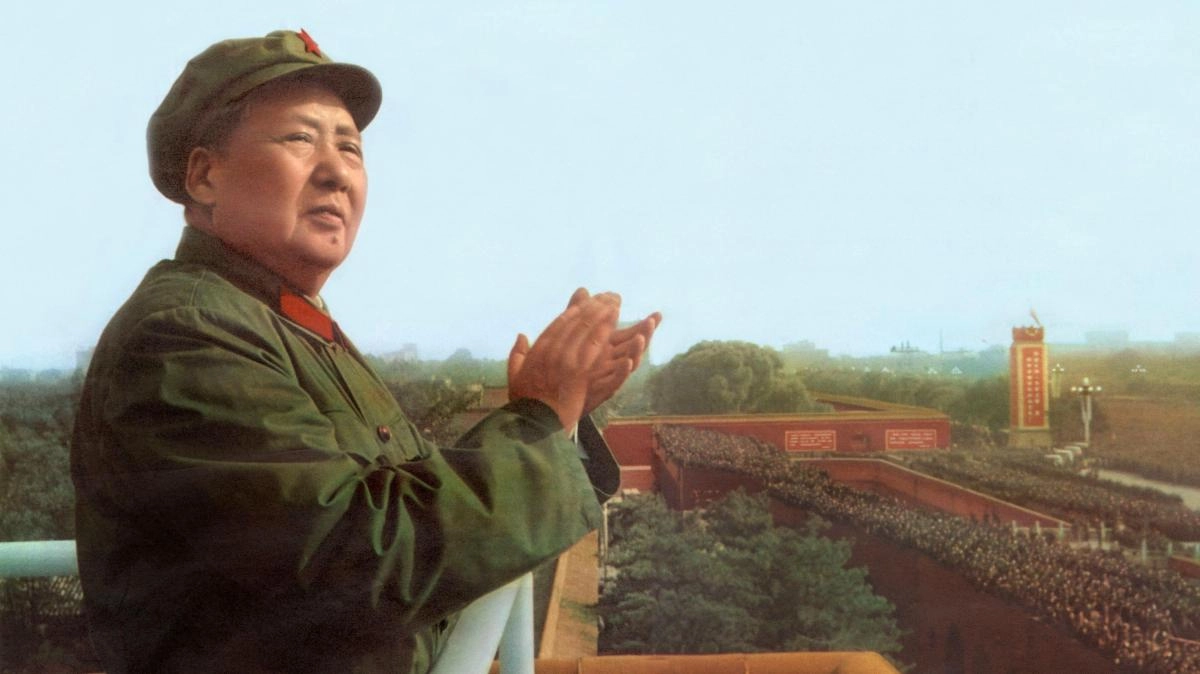

The Cultural Revolution, which began six decades ago, was one of the darkest stages in Chinese history.
In 1966, communist leader Mao Zedong ordered a national campaign to purge considered counterrevolutionary elements, capitalist influences, and bourgeois thought in government, education, and art.
Mao was declaring war on the past, on “old ideas” and “old customs.”
And the battle would not be fought primarily by police or security agencies, but by ordinary citizens—especially young people—against their own fellow citizens.
"Mao's message was: 'Rebel against your professor, against your teacher, against your party leader, your superior, the factory bosses. The rebellion is justified,'" explains historian Yafeng Xia, professor at Long Island University in the US.
The campaign, which officially lasted until 1976, completely transformed Chinese society and left deep political and cultural traces that are still present in the country.
The rise of Mao and the failure of the Great Leap Forward
Mao came to power in 1949 after defeating the nationalist Kuomintang troops and establishing the People's Republic of China, inspired by Marxism.
After centuries of imperial dynasties, China had entered the 20th century with deep economic backwardness and marked by invasions by foreign powers.
The inequalities between rich and poor, between the countryside and the city and between men and women were enormous.
In 1958, Mao launched the so-called Great Leap Forward, an ambitious program aimed at rapidly industrializing the Chinese agrarian economy and catching up with the West in a few years.
Agriculture was collectivized and objectives considered unattainable were imposed along with erratic economic policies that ended up being counterproductive.
By the early 1960s, the Chinese economy and agriculture had collapsed.
The situation, combined with several natural disasters, led to one of the largest famines in history, in which an estimated 20 to 40 million people died.
“Mao knew there had been huge political mistakes,” says Yafeng Xia.
As the historian explains, in 1961 the leader took a step back and other leaders, such as Liu Shaoqi and Deng Xiaoping, were at the forefront of economic recovery.
By 1964, the Chinese economy seemed to improve.
But Mao never fully accepted having made mistakes.
According to Xia, the leader also feared that his successors would hold him responsible for the failure of the Great Leap Forward and the great famine.
In 1965 he began to prepare his political return by pointing out leaders such as Liu Shaoqi and Deng Xiaoping (who was dismissed and sent to work in a tractor factory) as “followers of capitalism”, an extremely serious accusation within Chinese communist rhetoric.
The beginning of the Cultural Revolution
On May 16, 1966, Mao issued a directive aimed at getting rid of his political opponents while ideologically revitalizing society.
According to the historian, Mao believed that many central, provincial and local government officials had become corrupt and no longer served the people, or considered them followers of leaders he had previously purged.
“Mao really thought that he was making a new communist revolution, that there must be a constant political revolution,” says the historian.
The mobilization was massive: peasants, workers and especially students were called to rebel against their superiors and against anyone who occupied positions of authority.
All of this also occurred under a massive campaign of cult of Mao's personality.
The images of thousands of young people gathered in Tiananmen Square in Beijing raising Mao's “Red Book” are one of the symbols of that time.
The Red Guard and the destruction of the “Four Old Men”
The most emblematic youth movement of the Cultural Revolution was the Red Guard, made up of millions of high school and college students who emerged across the country to enforce Mao's teachings.
"For those young people, Chairman Mao was God. Everything he said was correct," Xia explains.
The campaign was directed against what the regime called the “Four Olds”: the old ideas, the old culture, the old customs and the old habits.
The Red Guards toured China with the aim of destroying traditions considered incompatible with the revolution.
Teachers, intellectuals and people designated as enemies of the State were taken from their homes, tied up, interrogated, publicly humiliated and beaten, sometimes to death.
For almost a decade, universities were paralyzed and hospitals partially functioned.
Temples, shops, homes, books and much of Chinese cultural heritage were also destroyed.
The violence also reached ordinary families: Xia remembers that his parents worked for a state company in a small town in Jiangsu province.
According to her, people who did not sympathize with her mother denounced her and she spent two years in prison.
His father, who had initially responded to Mao's revolutionary call, ended up being persecuted after 1968.
Chaos and massive shipment to the countryside
In 1968 the movement had gotten out of control and China was immersed in an environment of violence and chaos that some compared to a civil war.
It is estimated that hundreds of thousands of people died in purges and power struggles.
Mao ended up concluding that the situation was unsustainable and decided to stop the Red Guard.
Many of these young people were urban students who traveled around the country without doing productive work, Xia explains.
Mao's solution was to send them to the countryside to work as farmers and “learn from the peasants.”
Around 16 million young people were moved to rural areas, allowing the cities to regain a certain calm.
Although official Chinese history considers that the Cultural Revolution lasted from 1966 to 1976, the first three years were the most radical and violent.
Beginning in 1969, Mao continued to purge members of the government and military, and reinforced his power by relying on figures considered radical, such as his wife, Jiang Qing.
Along with Zhang Chunqiao, Wang Hongwen and Yao Wenyuan, Jiang was part of the group that would later be known as the “Gang of Four.”
The death of Mao and the legacy of the Cultural Revolution
Mao Zedong died in September 1976.
After his death, the Chinese Communist Party presented him as a “great hero” and tried to disassociate him from the excesses and horrors of the Cultural Revolution, considered catastrophic in the country.
The new leaders prosecuted those they considered intellectually responsible for the atrocities, especially the Gang of Four, whose members were sentenced to life imprisonment.
According to Xia, the Communist Party could not afford a complete condemnation of Mao because that would have called into question the very legitimacy of the regime.
Therefore, Mao's successors maintained that the leader was old and ill, and that he had been manipulated in his final years.
As time went by, however, some of the leader's mistakes were officially recognized.
Deng Xiaoping (already rehabilitated) summarized that vision with a phrase that would become famous: Mao “was 70% right and 30% wrong.”
Deng, who became supreme leader in 1978, pushed for a change of course that would help shape contemporary China.
The repressive apparatus of the State remained, but the country began to bring together two ideas that had divided the world for much of the 20th century: political communism and capitalist economic opening.
In a country governed by a communist party, capitalism was no longer seen as a contradiction.
Decades later, the figure of Mao continues to generate divisions in China.
According to Xia, many citizens continue to idealize that era and consider that during Maoism “officials were generally not corrupt.”
“More than 50% of Chinese still believe that Mao was a great leader,” says the historian.
However, he points out, “the most educated people know what happened during the Cultural Revolution.”
Click here to read more stories from BBC News Mundo.
Subscribe here to our new newsletter to receive a selection of our best content of the week every Friday.
You can also follow us on YouTube, Instagram, TikTok, X, Facebook, and our new WhatsApp channel.
And remember that you can receive notifications in our app. Download the latest version and activate them.