

Opposition organizations promote legal plan for a democratic transition in Cuba
The project defines the transition as a period of two years from the fall of the communist system until the holding of free general commissions on the island
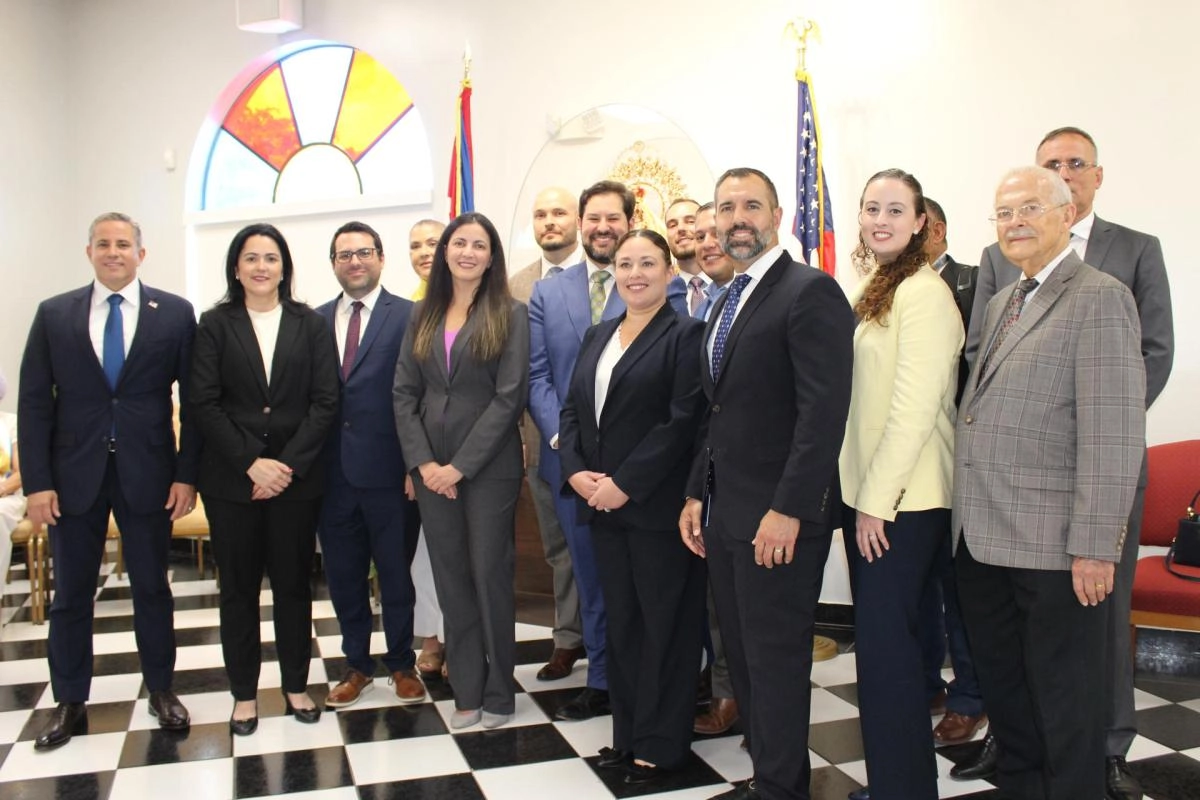

Cuban opposition organizations based in the United States announced a new alliance with exile jurists to design the legal structure that, according to its promoters, would serve as the basis for an eventual democratic transition in Cuba.
The initiative seeks to prepare from now on the norms, institutions and legal mechanisms that could be put in place in the event of a political change on the island. The announcement was made in Miami by representatives of the so-called Liberation Agreement and the Cuban-American Bar Association (CABA), who reported the beginning of a recruitment campaign aimed at lawyers, judges, academics and law students both within Cuba and in the diaspora.
During the presentation, Cuban activist Rosa María Payá stated that the objective is to anticipate the institutional challenges that the country would face in a transition scenario. “We are building the legal foundations of a democratic Cuba even before the regime changes,” Payá said. As he explained, the coalition aims to develop legal tools that allow us to respond from day one to issues related to the release of political prisoners, the reorganization of public institutions and the reestablishment of the rule of law.
They prepare a legal structure for an eventual transition
The collaboration with CABA contemplates three main lines of work. The first consists of updating and adapting a Transition Law project prepared more than a decade ago by Cuban-American jurists. The second seeks to create a network of legal specialists who can advise an eventual provisional government. The third contemplates incorporating legal experts to the different working commissions of the Liberation Agreement.
According to the organizers, legal preparation is part of a roadmap that includes four stages: liberation, stabilization, reconstruction and democratization. The plan proposes the restoration of judicial independence, the holding of multiparty elections and the reconstruction of democratic institutions. Likewise, it proposes the strengthening of fundamental guarantees such as freedom of expression, association, press and religion.
The president of CABA, Jordi Martínez-Cid, noted that the organization is willing to provide the legal experience necessary to support an “orderly, fair and lasting” transition. "The rule of law does not arise spontaneously. It must be built on solid foundations," he expressed during the conference.
Expectations of change and support from exile
The promoters of the initiative consider that the Cuban community abroad can play a key role in the institutional design of a future democratic Cuba. Payá highlighted that the diaspora has professionals specialized in various areas and affirmed that the experience accumulated outside the island could contribute to the reconstruction of the country.
The activist also stated that the coalition maintains expectations that significant political changes may occur in Cuba during 2026. In that context, he mentioned the support of figures from the administration of President Donald Trump and Secretary of State Marco Rubio for the pressure policies against the Cuban government.
For his part, opposition member José Daniel Ferrer described the initiative as an important step to prepare the institutional conditions for an eventual transition. In his opinion, any process of change will require a legal framework capable of guaranteeing the independence of powers and the protection of citizen rights.
The Liberation Agreement was signed in March by various opposition groups and exile organizations. Its promoters maintain that the objective is to coordinate political, social and technical efforts to design a route of democratic transformation that includes legal reforms, economic recovery and institutional strengthening in a Cuba after the current government system.