

UN accuses that restrictions on aid in Gaza contradict the ceasefire agreement
Accuses that Israel's restrictions on humanitarian aid in Gaza put thousands of lives at risk and contradict peace commitments
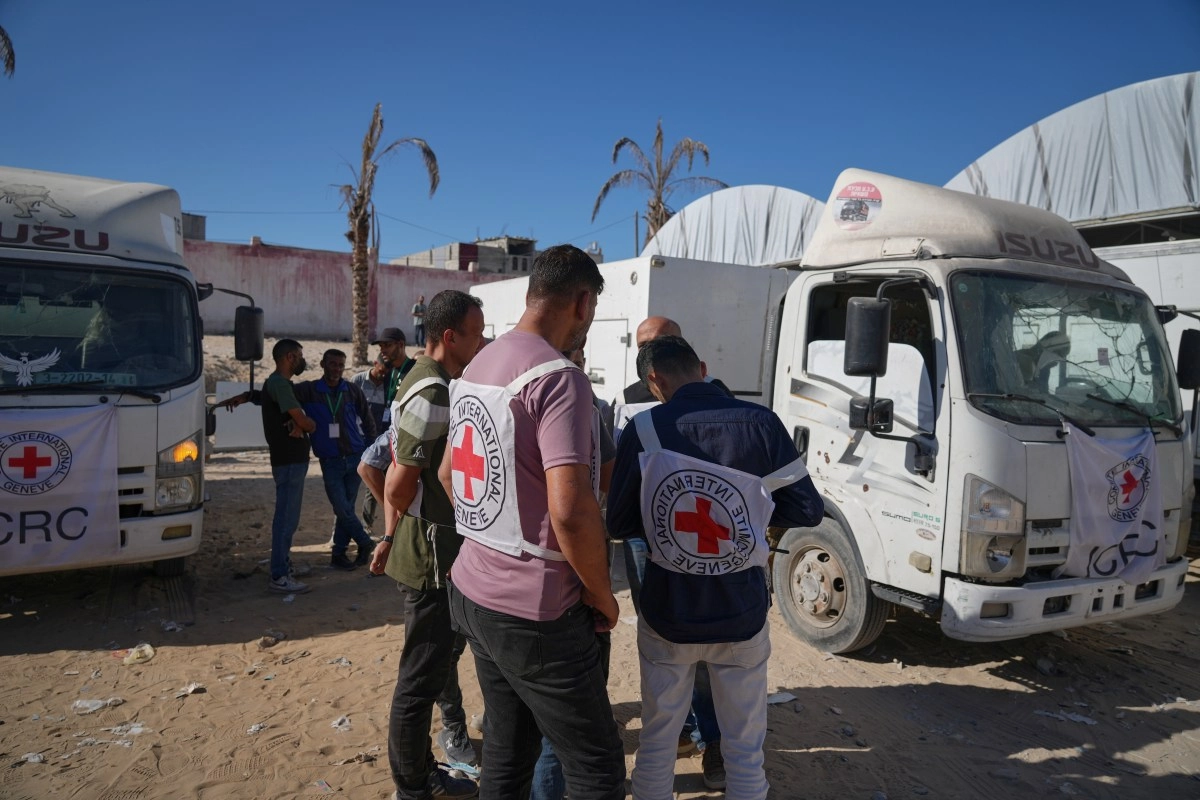

During a session before the Third Committee of the General Assembly, the UN High Commissioner for Human Rights, Volker Turk, welcomed the release of all hostages and numerous arbitrarily detained Palestinians, as part of the first phase of the ceasefire agreement, but warned that much work remains to be done do.
“This must lead to a permanent ceasefire, with the sustained and large-scale entry of humanitarian aid,” said Turk.
Despite this, senior UN officials denounced that Israel’s restrictions on the entry of humanitarian aid into Gaza put thousands of lives at risk and contradict the commitments of the recent ceasefire agreement.
After the handover of only four of the 28 bodies of hostages, Israel announced that the Rafah crossing with Egypt will remain closed at least until Wednesday and informed the UN that, from now on, it will not allow more than 300 trucks to enter daily.
From Egypt, where the bases of the current process were agreed upon, the head of the Office for the Coordination of Humanitarian Affairs (OCHA), Tom Fletcher, highlighted both the recent progress and the imminent risks if the commitments are not maintained.
“At the beginning of this week, we were able to begin our humanitarian expansion after months of frustration and blockages. Food, medicine, fuel, water, cooking gas, and tents reached those in need. (…) But yesterday we faced new obstacles,” the relief coordinator said.
Aid to civilians is not a bargaining chip
“Throughout this crisis, we have maintained that withholding aid to civilians cannot be used as a bargaining chip. Providing aid is a legal obligation,” Fletcher stressed.
The response plan includes an intensive 60-day operation of life-saving assistance, coordinated by UN teams in Gaza, the West Bank, Egypt, and Jordan. Fletcher thanked the signatories of the agreements in Sharm el-Sheikh for their steadfast and unequivocal support for the mission.
Both officials agreed that the international community must act urgently to prevent the collapse of the progress made. “The test of these agreements will be families being safe and reunited, children being fed, sheltered, and back in school, and Palestinians and Israelis being able to look to the future with greater security, justice, and opportunity,” Fletcher stressed.
“The world has failed too many times before. We cannot fail this time,” he noted.