

Who is Dr. Hussam Abu Safiya detained by Israel in Gaza and why there are fears for his life
The lawyer of Palestinian doctor Hussam Abu Safiya stated that his client was beaten so brutally that he could not recognize him during a visit
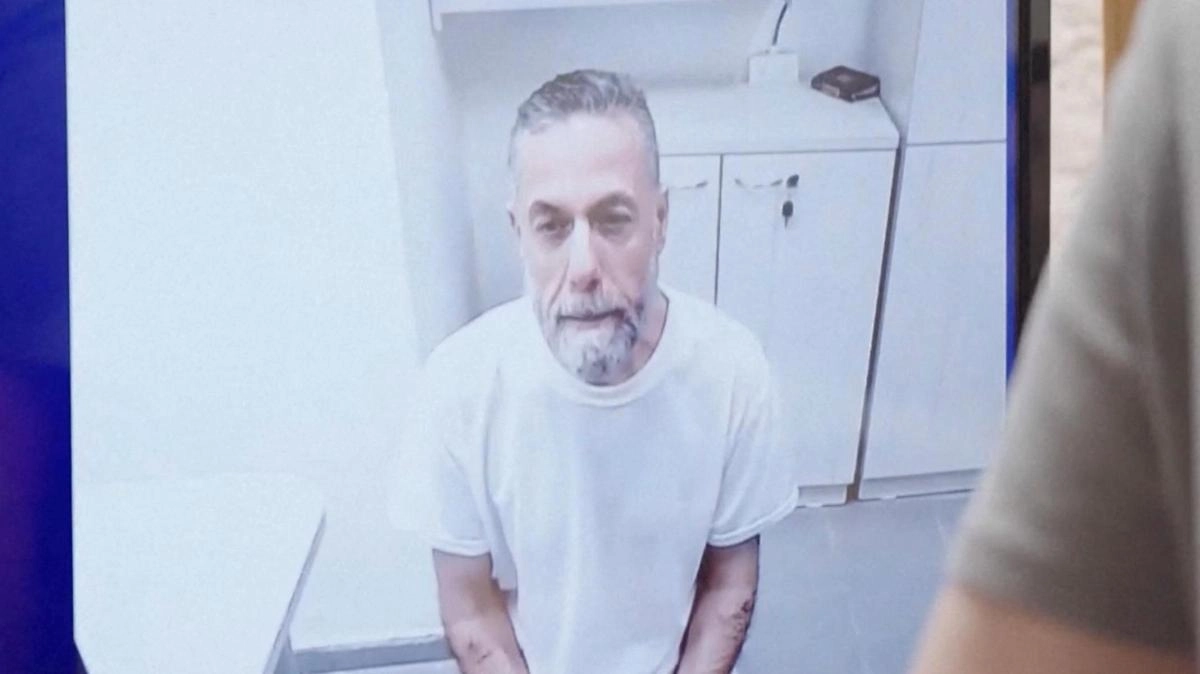

The lawyer for a prominent Palestinian doctor in Gaza, detained without charge by Israeli authorities for more than 18 months, has told the BBC that he fears for his client's life.
Nasser Odeh testified that when he visited Dr. Hussam Abu Safiya a week ago at a notorious interrogation center called Rakefet, his client was so brutally beaten that he could not recognize him.
“He almost lost consciousness several times,” Odeh said of his encounter.
“He told us that he had been a victim of extreme violence inside the prison, especially on the day of the visit.”
In a statement to the BBC, the Israel Prison Service rejected the version of events, calling it false.
Israel's Supreme Court has ordered the government to respond to a petition demanding the release of Abu Safiya and 13 other Palestinian doctors from Gaza who are being held without charge in Israel.
According to Odeh, Abu Safiya claimed that more than five prison guards attacked him with their hands, batons and hammers following an appeal against his detention last month before the Jerusalem Supreme Court, and that he had not received any medical treatment.
"It was difficult for me to recognize his features. He had bruises all over his face, around his eyes, on his neck and on his ears. The marks of beatings and torture were clearly visible on his face," said the lawyer.
“He was exhausted and had difficulty breathing, in a very delicate physical, psychological and mental state,” he added.
"He said clearly: 'I'm living hell. What I suffer every day is unimaginable. I think someone has decided to kill me.'"
Odeh said he had not given up hope of seeing his client again.
“I hope to see him out of prison soon,” he said. “His place is outside of prison, his place is in the hospital.”
But it was difficult for him to repeat the words that Abu Safiya told him: “Thank you, Nasser, but I think this will be the last time we will see each other.”
director of a hospital
According to the UN, Abu Safiya was director of the Kamal Adwan hospital in northern Gaza, where he treated patients while the area was under “almost total siege” by Israeli forces.
He was detained in December 2024, when the Israeli army forced patients and medical staff to leave the hospital, claiming it was a “Hamas terrorist stronghold.”
At the time, the World Health Organization called for an end to attacks on hospitals in Gaza.
Footage circulating at the time showed Abu Safiya walking through the rubble, dressed in his white doctor's coat, toward an Israeli armored vehicle before being taken away for questioning.
A spokesman for the Israel Defense Forces (IDF) told the BBC that the man was arrested for his alleged involvement in terrorist activities and for holding a position in Hamas.
Abu Safiya held the rank of colonel in the Health Department of Gaza's Interior Ministry, in an agency that provided medical treatment to security forces, police and their families.
However, medical staff and international aid organizations that worked with Abu Safiya deny that he cooperated with Hamas or worked for them.
The doctor is detained under the Illegal Combatants Law, which authorizes the military to arrest anyone suspected of posing a security risk in Gaza and hold them indefinitely without charge.
The Israeli Prison Service has already received harsh criticism for its treatment of Palestinian prisoners and detainees, criticism it rejects.
In November 2025, the United Nations Committee against Torture expressed deep concern over reports indicating “a de facto state policy of organized and widespread torture and ill-treatment” against Palestinian detainees in Israeli prisons.
In the same month, the Israel-based Physicians for Human Rights organization claimed that at least 94 Palestinian prisoners and detainees had died in Israeli custody in less than two years.
The Israel Prison Service (IPS) told the BBC that the allegations about Abu Safiya's treatment, detailed by his lawyer, were false and unfounded.
Citing privacy and security reasons, the Israeli agency did not provide information on detention status, place of detention or medical status, but stated that all prisoners and detainees are held in accordance with the law and receive medical care according to Health Ministry guidelines.
The SPI added that it rejects accusations of abuse, torture, starvation or denial of medical treatment.
Various human rights organizations, such as Amnesty International, have issued statements demanding action in the case of Abu Safiya. His spokesperson called it “truly appalling.”
Doctors for Human Rights Israel stated that he must be transferred immediately, receive urgent medical treatment and be visited by a judge.
The organization also filed a petition with the Supreme Court in April requesting the release of Abu Safiya and 13 other Palestinian doctors from Gaza who are being held in Israel without charge.
On Monday, the UN Working Group on Arbitrary Detention adopted an opinion calling Israel's detention of Abu Safiya arbitrary and calling for his immediate release.
The panel of independent experts also stated that the case was one of several that had been brought before it that “could indicate a widespread or systematic practice of arbitrary detention in the country.”
The BBC has contacted the Israel Prison Service for comment on the working group's findings.
This article was originally written in English and we used an artificial intelligence tool to translate it. A BBC journalist reviewed the text before publication. Learn more about how we use AI.