

PM Modi Leads High-Level Strategic Meeting with Rajnath Singh, Jaishankar, and Top Security Chiefs
Prime Minister Narendra Modi convenes high-level security meeting with key ministers and defense officials amid rising national security concerns.
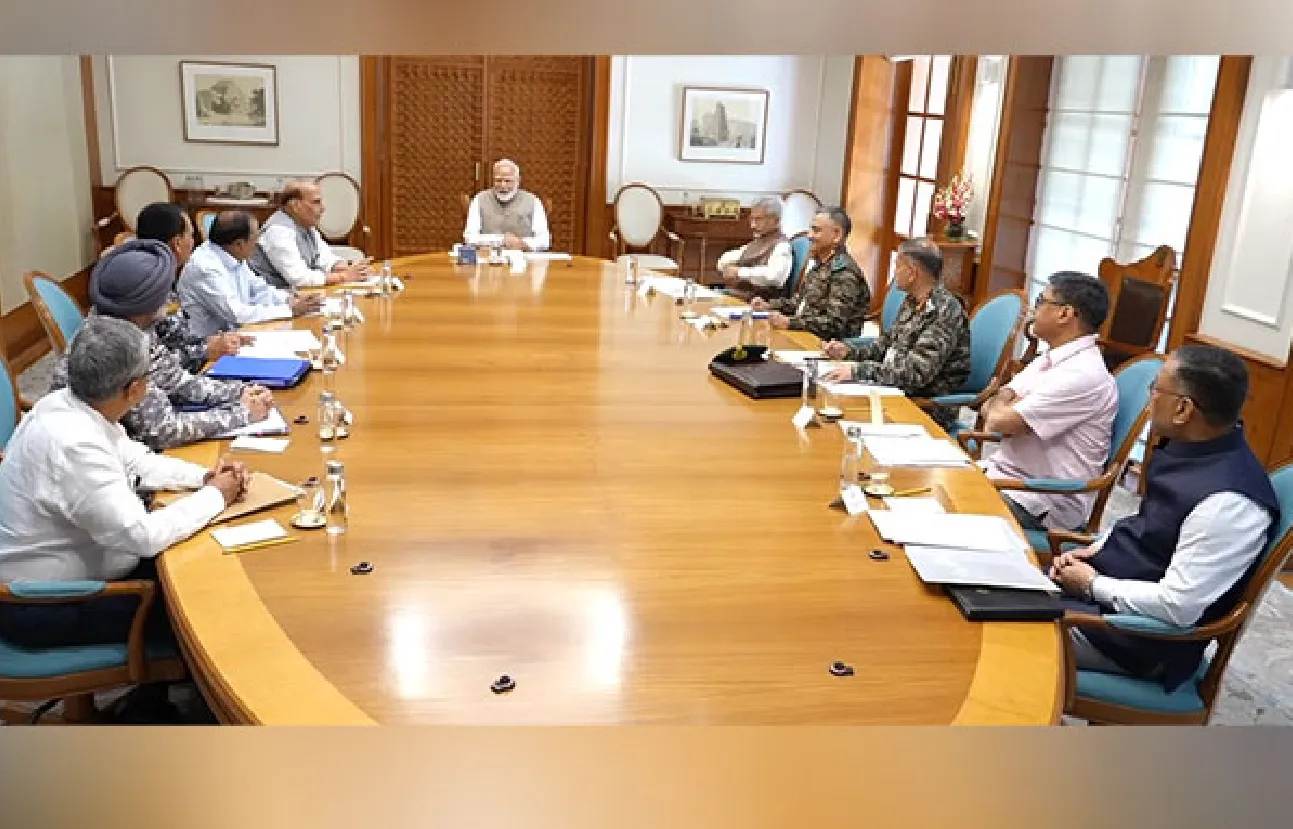

In a decisive move underscoring India’s commitment to national security, Prime Minister Narendra Modi held an extensive high-level meeting with key government and defense leaders on Monday. The closed-door session was attended by Defence Minister Rajnath Singh, External Affairs Minister Dr. S. Jaishankar, National Security Advisor (NSA) Ajit Doval, Chief of Defence Staff (CDS) General Anil Chauhan, and the chiefs of the Indian Army, Navy, and Air Force.
This strategic gathering comes amid evolving global geopolitical shifts and increasing regional challenges. The central focus of the discussion, according to reliable sources, was to assess the current national security landscape, strengthen inter-agency coordination, and enhance operational preparedness across India’s defense forces.
National Security at the Forefront
The meeting, described by officials as “intensive and forward-looking,” highlighted India’s proactive stance on safeguarding its sovereignty and territorial integrity. Prime Minister Modi reportedly emphasized the importance of synergy between the ministries of defence, external affairs, and national security institutions.
“Our nation’s security requires unity in thought, strategy, and execution,” the Prime Minister is believed to have said during the session. With regional tensions on the rise and multiple fronts demanding attention, Modi’s convening of such a crucial meeting reflects his administration’s vigilant approach to both external threats and internal security dynamics.
Defense Preparedness and Modernization on the Agenda
One of the key topics discussed was the modernization of India’s armed forces, which has been a priority for the Modi government since it assumed office. Defense Minister Rajnath Singh provided an in-depth briefing on current modernization initiatives, including new defense procurements, technological upgrades, and efforts to bolster indigenous defense manufacturing under the ‘Aatmanirbhar Bharat’ (self-reliant India) initiative.
The service chiefs updated the Prime Minister on the latest developments in force preparedness, logistics, and strategic deterrence capabilities. From enhanced surveillance infrastructure to the deployment of state-of-the-art weaponry, the Indian military’s commitment to maintaining a robust defense posture was front and center.
Geopolitical and Diplomatic Dimensions
External Affairs Minister Dr. S. Jaishankar’s presence added a diplomatic dimension to the meeting. Sources suggest that the minister provided a comprehensive overview of India’s current foreign policy engagements, international collaborations, and strategic alliances, especially in the Indo-Pacific region.
Amid growing global interest in India’s role as a regional power and a responsible global player, the meeting aimed to align defense priorities with foreign policy objectives. The goal, officials indicated, is to ensure that India’s military and diplomatic strategies are closely coordinated to respond effectively to regional crises and global disruptions.
Emphasis on Intelligence and Cybersecurity
NSA Ajit Doval, known for his deep expertise in counter-terrorism and intelligence, reportedly led the discussions around cybersecurity, intelligence coordination, and internal threat mitigation. With the growing threat of cyberattacks, misinformation campaigns, and hybrid warfare, the role of national intelligence agencies has become more critical than ever.
Doval emphasized the importance of strengthening India’s cybersecurity infrastructure and enhancing digital resilience. Reports suggest that the NSA also pushed for greater inter-agency collaboration to ensure real-time intelligence sharing and quicker response capabilities in crisis scenarios.
Strengthening Civil-Military Cooperation
Another significant takeaway from the meeting was the reiteration of civil-military coordination as a pillar of national security. Prime Minister Modi, officials say, reaffirmed his government’s commitment to enhancing the role of the armed forces in humanitarian assistance, disaster response, and internal stability operations.
This strategic alignment between civilian authorities and military leadership not only ensures operational efficiency but also strengthens public confidence in the country’s security apparatus.
A Message of Vigilance and Unity
This high-powered meeting sends a strong signal about India’s preparedness and strategic focus in the face of emerging challenges. From border security to global diplomacy, the Modi administration continues to adopt a whole-of-government approach to secure the nation’s interests on all fronts.
With national elections on the horizon and regional tensions simmering, this timely meeting underscores the administration’s commitment to protecting India’s national integrity and global standing. The involvement of all top-tier officials from defense to diplomacy highlights a unified vision and strategic direction moving forward.