

The Iran deal ends a war considered “Trump's worst foreign policy mistake yet”
The agreement leaves the parties in the same situation they were in 24 hours before the war, only now with thousands of dead
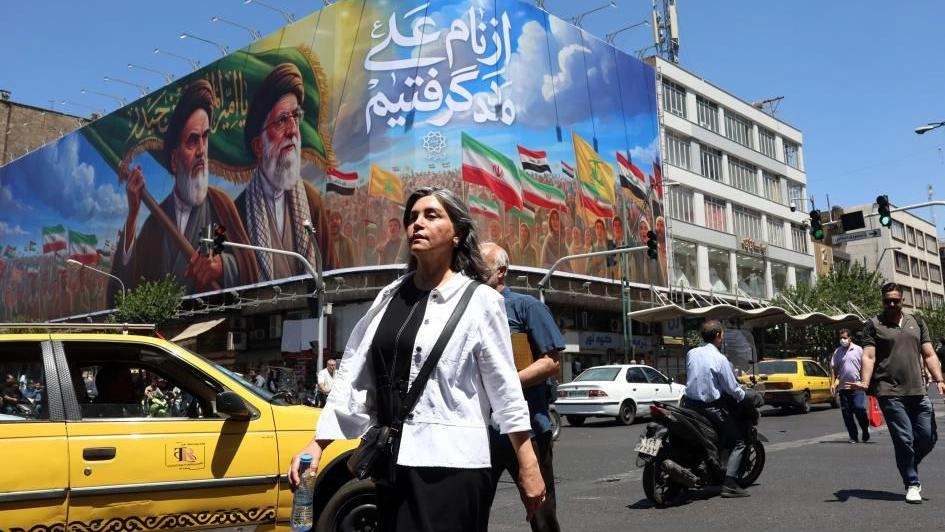

The war against Iran has been President Donald Trump's worst foreign policy mistake yet.
It makes it more difficult for the United States to deter its enemies.
It has damaged its alliances with the oil-producing Arab monarchies of the Gulf, whose business model as islands of stability in the turbulence of the Middle East will take years to recover.
Privately, officials in these countries are already talking about diversifying their loyalties and the need to find ways to coexist with Iran, their neighbor across the sea.
China will have been watching closely as the United States depleted hard-to-replace weapons reserves and faced the limits of its power.
The agreement, provided there are no last-minute setbacks, ends a war that was based on a misinterpretation by the United States and Israel of their enemy's strength in Tehran.
This will bring a huge sigh of relief to all those whose lives have been disrupted by war, starting with the civilians in the line of fire.
The deal reopens the Strait of Hormuz, Trump says, easing pressure on the global economy and on the real lives of hundreds of millions of people around the world who are already struggling.
Thousands of people in the Middle East have died. Homes and businesses have been destroyed.
The impact on fertilizer production, which relies on supplies transported across the strait, could mean people in poor countries go hungry later in the year, with sub-Saharan Africa especially at risk.
The agreement is not a peace treaty.
The full text, which negotiators say consists of 14 points on two pages, has not yet been published. But, in addition to reopening the strait, the memorandum of understanding extends the ceasefire and lifts the US Navy's blockade of Iranian ports.
Leave the thorniest issues for future negotiations.
That agenda will include the future of Iran's nuclear program and the level of sanctions relief Tehran will receive in exchange for concessions.
A final line has finally been drawn to the war that the United States and Israel started on February 28.
A look back
Let's turn back the clock to February 27, as American and Israeli forces prepared to attack, arming their planes, briefing their crews, and scheduling targets for their missiles.
In Geneva, Iran and the United States were engaged in what the world was told were essential talks aimed at reining in Iran's nuclear plans.
Multiple sources have told me and others that Iranian negotiators believed they were in a serious process and had put concessions, as well as demands, on the table.
At the entrance to the Gulf, the Strait of Hormuz was open, allowing the passage of about 20% of the world's needs for oil and natural gas, as well as byproducts of the petrochemical industry that have become vital components of modern life, including agricultural fertilizers and semiconductors.
The memorandum of understanding clears the way for nuclear negotiators to meet again and for ships to transit the strait.
That is exactly the point they were at 24 hours before the United States and Israel went to war with Iran.
In the first of a series of devastating surprise attacks, Israel killed Iran's supreme leader, Ayatollah Ali Khamenei, and his closest advisers.
Around the same time, a US attack leveled a school in Minab, southern Iran, multiple investigations have shown.
More than 150 civilians were killed, including at least 120 schoolchildren, mostly girls under 12 years old.
Both Trump and Israel's Prime Minister Benjamin Netanyahu appeared in videos to announce the start of a war they believed would be short, decisive and victorious.
It was a staggering miscalculation.
His speeches predicted the fall of the regime in Tehran. Instead, its survival has strengthened the regime.
Their worst nightmare was a large-scale attempt at regime change by the United States and Israel. It happened and it failed.
The hard men in Tehran who survived came out stronger.
Changing of the guard
Khamenei and his advisors were quickly replaced, by Mojtaba Khamenei as supreme leader and by a younger generation of commanders, dominated by senior leaders of Iran's Islamic Revolutionary Guard Corps.
They are as ideologically driven as the old guard, but they are less cautious, willing to take risks in what they rightly considered a fight for the survival of the Islamic regime in Iran.
They pushed to the limit a well-planned strategy of closing the Strait of Hormuz and attacking Iran's Arab neighbors, as well as American forces and bases, and Israel itself.
US Defense Secretary Pete Hegseth's belligerent rhetoric claiming that US power had crippled the Iranian military turned out to be exaggerated and false.
Israel was America's full partner in the war. But he was excluded from the memorandum of understanding negotiation and views the agreement with dismay.
Netanyahu's balance
Netanyahu said on February 28 that he had waited his entire political life for the opportunity to destroy the Islamic Republic, which he considers Israel's most dangerous enemy.
He is now being attacked by his political opponents for endangering Israel's security.
Netanyahu will have to deal with the recriminations and fallout until the fast-approaching general election, scheduled for late October.
One possible obstacle is Israel's stated determination to continue occupying a wide swath of territory in southern Lebanon, from which it has expelled civilians and destroyed thousands of buildings.
Israel's Defense Minister stated that the country will continue its occupation of lands in Lebanon, Syria and Gaza "indefinitely."
Netanyahu is under pressure from the toughest sections of his cabinet and his political opponents to carry out more offensive actions in Lebanon. Some are calling for the annexation of the south of the country.
He will have to weigh whether he can afford to risk causing further damage to Israel's alliance with the United States by challenging Trump, who has been expressing frustration with Netanyahu in a series of interviews in the US.
An Israeli airstrike on Beirut's southern suburbs on Sunday was a clear attempt to derail negotiations at a critical moment.
Instead, it seems to have accelerated them, as time for dialogue seemed to be running out.
Will a larger agreement be possible?
Now there is time to take a breath.
It is too early to conclude that the memorandum of understanding can be expanded into a major deal between the United States and Iran.
Such an agreement could transform the Middle East. But ideology and a complete lack of trust make it a distant dream.
This has been an unfortunate matter for everyone involved.
The Iranian people, to whom Trump promised a vision of freedom on February 28, remain governed by a ruthless regime that in January killed thousands of its own citizens for protesting in the streets.
The United States maintains enormous economic and military power.
But Trump's impulsive decision to go to war against Iran looks like the action of a superpower struggling to maintain its dominance in a changing world.