

Almost ten years later, the Tesla Semi prepares its arrival
Tesla finalizes details to launch its electric truck Semi in Europe. Production in Nevada will increase in 2026, while preparations are consolidated
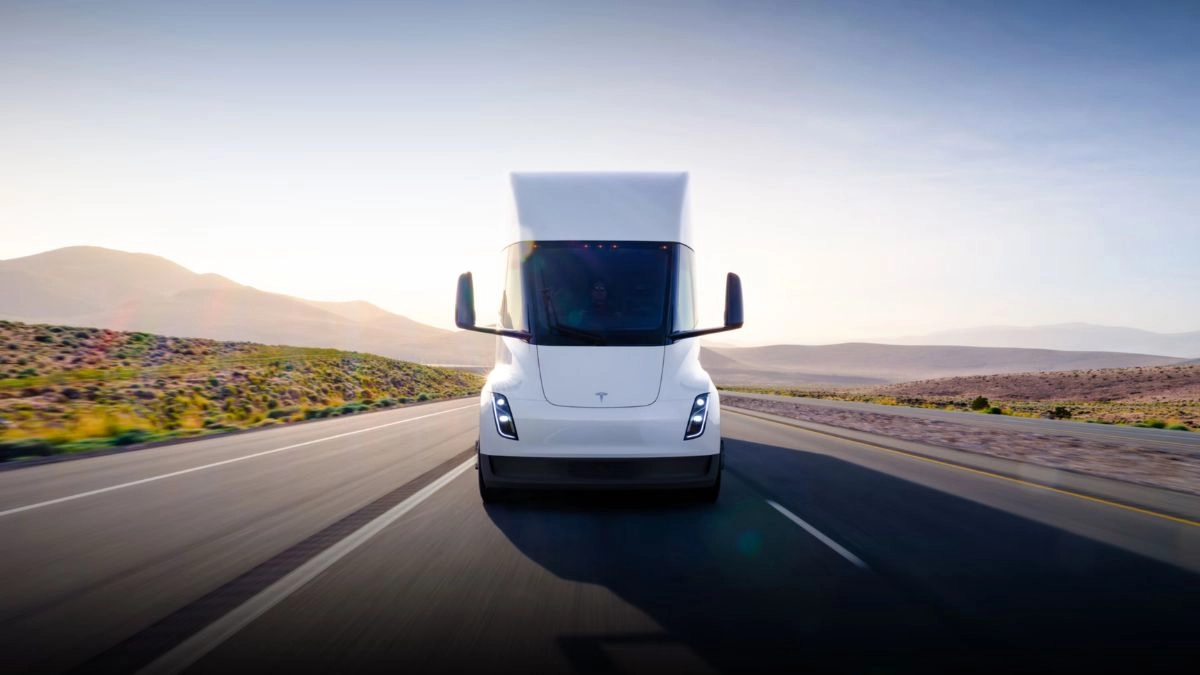

Almost a decade ago, Tesla amazed the automotive world with the promise of its electric truck Semi. At that time, trucks powered by electricity were still barely futuristic concepts. Tesla, however, was bold in its unveiling, already hinting at its goal of reducing emissions from heavy-duty transport.
Since then, the road has been winding. Elon Musk announced in 2017 that the Semi would arrive in 2019, but this was not the case.
You can read: XiEV batteries come with 1,200 km and recharge in 10 minutes
Between technological delays and adjustments in design and production, the first units did not see the light of day until the end of 2022, and only in the United States. However, those inaugural deliveries made it clear that Tesla hadn't abandoned the project; it was just fine-tuning it.
In a key strategic move for its expansion, Tesla has reconfigured its management structure: Usuf Schermo, a former executive at Volta Trucks and EVUM Motors, has taken over as Director of Business Development for the EMEA (Europe, Middle East, and Africa) region. A strong signal that Europe is officially on the Semi's radar.
The firm has also announced a significant increase in Semi production, with a major expansion at its Nevada factory scheduled for 2026. The goal is clear: to have the necessary volume to meet international demand, including in Europe.
In mid-2023, at the Hannover Motor Show, Tesla unveiled a version of the Semi tailored for the European market.
After years of testing, the Semi will enter Europe within the next couple of years. This would represent a milestone: the transition from concept car to full-fledged global player.
A leaked piece of information following Elon Musk's visit to Tesla's German factory in March 2024 rekindled expectations. Musk hinted that that facility could eventually assemble the Semi for the continent.
However, Tesla hasn't made any of those plans official yet, leaving open the option for the truck to be built in the United States and exported.
The most realistic updated estimate suggests that Europe will receive the Semi in late 2026 or even 2027. That would mark the truck's debut on the continent almost 10 years after its announcement. In the United States, official pricing figures are already known: $150,000 for the base version, and $180,000 for the configuration with the longest range.
Tesla Semi Features
This truck has two battery variants 450 and 800 km of range and can incorporate up to three electric motors, guaranteeing impressive performance on the road.
Predictions for Europe have suggested that prices could start at a significantly higher level, although no official dollar figure has yet been released.
The Semi's history offers a lesson in the challenges of bringing electric vehicles to global markets. It's not just about design, but also about adapting infrastructure, regulations, service centers, and ultra-fast charging networks specifically for large trucks.
At the Nevada factory, Tesla's strategy is to apply the learnings accumulated during initial production in the US. It will steadily increase the pace by 2026, when the international leap is expected. There, the team would be trained for the new challenges of logistics and European regulations.
The profile of Usuf Schermo brought in specifically to lead this process responds to a strategy: a leader with previous experience in electric commercial vehicles and knowledge of the European framework.
Volta Trucks, for example, developed urban electric trucks, while EVUM Motors is working on electric models for light loads. This experience will be essential for moving the Semi from the assembly line to the operational market in Europe.
Prices and advantages of this model
Considering the autonomy and price figures, the Semi is positioned as a democratic solution compared to diesel trucks, with savings in operating costs and emissions.
In the United States, prices are between $150,000 and $180,000 dollars. Experts affirm that in Europe they could be higher, but concrete data in dollars has not yet been presented.
It is important to remember that the Semi is not just about robustness and autonomy: it is a technological advance. With superior electrical efficiency, multi-motor traction, and good thermal management, it becomes a machine that competes with diesel trucks, with no emissions.
If green incentives, such as tax exemptions or operating advantages, are adopted in Europe, its attractiveness would grow significantly.