

The Chevrolet Silverado EV sets new world brand
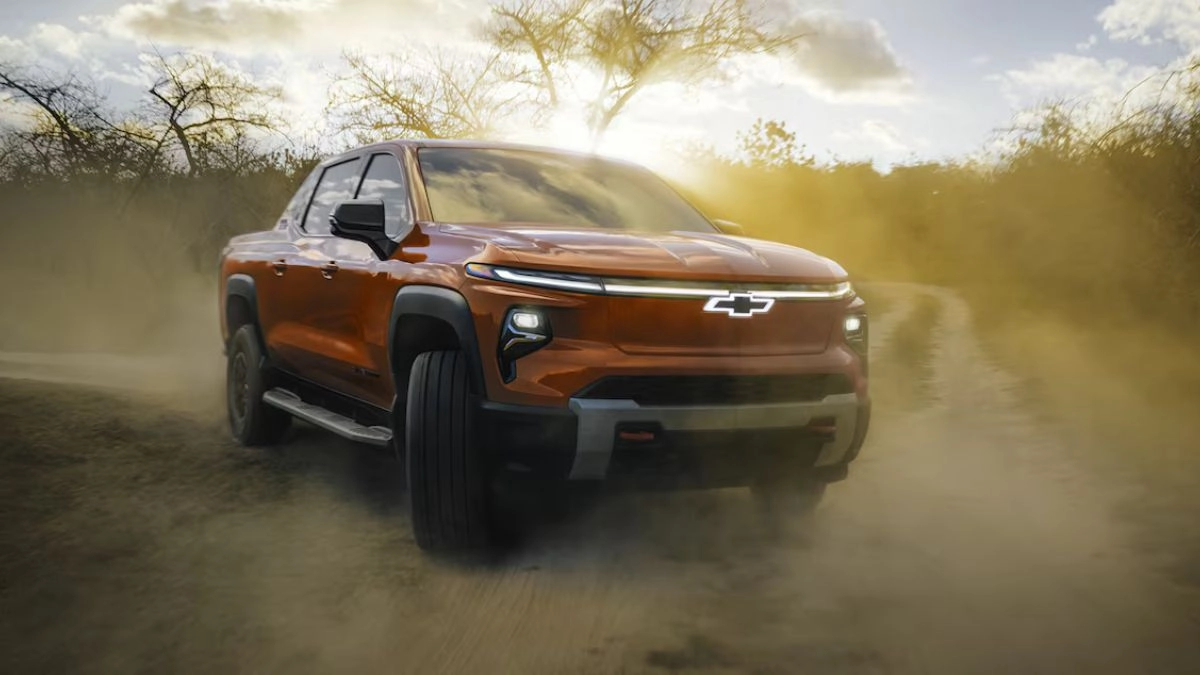
The Chevrolet Silverado EV WT traveled 1,059.2 miles without recharging for seven days, surpassing the world record for range for an electric vehicle.

It is well known that for electric cars, range is a decisive factor in demonstrating the technological capability of each manufacturer.
This time, Chevrolet has captured global attention by getting its Silverado EV WT pickup truck to surpass the 1,000-mile barrier on a single charge, leaving behind the previous record set by the Lucid Air Sapphire.
The feat was not an improvised road trip or a coast-to-coast trip. It was a controlled test, organized by General Motors engineers in Michigan, that combined technical precision and creativity to showcase what Chevrolet's electric platform is capable of.
A record that changes the conversation
Before this challenge, the brand that boasted the longest range for an electric car was Lucid, with 746 miles (1,200 kilometers). However, the Silverado EV WT ”the most basic work version of the range” reached 1,059.2 miles, equivalent to 1,694.3 kilometers, in a period of seven days without going to a charger.
This result not only represents an achievement for Chevrolet, but also opens the debate on the potential of electric trucks in segments where combustion engines previously dominated.
GM's pickup proved that, with efficient driving, an electric vehicle can go much further than its official figures indicate.
The Silverado EV WT, under normal conditions, offers 492 miles of range thanks to its 205 kWh battery. However, to break the record, a group of around 40 General Motors engineers set out to squeeze every available kilowatt out of it.
Minimal settings for maximum performance
One of the most interesting aspects of the challenge was that the truck wasn't transformed into a radical prototype. On the contrary, The premise was to keep it as close as possible to a standard production vehicle, with only minor modifications aimed at reducing weight and aerodynamic drag.
Among the decisions made, details such as:
Another key element was the driving style. Throughout the summer test, the Silverado EV traveled between 20 and 25 mph, a low speed that helped conserve energy and avoid fuel consumption spikes.
Had the speed been increased to the 50 or 75 mph range, engineers estimate the range would have dropped by about half.
Seven Days Without Charging, Between Milford and Belle Isle
The Silverado EV's journey wasn't a scenic drive on open roads, but rather an itinerary designed to optimize every mile. Most of the laps were completed at the Milford Proving Ground in Michigan, a General Motors facility equipped for this type of testing.
Sections were also completed on Belle Isle, east of Detroit, always within a controlled environment. The truck was on the move for seven days, without receiving any charge, until it reached 1,059.2 miles, which set a new record.
To maximize efficiency, engineers avoided using the climate control system, a major energy consumer in any electric vehicle.
Both the hardware and software remained in their standard configuration, confirming that this record was achieved without resorting to technologies beyond the reach of the customer.
The importance of context
Although the test was carried out under optimal conditions, Chevrolet engineers were clear on one point: the results could vary drastically in different scenarios.
For example, winter temperatures, use of air conditioning or speeds higher would have significantly reduced range.
However, this record serves a clear purpose: to demonstrate the potential of the Ultium platform, which underpins the Silverado EV, and to send a message to the market about the brand's technological strength in the era of electrification.
From theory to commercial strategy
For Chevrolet, this achievement is not just a technical medal, but a sales pitch in a segment that continues to convince users of combustion pickups.
With an official range of 492 miles and the ability to exceed 1,000 under controlled conditions, the Silverado EV WT delivers a strong message about the viability of electric vehicles even in demanding jobs.
In the US market, the Silverado EV competes directly with the Ford F-150 Lightning and the Rivian R1T.These types of achievements reinforce its position against rivals seeking to attract customers who prioritize both autonomy and reliability.
Prices for the Chevrolet Silverado EV start at approximately $74,800 for the WT version in the United States, while the most equipped variants can exceed $96,000.
Although it is not an economical pickup, its range and cargo capacity figures make it an attractive alternative for corporate and individual customers looking for a robust vehicle without depending on fossil fuels.