

Lexus isn't resting on its laurels and wants to revive a car you'll love
The Japanese brand wants to reinvent one of its sportiest models to adapt it to the new era of sustainable luxury and high performance without emissions, the IS
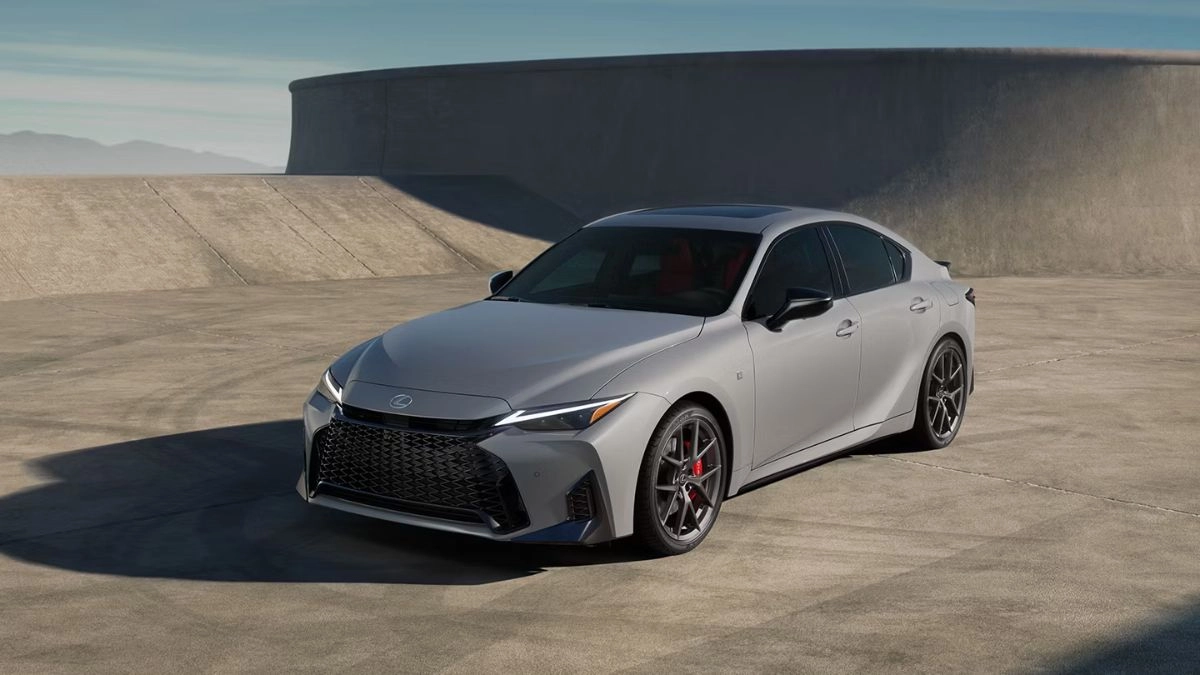

The luxury sports sedan segment is undergoing a profound transition driven by electrification, and Lexus seems ready to reinterpret one of its most iconic names to remain competitive.
Everything indicates that the Lexus IS, known for its The balance between comfort and dynamic handling would have a new opportunity in the market under a fully electric configuration.
The model's continued existence was a surprise recently after the arrival of a facelift that extended its sales cycle, when many anticipated its final farewell. This move now makes sense given the rumors pointing to a much more ambitious evolution: transforming the IS into a zero-emissions vehicle aligned with the brand's global electrification strategy. Far from simply adapting an existing model, Lexus is reportedly working on a complete reinterpretation of the sedan, maintaining its sporty character but supported by new platforms designed exclusively for electric cars. Direct inspiration from the LF-ZC concept: The possible electric successor to the IS would take its starting point from the LF-ZC concept car presented by Lexus in 2023. This prototype previewed the design language that will define the next generation of electric vehicles from the Japanese firm. Cleaner lines, aerodynamic surfaces, and a cabin focused on digital interfaces anticipate a significant change from the current design. The philosophy seeks to maximize energy efficiency without losing the elegance that distinguishes the brand within the premium segment. Some analysts believe that the Lexus ES, expected in 2026, already shows clear signs of this aesthetic transition, which would reinforce the idea that the IS will follow a similar evolution, albeit with a sportier orientation.
New Dimensions and Electric Architecture
Reports from Japan indicate that the future electric IS will reach approximately 188.5 inches in length, equivalent to about 4.79 meters. This would represent an increase of nearly 7.6 centimeters compared to the current model.
The increase in size is not intended to make it a larger sedan, but rather to improve interior space by eliminating traditional mechanical elements such as the transmission tunnel. Electric platforms allow for a flatter floor and optimized weight distribution, key factors for comfort and stability.
The model is expected to adopt a modular architecture dedicated to electric vehicles, capable of integrating high-energy-density batteries and improving both range and dynamic performance.
Sporty Power Without Emissions
The range could include at least two powertrain configurations. An entry-level version would use a single electric motor with rear-wheel drive, maintaining the classic IS focus on sporty handling. Above that, a dual-motor variant with all-wheel drive would aim directly for high performance. Initial estimates suggest figures close to 500 horsepower, positioning it as a direct rival to premium electric sedans focused on performance. This technological leap would mean definitively abandoning the combustion engines that have characterized the model since its launch, replacing them with instant acceleration, greater energy efficiency, and a lower center of gravity. A key part of Lexus's electric plan: The potential arrival of the electric IS fits within Lexus's roadmap to rapidly expand its emissions-free lineup. The company has already announced its intention to offer at least 15 electric models globally by the middle of the decade, with progressive expansion in subsequent years. Reviving the IS name in electric form would allow the company to maintain an emotional connection with traditional customers while attracting a new generation interested in technology, connectivity, and sustainability. If projections hold true, the electric Lexus IS could debut around 2027 as a luxury compact sedan with a refreshed identity.but improve interior space by eliminating traditional mechanical elements such as the transmission tunnel. Electric platforms allow for a flatter floor and optimized weight distribution, key factors for comfort and stability.
The model is expected to adopt a modular architecture dedicated to electric vehicles, capable of integrating high-energy-density batteries and improving both range and dynamic performance.
Sporty Power Without Emissions
The range could include at least two powertrain configurations. An entry-level version would use a single electric motor with rear-wheel drive, maintaining the classic IS focus on sporty handling.
Above that, a dual-motor variant with all-wheel drive would aim directly for high performance.
Initial estimates suggest figures close to 500 horsepower, positioning it as a direct rival to premium electric sedans focused on performance. This technological leap would mean definitively abandoning the combustion engines that have characterized the model since its launch, replacing them with instant acceleration, greater energy efficiency, and a lower center of gravity. A key part of Lexus's electric plan: The potential arrival of the electric IS fits within Lexus's roadmap to rapidly expand its emissions-free lineup. The company has already announced its intention to offer at least 15 electric models globally by the middle of the decade, with progressive expansion in subsequent years. Reviving the IS name in electric form would allow the company to maintain an emotional connection with traditional customers while attracting a new generation interested in technology, connectivity, and sustainability. If projections hold true, the electric Lexus IS could debut around 2027 as a luxury compact sedan with a refreshed identity.but improve interior space by eliminating traditional mechanical elements such as the transmission tunnel. Electric platforms allow for a flatter floor and optimized weight distribution, key factors for comfort and stability.
The model is expected to adopt a modular architecture dedicated to electric vehicles, capable of integrating high-energy-density batteries and improving both range and dynamic performance.
Sporty Power Without Emissions
The range could include at least two powertrain configurations. An entry-level version would use a single electric motor with rear-wheel drive, maintaining the classic IS focus on sporty handling.
Above that, a dual-motor variant with all-wheel drive would aim directly for high performance.