

The silent method Walmart uses to detect theft at self-checkout registers
Walmart Employees Can Use Wearable Devices to Monitor Self-Checkout Checkouts and Detect Unscanned Products Without Drawing Attention
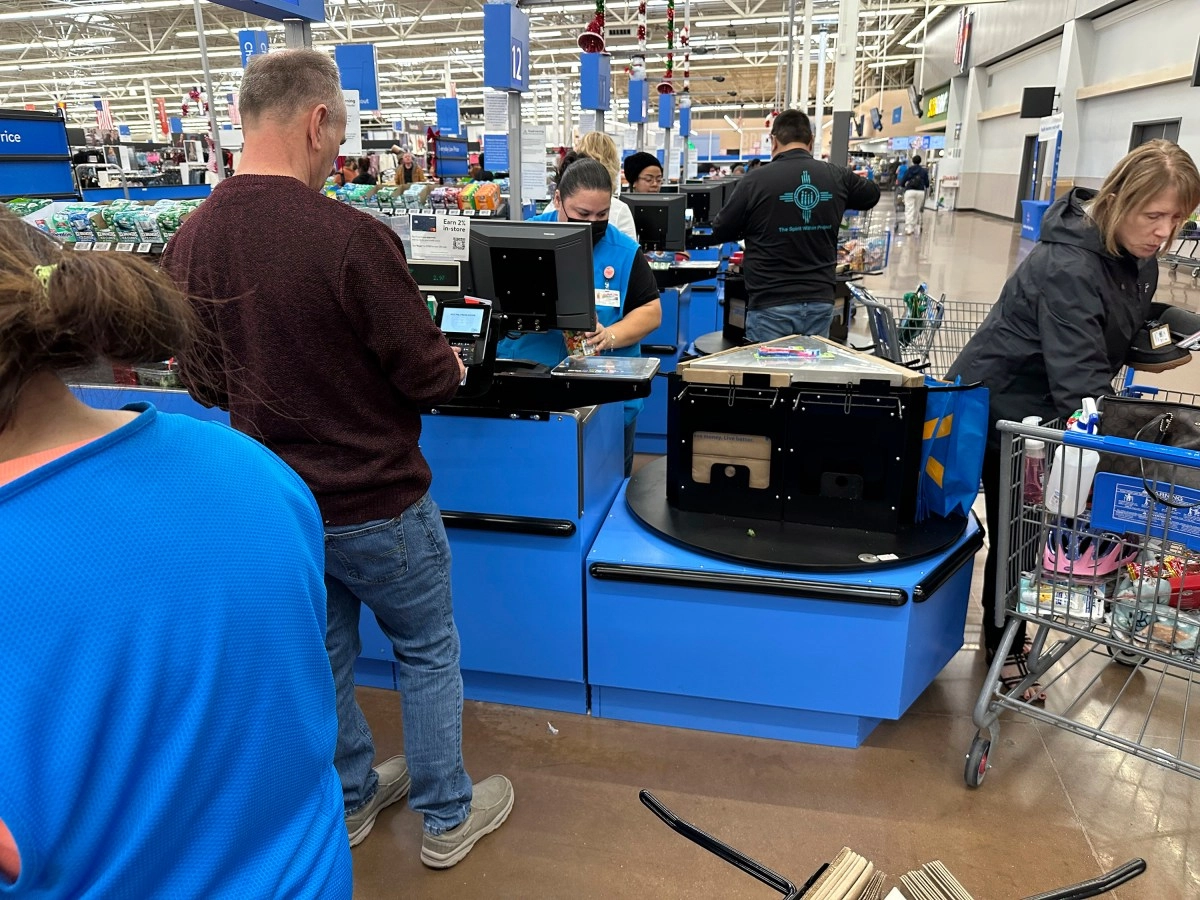

A Walmart employee appears to be checking messages on his phone while customers use the self-checkout registers. However, in some stores it may be doing something very different: monitoring transactions from a portable device connected to the security system.
The practice is part of the tools that large retail chains use to reduce theft and detect products that were not scanned. The method allows you to discreetly observe what happens at the self-checkout stations without the worker having to remain next to each customer.
How surveillance from portable devices works
Josh Bush, research project coordinator for the Loss Prevention Research Council (LPRC), explained that some employees who appear to be typing messages may actually be consulting wearable surveillance devices.
These devices allow you to follow the activity at the checkouts, receive alerts and review possible irregularities in real time. The system can show which products were searched and warn when a camera or software detects an item that apparently passed through the scanning zone without being charged.
Discreet observation has an advantage: a person trying to skip the scan may think the worker is distracted, when in fact the transaction is being monitored.
You can see: Walmart and Costco limit self-payment to 15 items due to equity policy
Walmart also uses cameras to detect unscanned items
Surveillance with portable devices is not the only recourse. Walmart has used computer vision systems capable of monitoring movements at checkouts and generating an alert when they identify a possible “missed scan.”
When that happens, the station can temporarily stop the process and request an employee to intervene. They must review what happened and determine if it was an accidental error, a problem with the barcode, or possible deliberate behavior.
The system does not mean that every alert confirms a theft. The devices can detect ambiguous movements or inadvertent failures, so human review is still necessary.
What employees can see
Workers and former employees have explained that some devices linked to self-payment checkouts allow them to check:
In certain cases, the employee can also pause a transaction to come to the station to provide assistance or verify what happened.
You can see: 5 violations at a Walmart that lead to fines for misconduct
Why self-checkout registers demand so much surveillance
Self-checkout checkouts can facilitate inadvertent errors, such as checking in two units instead of three, confusing fruit and vegetable codes, or passing an item without the reader recognizing the code.
They can also be used for deliberate practices, such as not scanning certain products or registering an expensive one with the code of a cheaper one. For this reason, chains combine cameras, software alerts, supervisory employees and protection systems in the products.
Business loss research indicates that the challenge is to reduce theft without turning a regular purchase into a hostile experience for customers.
In any case, it is important to clarify that it is not necessarily a new or universal method. Although some reports present it as a new Walmart strategy, there is no corporate announcement that confirms that all its establishments are applying exactly the same system.
Tools may vary by store, area, loss level, and checkout configuration. Walmart has also reduced or eliminated self-checkout at some locations, while maintaining these stations with greater oversight in others.