

Toyota dominated sales in 2025 and Tesla lost ground
In the US automotive market, Toyota consolidated its leadership thanks to a strong hybrid offering, and Tesla faced one of its biggest declines
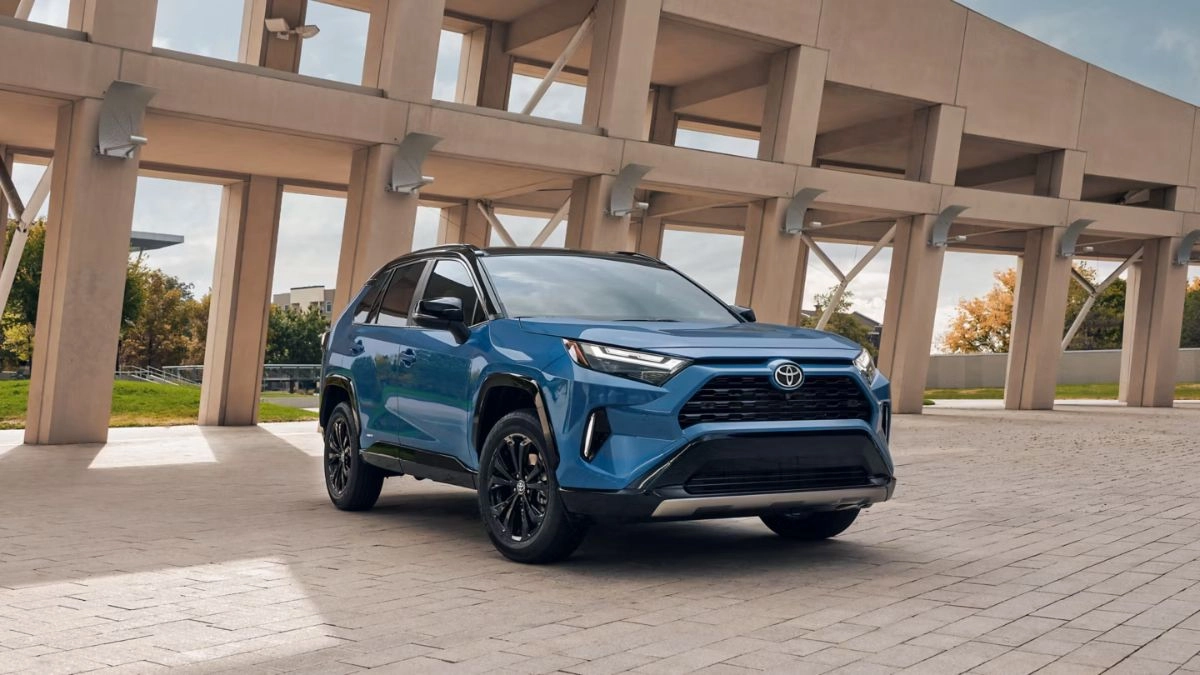

The year 2025 marked a turning point for the US automotive industry. After several years affected by the pandemic, supply problems, and unprecedented pent-up demand, the market began to stabilize. In the first eleven months of the year, total sales reached 14.8 million units, representing a moderate growth of 2.4%.
This growth, far from the peaks of previous years, confirms that consumers no longer buy on impulse or due to scarcity. Today, a more analytical logic prevails, where price, fuel consumption, proven technology, and ease of use carry more weight than futuristic promises. In this new scenario, some brands have adapted better than others.
Toyota and the strength of hybrids
Toyota Motor North America was, without a doubt, the big winner of 2025. The Japanese brand registered cumulative growth of 7.7%, exceeding 2.28 million units sold, a figure that consolidates its position as a market benchmark.
The key to this performance lies in a strategy that many considered conservative, but which the market ultimately validated. Almost half of Toyota's lineup is made up of conventional hybrid models, a mature technology that offers clear improvements in fuel consumption without requiring drivers to change their habits.
Models like the RAV4 Hybrid and the Camry Hybrid became natural choices for families, professionals, and fleets, combining reliability, savings, and immediate availability. Unlike pure electric vehicles, these vehicles do not depend on charging infrastructure or generate range anxiety, two factors that continue to influence the purchase decision. Toyota opted for accessibility, scalability, and familiar technology, aligning itself with a market that prioritizes practical solutions.The result was a solid and sustained leadership that positions it as one of the brands that best interpreted car sales trends in 2025.
Tesla faces its biggest correction
At the opposite end of the spectrum is Tesla.The American brand is going through one of the most complex periods in its recent history, with an estimated 8.5% contraction in sales during 2025. Through November, the company had sold around 526,000 units, a figure much lower than in previous years.
The main problem lies in a lineup that began to show signs of aging. Key models such as the Model 3 and Model Y did not receive significant updates, which opened the door to competitors with fresher offerings, more competitive prices, and, in many cases, more attractive hybrid solutions for the general public.
Added to this are external factors that directly impacted demand. Reduced incentives, increased scrutiny of real-world range, and growing price sensitivity have led many buyers to reconsider their choices. Consumers are no longer satisfied with technological novelty; they demand tangible value for every dollar spent.
The top three manufacturers in the United States
The overall sales ranking clearly reflects this market polarization. General Motors maintained its absolute lead with 2.58 million units sold and 6.7% growth, driven primarily by Chevrolet and GMC trucks.
Ford came in second with 1.94 million units and 6.3% growth, supported by the strength of the F-Series and the good performance of the Maverick. Both brands continue to dominate the pickup truck segment, a key category in the United States. Hyundai-Kia was among the fastest-growing groups in percentage terms, with 1.67 million units sold and an 8.0% increase, thanks to its offering of affordable and well-equipped hybrids. Honda, with 1.31 million units (+1.8%), maintained a solid performance despite supply constraints. In contrast, Stellantis closed with 1.13 million units and a 3.7% drop, affected by high prices and excess inventory. Nissan sold 844,000 units (-0.7%), while Subaru and Mazda also registered declines of 3.3% and 1.7%, respectively. Consumer Preferences in 2025 The figures confirm a trend that was already developing. Light trucks and SUVs accounted for 84% of the market, with a growth of 5.1%, while sedans fell by 8.8%. This gap highlights the declining prominence of traditional cars compared to more versatile vehicles better suited to the American lifestyle.
Asian brands like Toyota and Hyundai-Kia capitalized on this preference by combining design, functional technology, and competitive pricing. In Detroit, GM and Ford held their own with their pickup trucks, while other companies paid the price for less successful decisions.
The 2025 outlook confirms that the automotive strategic market has entered a stage of maturity. Pent-up demand is a thing of the past, and informed purchases now prevail. Hybrids are emerging as the most effective bridge to electrification, while pure electric vehicles face a logical correction after years of rapid growth.
Looking ahead to 2026,more aggressive competition is anticipated, with urgent updates, price adjustments, and selective discounts. Brands with controlled inventories and balanced offerings will maintain healthy margins.