

3 international investigations into Nicolás Maduro and his government in addition to the New York judicial process
While in the US the former president is accused of drug trafficking, other investigations focus on possible crimes against humanity
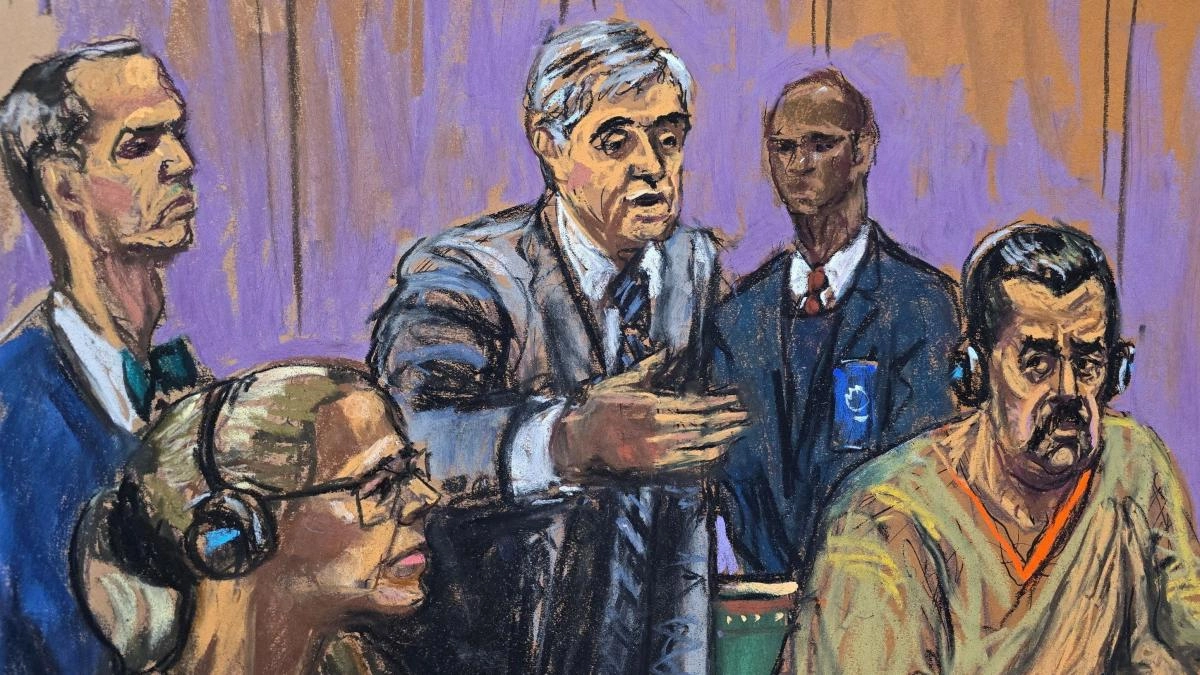

Former Venezuelan president Nicolás Maduro and his wife Cilia Flores attended this Wednesday, July 22, a new hearing of the judicial process they face in the Southern District Court of New York.
The judge decided that the trial against the former president begins on June 1, 2027.
Maduro is accused of “terrorism related to drug trafficking” by the US justice system after Washington launched a military operation on Venezuela last January that resulted in the capture of the couple and around 100 deaths, according to the Caracas government.
Another of the charges that Maduro faces is that of alleged use of his position to facilitate the smuggling of thousands of tons of cocaine into the United States.
Both he and his wife plead innocent and accuse the United States of having kidnapped them.
But this is not the only international legal case against Maduro and his government, accused of alleged human rights violations.
The new cause in the United States
Last May, the United States Department of Justice (DOJ) opened a new criminal investigation, the second in the country, against Maduro.
In this case, in Miami, where Álex Saab, the alleged front man of the former president and part of his executive as Minister of Industry, has been detained since May until his recent deposition by the current president in charge, Delcy Rodríguez.
The second investigation, according to media in the United States, is focused on possible financial crimes.
It was opened in March after federal prosecutors in Miami received orders to launch new criminal investigations against Maduro “amid concerns that the pending case against him (in New York) is weak,” according to CBS News, BBC's partner in the US.
As Myriam Fernández Nevado, international consultant on human rights and children's rights, explains to BBC Mundo, compared to other processes that may be longer, the United States "prefers to ensure that he is going to be tried and serve his sentence in a maximum security prison in its territory rather than elsewhere."
This second process is led by prosecutor Michael Berger, specialized in international criminal cases, together with agents from the FBI, Homeland Security Investigations (HSI) and the Criminal Investigation section of the IRS, the US treasury.
“What is happening in the United States, whether convicted or not, falls very short of what was expected in terms of justice and accountability with what has happened in the last decade in Venezuela,” Marta Valiñas, an international jurist who hopes that Maduro will respond for alleged crimes of human rights violations, tells BBC Mundo.
Consulted in May by CBS, a lawyer for Maduro declined to comment on this process.
The Argentine cause
In Argentina there is another case open since 2023.
"This case opened in Argentina is under the principle of universal jurisdiction. It is based on complaints made by two organizations, the George and Amal Clooney Foundation (CFJ, in English) and the Argentine Forum for the Defense of Democracy (FADD)," explains Valiñas, who was also president of the UN Fact-Finding Mission for Venezuela until January 2026.
The complaints were filed separately, but later merged into a single case.
Under the principle of universal jurisdiction, explains Valiñas, neither the accused nor the victims must have Argentine nationality nor must the acts have been committed in that country.
“The courts of Argentina have accepted jurisdiction of the case and it is against several people, including Nicolás Maduro,” he maintains.
In addition, the justice of that country requested the United States to extradite the former president in March. Specifically, an Argentine judge issued an “international appeal to the United States of America to request the extradition of Nicolás Maduro Moros” to be investigated within the framework of an investigation for crimes against humanity under the principle of “universal jurisdiction.”
Already in 2024 they had requested his international capture.
There is no set deadline for the United States to respond to the extradition. Valiñas explains that “it is not likely, given the current context, that it will occur, but there is a probability with changes in the international context.”
In any case, he points out, this case “contemplates crimes against humanity, which do not prescribe.”
Specifically, the Argentine justice system maintains that there was a “systematic plan of repression, forced disappearance of people, torture, homicides and persecution against a portion of the civilian population” in Venezuela since 2014.
When the Argentine justice system issued the arrest warrant against Maduro in 2024, the then Attorney General of Venezuela, Tarek William Saab, criticized that decision, calling it “irritating” under the argument that “it violates the jurisdiction of the States and the immunities and privileges enjoyed by presidents and high officials.”
In this case, the current Minister of the Interior, Diosdado Cabello, is also being investigated.
It is not the first time that the Argentine justice system applies this principle of international jurisdiction. In 2021, it opened an investigation into accusations of crimes by the Burmese military against the Muslim minority and, in 2022, it began a criminal investigation against the Nicaraguan president, Daniel Ortega.
The International Criminal Court
Of all the open processes, this is the one that can take years, explain the experts consulted by BBC Mundo.
As Myram Fernández Nevado tells it, the International Criminal Court (ICC) only judges certain crimes: genocide, crimes against humanity, war crimes and crimes of aggression.
Acts against humanity include acts such as murder, slavery, torture, rape, persecution of a specific group of people or forced disappearances against a civilian population. They are crimes that do not prescribe.
At the same time, the ICC works through the principle of complementarity, meaning that it does not replace national courts, which are expected to act first.
“The ICC only intervenes when the State where these crimes occur does not have the will or lacks the real capacity to investigate and prosecute those responsible,” Fernández details.
Rafael Uzcátegui, human rights defender and director of the Peace Laboratory in Venezuela, explains that in the Venezuelan case an attempt was made to exhaust this principle. “It was called a Memorandum of Understanding, Maduro signed it and the government committed to restructuring the justice system, but they used resources to buy time and simulate cooperation with the ICC,” he says.
The attitude of the Maduro government towards the ICC process changed over time. In 2021, the then president said that Venezuela as a State did not share the ICC's decision to move forward with the investigation, but that he respected it.
Then, in 2022, Venezuela requested to postpone the process, alleging that the Venezuelan justice system was already investigating.
Finally, in 2025, the Chavismo-controlled National Assembly voted to repeal Venezuela's accession to the Rome Statute, accusing the ICC of being an instrument of “American imperialism.” It should be noted that the US is not a party to the Rome Statute or the ICC.
To initiate a case before the ICC, the Rome Statute must first have been ratified. Venezuela did so in 2000 and remains within it, despite the fact that last year it tried to repeal this accession.
An investigation can also be initiated at the request of one or several Member States, by reports from the UN Security Council or by official letter from the ICC prosecutor “based on information that it considers credible,” says Fernández.
In the case of Venezuela, the investigation is based, in part, on investigations carried out by the UN Mission on events that occurred from 2014 until now.
"The Mission's reports talk about human rights violations, crimes against humanity that include torture, arbitrary detentions, deaths in protests. There are official documents, judicial files, testimonies of victims, witnesses, family members, statements from members of the government, reports from NGOs," details Valiñas.
On a personal note, Valiñas assures that “there is information that justifies a criminal investigation into these events.”
But, as Uzcátegui explains, "it is a process that is not quick, since the ICC prosecutor's office continues investigating to make a solid case about specific people. And you never know for sure which file is better."
He clarifies that they usually present a case “when they have more than enough solid evidence and that it depends on the quality of the evidence.”
That is to say, the ICC may present a case against Maduro or against a person in his government, but there is no certainty in this regard.
"When you read the Mission reports, they insist that Maduro knew, gave orders, did nothing to prevent the violations. He appears as the highest in the chain of command. It is quite likely that he will end up being tried for crimes against humanity," says Uzcátegui.
The problem is that, in addition to being a slow process, in the current state of things it would be unlikely that the ICC could try him, since, among other things, the United States, where the Venezuelan president is now detained, is not a signatory of the Rome Statute and does not recognize the ICC.
But, as Valiñas points out, it is not just about Maduro. “There are several people close to him, part of the regime, the armed forces, the government, who must respond, they must be investigated.”
Download the new BBC World Service app. Choose BBC News Mundo and receive news alerts, documentaries and analysis, all in one place. Important: The new app is not available in the United Kingdom or the United States.