

Control, threats and surgeries to change appearance: my life inside Jeffrey Epstein's “cult”
Anya (not her name to preserve privacy) gives the BBC an account of how Jeffrey Epstein lured and abused his 'assistants'
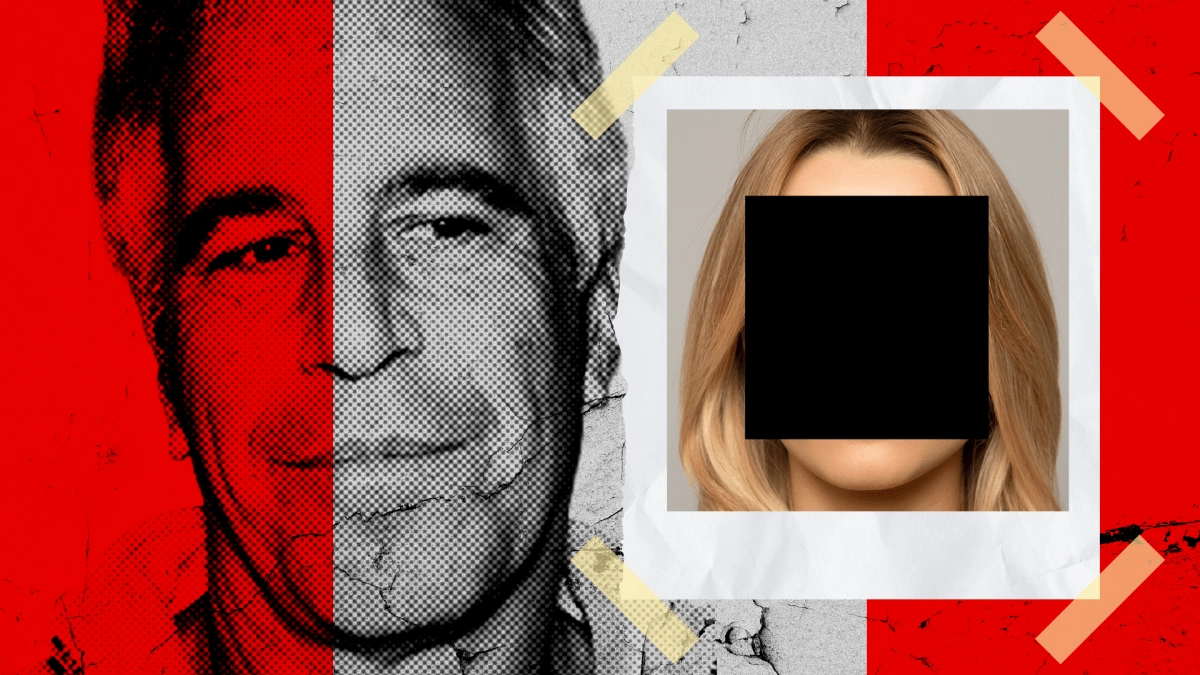

The week after the death of financier and sex offender Jeffrey Epstein, Anya (not her real name) opened the door to his New York apartment. Epstein's brother Mark was outside, telling him he had to leave, he says.
Anya had lived for years in one of several apartments on East 66th Street in Manhattan that Jeffrey Epstein used to house the women he abused.
In an instant, Anya lost her home, but escaped a nightmare.
Mark Epstein denies having knowledge of his brother's illicit activities.
“It's still hard for me to accept that I was a victim of abuse for years,” Anya says. "They didn't chain you to a door or anything like that. They didn't lock you in a basement. The chains were less obvious, but they were there."
Epstein, who died in 2019 while awaiting trial for child sex trafficking, often said that his organization was “like a cult, and that he was the leader of the cult,” Anya says.
The woman gives the BBC an exceptional account of her life as one of Epstein's "assistants", detailing how the financier maintained control over many of his victims for so long.
The assistants were a group of women—about 12 at a time, according to Anya's estimate—who lived in Epstein's home, worked at all hours at his beck and call, and were victims of sexual abuse by him regularly.
Anya claims that they were subjected to elaborate deceptions and empty promises of work, before he began to coercively control almost every aspect of their lives, exploiting any vulnerabilities he could discover.
According to her, he controlled their finances, dictated who they saw, and psychologically humiliated them.
Anya claims that he monitored their bodies obsessively and forced her to undergo unnecessary surgeries that disfigured her.
Sarah Kellen, another former assistant, confirms Anya's account of Epstein's control.
Earlier this year, Kellen testified before the US House Oversight Committee how Epstein presented himself as the savior of the assistants.
"He was very skilled at annihilating your ability to make your own decisions and have autonomy. And that made you increasingly dependent on him," he said.
There is a bias that tends to make people believe that only children are susceptible to this type of coercion, but “you can be manipulated as an adult,” says Tara Quinn-Cirillo, a clinical psychologist who has worked with victims of coercive control.
“You can be vulnerable to this,” he adds.
“A complete montage”
After Jeffrey Epstein's conviction in 2008 for abusing a teenager—whom he took home with the promise of working as a masseuse—he changed tactics.
It began to focus mainly on adult women, especially from Russia or Eastern European countries.
Anya claims that she and many of the other women recruited still looked like teenagers, and to prove it, she showed the BBC photos of herself from that time.
Anya grew up in a Russia that was emerging from the communist regime, with strict parents who instilled in her that “education would be the key to success,” she says.
But opportunities were scarce and, armed with her university degree, she left Russia to work as a model.
She worked in Europe for luxury brands such as Fendi and Chanel. I had friends, a support network, and family I could visit whenever I wanted.
When she was in her early 20s, she entered Epstein's orbit by visiting an agency in Paris and meeting modeling scout Daniel Siad.
He praised her intelligence, “something rare in the modeling industry,” says Anya, and suggested introducing her to a friend of his with contacts in the fashion world: Epstein.
Anya says she used to wonder what would have happened if she hadn't stopped by the agency that day, but now she believes she was caught deliberately.
“It was a total trap,” he points out, describing Siad as “a professional trafficker.”
Siad's name appears thousands of times in the Epstein files, the huge collection of documents about the financier that the US government released in January.
Siad's lawyer said he would not comment; He previously denied having any knowledge of the danger Epstein represented.
It so happens that Siad was found dead on Monday, July 20, in Paris. Authorities opened an investigation to determine the causes of death.
Anya says she met Epstein at his spacious 18-room apartment in Paris, decorated with photographs of him posing with the likes of Bill Clinton and other world leaders.
She says she felt comfortable because there were two other women present: one Russian and the other, Epstein's then-girlfriend, originally from Eastern Europe.
According to Anya, Epstein asked her to strip naked so he could see her body for modeling purposes.
While in her underwear, the financier told her she was “not in shape” and needed to “start exercising,” calling her lazy.
Anya claims that comments like that were common in the modeling industry, and she believed his claims that if she worked hard, she would be introduced to the right people.
The woman says that he asked her about her family and her interests.
“What I was trying to achieve in life, why I dedicated myself to modeling, all the things that were important to me,” he evokes.
“In the world of fashion they don't ask you those questions,” he says.
Several women have told the BBC that Epstein liked to know what was important to them and then use that information against them.
He also addressed their concerns directly.
“I see that you are intelligent and distrustful,” she remembers him saying. “I don't want to sleep with you.”
Anya says this calmed her down even more. "I was saying to myself, 'Oh my God, this man is incredible. He knows me inside out,'" she says.
Promises and deceptions
This was just the beginning of a manipulation process that would unfold over many months, in which Anya was duped with empty promises and prolonged deception.
For almost a year, Anya began training “religiously” to get the body Epstein wanted, she says.
Lesley Groff, the assistant who managed Epstein's schedule, would send him emails to update him on his progress, and Epstein would pressure Anya to send him photos, telling her not to be “shy” when he insisted she get naked.
According to Anya, Epstein finally arranged a meeting between her and Faith Kates, co-founder of modeling agency Next Management, as he had promised her.
The meeting lasted less than 30 minutes and she was told that Epstein would inform her of the outcome.
Anya explains that the financier told her that Next didn't want to hire her because she "wasn't good enough for the New York market," and Epstein added that she was "out of shape."
Anya says she was devastated. Epstein asked her to visit him in Palm Beach, Florida, where he was on parole while serving his sentence.
According to her, the financier blamed his conviction on a girl who - he said - had deceived him with a false identification.
Anya had to sign a register for a uniformed police officer to see him.
Epstein accompanied her to a room where he sexually assaulted her for the first time. At least two other women have testified that he sexually assaulted them while he was serving his sentence.
After the attack, Epstein began joking with the other attendees waiting outside, commenting that Anya was “very shy.” According to her, everyone laughed at her, and her reaction made her blame herself.
"I thought maybe nothing bad had happened. Maybe my reaction was wrong," he says. “Maybe it's because of my Russian upbringing, maybe it's because of how strict my parents were, but I felt like there was something weird about me, not him.”
Anya says it was only when Epstein's files were released that she realized what had really happened.
The emails suggested that, despite her face-to-face meeting with Faith Kates, the agency founder had rejected her a year earlier.
Anya claims that she realized that Epstein had been deceiving her for months and had set her up to fail, in an “extremely elaborate recruitment process.”
Then, when she was vulnerable, isolated and far from home, Epstein struck.
The kind of slow and steady preparation Anya describes is designed to avoid triggering the target's sense of danger, “just as stealth bombers are designed to go unnoticed,” says psychologist Quinn-Cirillo.
Faith Kates' attorney stated that any claim that his client had knowledge of or involvement in Epstein's alleged human trafficking is false and defamatory.
Suggesting that Epstein would communicate the agency's decision to Anya is “unusual, false and unfounded,” the lawyer stressed.
The agency made its own decisions about which models to hire and did not seek Epstein's approval for those decisions, he continued, adding: "Obviously, there is nothing unusual about a potential model being considered and rejected by a modeling agency, even more than once."
Next Management said in a statement that the company had no relationship with Epstein and that Kate's alleged actions had been "hers alone."
“Come work with me”
Epstein continued to offer Anya the chance to work as a model, introducing her to Jean-Luc Brunel, founder of the MC2 agency.
Epstein did not mention to him that he was one of the company's financial backers. (MC2 closed its offices in Miami and New York, and the founder of the branch still active in Israel has declared no relationship with Epstein.)
According to Anya, the agency practically did not offer her any work.
Instead, his agent told him he was going to Palm Beach for a “direct hire,” he explains. But she didn't get any modeling jobs, only more abuse from Epstein.
After a while, Epstein told her that modeling wasn't working for her and that the industry was dead.
Anya remembers him telling her: "Come work with me, I'll teach you a real business. You'll travel and meet important people from all over the world."
But working as Epstein's assistant wasn't what Anya imagined. He says Epstein didn't teach him anything about business.
Instead, she says, she sat there waiting for Epstein to give her something to do, while reproaching him for doing nothing.
Sometimes he assigned him menial tasks: answering the phone, escorting someone to a meeting room, or announcing a guest.
However, the assistants were available 24/7, says Anya.
On one occasion, Anya says she went out to lunch to meet someone and Epstein “went crazy,” calling her repeatedly and insisting that she could never leave the house without his permission.
Anya was completely dependent on Epstein. If she got sick and needed medical attention, he would tell her: “I am your health insurance.”
She did not have a bank account or the necessary documentation to rent a home, but she claims that Epstein kicked her out of the Manhattan apartment several times, telling her to “find a place to stay.”
He now realizes that they were very effective control mechanisms.
According to him, Epstein only began paying him a modest salary years later because his visa required it.
He used to tell her, “Don't worry, I will always support you.” Sexual abuse continued frequently throughout this period, Anya claims.
Sarah Kellen described a similar situation to US lawmakers: “I had no money, no family, no education, no sense of deserving better.”
Meanwhile, Epstein flaunted his power and connections to her. “Jeffrey made sure I knew that defying him would cost me my life,” she says.
“You will never go against me.”
On one occasion, an assistant ran away, Anya recalls.
She says that the woman called her during her escape, which made her fear that Epstein would discover that they had been in contact, since he owned her phones and monitored her calls.
According to Anya, Epstein hired a private investigator to locate the missing assistant. He explains that he showed him an email detailing the expenses that, according to his calculations, the woman owed him: a total of US$700,000.
Anya assures that the message was very clear to her: if you leave, you will owe me money and I will find you to get it back.
This wasn't the only thing Epstein had to blackmail women with. According to Anya, he also collected compromising material and casually reminded her that he had nude photos of her.
On one occasion, he says, he gathered his assistants for a photo shoot.
Epstein encouraged them to strip naked and dance, insisting that they record it.
Anya remembers him saying, “This way I know they will never go against me,” implying that it would be difficult for them to argue that they had not given consent if he showed the video.
“That was their source of evidence,” he says.
The financier also forced his assistants to write him emails that he called “letters of gratitude,” in which they thanked his abuser profusely.
“I was really afraid of not thanking him enough,” Anya says.
“I think, in part, those gratitude letters were another mechanism for him to say, 'How can you go against me if you're thanking me all the time?'”
According to Anya, Epstein also turned the assistants against each other.
For example, he let on that another woman was “angry” with her for being “useless and lazy,” but he said he was “supporting” her as “her biggest defender,” he explains.
In this way, it prevented women from forming real relationships with each other, which made it easier to control them.
As Anya talks to us, she lifts her blouse to show us several scars on her stomach. Then he shows us old photos from when he was a model, where he shows off a small tattoo from his adolescence.
Epstein wanted her to have it removed and a doctor came to her house, she recalls. But he didn't want her to undergo laser treatment because it would take too long, so he suggested that the doctor remove the tattooed skin.
“Only I could come up with that,” he remembers Epstein saying.
She claims she underwent the surgery, which left her with scars.
A year later, he insisted on having it done again because he didn't like the results.
“Ecosystem of abuse”
Anya says, with tears in her eyes, that the “most embarrassing thing” about her time with Epstein was having to recruit other women.
According to her, each assistant had to bring at least one other assistant, and Epstein told them to recruit young women like her.
“Whether it was one or ten, you were already an accomplice.”
Anya says she decided to speak out now to help people understand how women fell into Epstein's networks and to explain how the ring trafficked adults like her, as well as minors.
“He built an entire ecosystem of abuse that was at his service,” he maintains. "When people like Bill Gates come to your house for dinner and shake your hand, you think, 'Who am I to question him? Who am I to report him?' That legitimized the abuse."
Both Anya and Sarah Kellen later received compensation from the Epstein Victims Compensation Fund, which was created to provide financial assistance to survivors and involved sharing corroborating evidence of the abuse they suffered.
“While he was alive I didn't talk to anyone about this,” Anya says.
Now she hopes her testimony can help at least one woman escape an abusive relationship.
“I'm not special at all,” he says. "I just managed to find the inner strength to persevere and survive. If I could do it, you can too."
This article was originally written in English and we used an artificial intelligence tool to translate it. A BBC journalist reviewed the text before publication. Learn more about how we use AI.
Download the new BBC World Service app. Choose BBC News Mundo and receive news alerts, documentaries and analysis, all in one place. Important: The new app is not available in the United Kingdom or the United States.