

Amnesty International and the UN demand justice and investigate the murder of journalist Roxana Guzmán in Mexico
AI demanded that the investigations be carried out with a gender perspective, and demanded severe punishments for the material authors, intellectuals and officials.
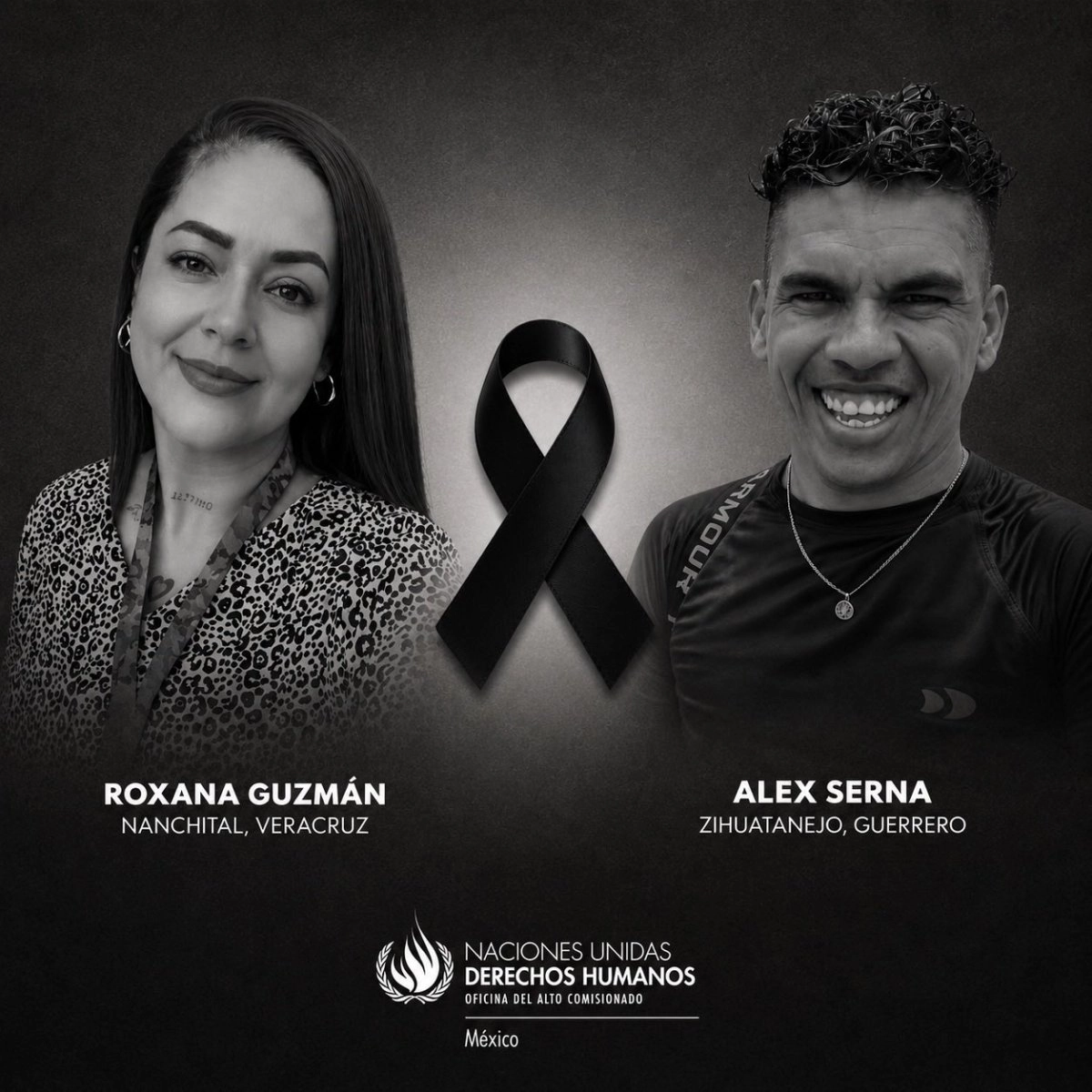

The murder of Veracruz journalist Roxana Guzmán once again placed the international spotlight on the violence faced by communicators in Mexico. Human rights organizations, including Amnesty International and the Mexico Office of the United Nations High Commissioner for Human Rights (UN-DH), called for a thorough investigation and the punishment of all those responsible, considering that the crime represents a new blow to freedom of expression.
The reactions arose after the Mexican authorities confirmed that the remains found in the state of Veracruz correspond to Guzmán, director of the Pulso Informativo Nanchiteco portal, who was deprived of her liberty on June 2 in the municipality of Nanchital. Amnesty International condemned the crime and requested that the investigation incorporate a gender and human rights perspective, in addition to identifying and punishing not only the perpetrators, but also those who ordered, facilitated or covered up the murder.
The organization warned that the case occurs in a context of growing violence against the press in Veracruz, where at least three journalists have been murdered during 2026. It also urged state and federal authorities to strengthen protection mechanisms for journalists and address the structural causes that allow these types of attacks.
Veracruz remains among the most dangerous regions for the press
The Secretary of Security and Citizen Protection, Omar García Harfuch, reported that so far eight people have been arrested in the case, including alleged members of a criminal group and three municipal police officers accused of providing logistical support to the criminal organization. He added that the investigation continues and that there are still people to be captured.
The Attorney General's Office later took over the investigation due to the seriousness of the case.
The kidnapping of Roxana Guzmán sparked outrage throughout the country after a video circulated on social media showing armed men breaking into her home to take her away by force. After the confirmation of his death, President Claudia Sheinbaum called on journalists who consider themselves to be at risk to request protection measures from the Ministry of the Interior to be able to carry out their work with greater security guarantees.
The murder brings to three the number of journalists murdered this year in Veracruz, an entity considered by civil organizations to be one of the most dangerous to practice journalism due to the presence of criminal groups and the constant attacks against communicators. According to Reporters Without Borders (RSF), Mexico continues to be the deadliest country to practice journalism in America for at least 15 years and ranks 122 out of 180 in the 2026 World Press Freedom Index. The organization has documented more than 150 murdered journalists and 28 missing since 2000.
The UN links the case to the protection of freedom of expression
The Office in Mexico of the United Nations High Commissioner for Human Rights expressed its dismay at the murder of Roxana Guzmán and environmental activist Alex Serna, whose body was recently located in the state of Guerrero after remaining missing.
The UN-DH asked the authorities to clarify both cases and consider the possible link between the crimes and the exercise of freedom of expression and the defense of human rights as a priority line of investigation.
In the case of Guzmán, the organization recalled that she was the director of a digital media and that she was allegedly the only woman who covered the police source in the south of Veracruz, which is why it stressed the need to recognize the differentiated risks that women journalists face.
Likewise, he expressed solidarity with the families of both victims and warned about the worrying number of murders and disappearances of journalists registered in states such as Veracruz and Guerrero.
According to the organization Article 19, since 2000, 176 journalists have been murdered and another 32 remain missing in Mexico, figures that maintain the concern of national and international organizations about the conditions in which journalism is practiced in the country.