

Protests in Bolivia: what power Evo Morales still has and what is known about his whereabouts
The former Bolivian president becomes the protagonist of the demonstrations against the government of Rodrigo Paz, despite facing an arrest warrant
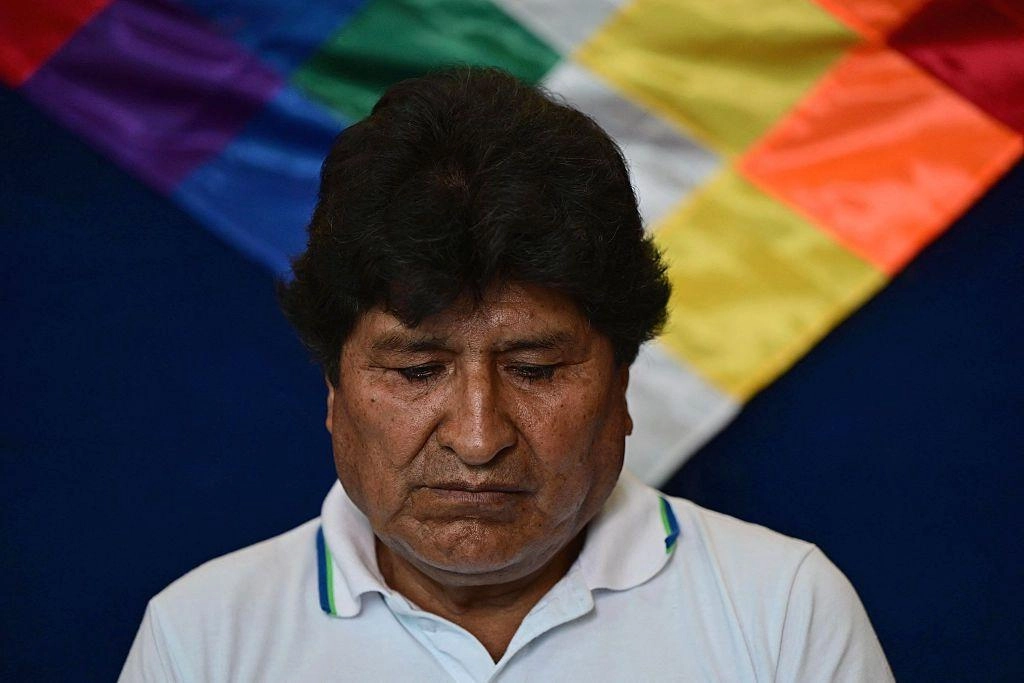

Evo Morales, the former president of Bolivia whom many believed defeated as a political leader, has once again been involved in a power struggle in his country.
From the Tropic of Cochabamba, a coca-growing area in the middle of Bolivia where he takes refuge surrounded by followers to evade a judicial arrest warrant, Morales gained relevance with the current Bolivian political crisis.
His supporters have joined the demonstrations of indigenous groups and unions that have been blocking roads and clashing with the police for weeks to demand the resignation of President Rodrigo Paz.
Already without public positions and without controlling the Movement towards Socialism (MAS) with which he was elected as the first indigenous president of Bolivia 20 years ago, Morales defined these protests as a “people's uprising” and demanded new elections in 90 days.
The current center-right president, who was inaugurated in November after two decades of MAS governments, accuses Morales of instigating unrest against democracy.
“He is a man who is brutalized by power and will do everything possible to, beyond the deaths, beyond the confrontation, beyond destroying Bolivia, overthrow this democratic process,” Paz said of Morales in the Argentine newspaper Clarín this week.
The question, therefore, is what power the former Bolivian president maintains from his tropical enclave.
“Politics in the streets”
At 66 years old, Morales seems to once again appeal to the street mobilization and road blockades that more than three decades ago served as political leverage for him as a coca leader, experts say.
“It has the power of the street,” Bolivian political analyst Carlos Toranzo tells BBC Mundo. "In Bolivia, the so-called politics in the streets tend to be stronger than the strength of the institutions. That is why Evo Morales came to power, through social mobilizations."
However, he affirms that things have changed since the first time Morales was elected president with a message of social inclusion, the fight against corruption and respect for Mother Earth or Pachamama.
"The image of social mobilization remains the same, nothing more than that now they mobilize around perks, to not lose privileges, and the visible captain is Evo Morales. But he is not the only one," says Toranzo.
During the almost 14 years in a row that Morales was president (with two re-elections in between), Bolivia had high rates of economic growth, reduced extreme poverty by more than half and made progress in areas such as health and education, after nationalizing hydrocarbons and benefiting from a boom in raw material prices.
But his critics accused him of concentrating more and more power, favoring related sectors, tolerating corruption and putting the environment at risk, by exploiting oil and gas or promoting a highway in an ecological reserve.
His mandate ended abruptly in 2019, when he tried to be re-elected for the third time endorsed by a court, despite the fact that the Constitution prevented it and the citizens had rejected that possibility in a referendum.
The elections of that year led to a major crisis when the opposition denounced an attempted fraud and Morales left Bolivia claiming that there was a coup against him.
He returned to the country in 2020, at the beginning of the mandate of his political dolphin Luis Arce.
But an internal dispute between Morales and Arce and a severe economic recession in Bolivia weakened the MAS, which received just 3% of the vote in the 2025 elections won by Paz with the support of many of his former voters.
The former president, prevented from running for having reached the limit of terms allowed by the Constitution, called for the vote in those elections to be annulled.
Some saw in that gesture a sign that he was preparing to confront the next government.
However, at that time Morales was already hiding in his coca-growing bastion and was evading the arrest warrant to investigate him for alleged human trafficking and the alleged pregnancy of a minor under 15 years of age when he governed.
The former president maintains that it is a process invented to harm him politically.
“There is no victim, there was no due process and there was no evidence,” he said a few days ago on the Argentine channel C5N.
But this month the Tarija court where the case is being heard declared Morales in absentia for being absent at the start of the trial and issued a new arrest warrant against him.
a special place
Morales now demonstrates that he maintains a loyal base of followers in the face of a government weakened by the economic crisis and management problems, analysts point out.
Road closures around La Paz and other cities have caused shortages of food, fuel and medicine.
President Paz “has two paths: a suicidal decision, militarize” or “pacification, transition, election in 90 days,” Morales said Sunday on his movement's Kawsachun Coca radio station.
But political scientist and sociologist María Teresa Zegada points out that Morales also has limited leadership due to his disqualification from being president again, his inability to move around Bolivia and “a very strong social sanction” for the process he faces.
“There is a kind of inflation of (Morales') leadership in discursive terms, because his real possibilities of returning to the political field, at least within the framework of the democratic institutional system, are zero,” Zegada, who is a professor at the Universidad Mayor de San Simón, in Cochabamba, tells BBC Mundo.
The Bolivian Congress on Tuesday authorized the president to deploy the military to the streets and declare a state of emergency in the face of the crisis.
Paz has said he prefers dialogue to confrontation with weapons, but is under increasing pressure to defuse the protests.
The president has also indicated that Morales predominates in “one of the most important regions for the generation of drug trafficking in South America.”
And a government spokesman recently suggested that the protests are funded by that illicit activity.
But no empirical proof of this has been shown, although “we know that in Chapare there are not only social movements, coca growers and peasants, but that there is also a strong presence of drug trafficking,” says Zegada.
There has also been no formal accusation to date linking the former president to drug trafficking.
Although it is often noted that Morales is in the province of Chapare, he himself said days ago that he has been confined for more than a year at the headquarters of the Six Federations of the Tropics, the coordinator of coca growers and agricultural producers based in Lauca Eñe, a small Amazonian city in the province of Tiraque.
The former president has had some recent public appearances in that difficult-to-access place, guarded by hundreds of indigenous people who declare loyalty to him.
It is also likely that Morales frequently changes location in those places in the Cochabamba Tropics, to avoid being located.
“If you add the coca union issue, which has become a bastion of Evo Morales,” says Zegada, “plus this strong connotation of drug trafficking, this place obviously becomes a tinderbox.”