

Lines to get gas get longer in Russia
Reports from different parts of the country show how residents are dealing with difficulties in their daily lives.
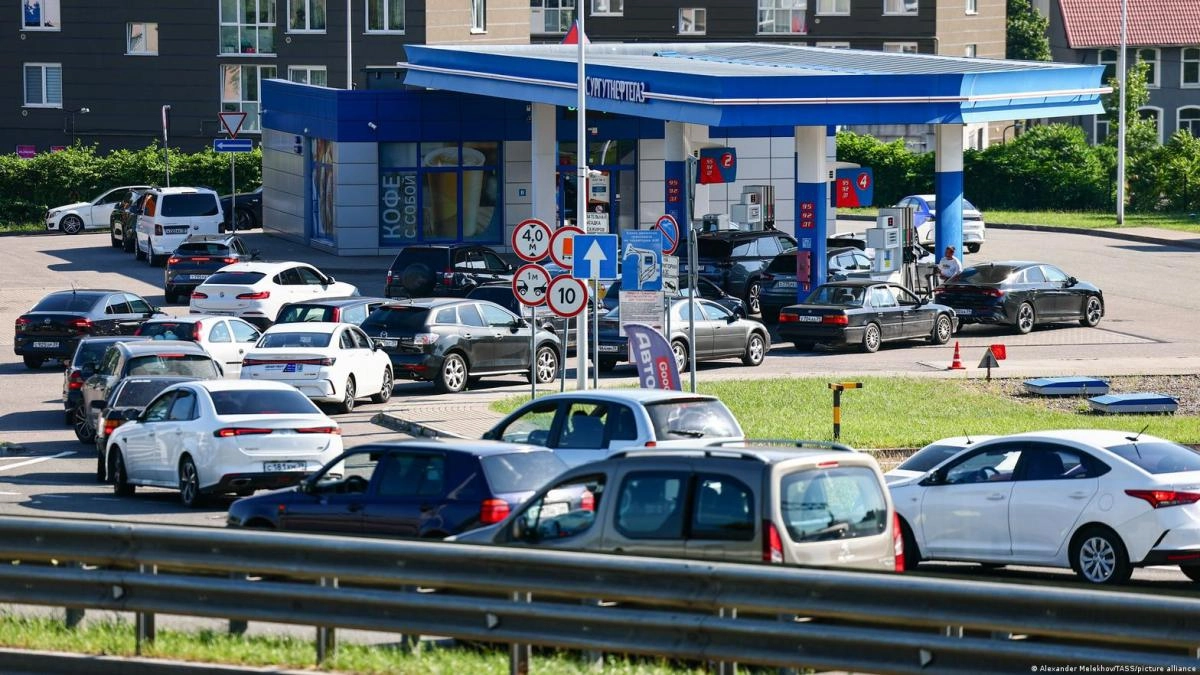

Drivers across Russia wait hours to fill up at gas stations and, in some regions, even days. As fuel shortages worsen, people are scouring entire cities in search of gas stations that are still open, spending the night in their cars and waiting their turn to refuel.
In recent months, Ukraine has stepped up drone attacks against Russian oil refineries. On July 6, Ukrainian forces attacked the Omsk refinery, about 2,500 kilometers from the border. Ukraine has already attacked Russia's 10 largest oil refineries, from the Leningrad region to Omsk. The campaign further aggravated a fuel crisis spreading across much of Russia.
Horses and bicycles as an alternative
People in all regions are reporting that gas stations are closing. The few that still have fuel attract lines that stretch for miles. According to videos posted on social media, the situation appears to be more serious in Chita, a city in Russia's Transbaikal region. There, drivers reportedly wait up to 36 hours to buy fuel. Some run out of gas while waiting and are forced to push their cars
Fuel shortages are forcing many Russians to change their daily routines. Some are carpooling to shop or take their children to school; others are turning to public transportation after trying to refuel their car without success. But those services are also feeling the impact. The Kommersant newspaper reports that taxi drivers are working less frequently and are increasingly canceling long trips and transfers in major cities. The result has been an increase in rates.
Some residents of Russia's more rural regions are buying horses instead of cars. The Telegram channel Mash cited horse breeders in reporting that demand for these animals has skyrocketed in recent weeks. They are being used for forestry work, hay harvesting and everyday agricultural tasks.
The demand for bicycles has also increased considerably. In June, bicycle sales on the online marketplace CDEK.Shopping increased by 131% compared to May.
Kremlin denies shortages
Some social media users accuse the authorities of downplaying the crisis. Although nearly a third of Russia's oil refineries are reportedly out of commission, the government has remained largely silent, Nina Ostanina, a member of the Duma, the lower house of parliament, wrote on her Telegram channel.
“Why are the Minister of Agriculture and the Deputy Prime Minister in charge of the sector silent on the eve of the harvest?” Ostanina wrote. “The country could run out of grain, which, under international sanctions, would be equivalent to a death sentence.”
National authorities deny that Russia is facing systemic fuel shortages. They attribute the crisis to panic buying and speculators. Although national fuel demand has increased by 20% to 30%, Deputy Prime Minister Alexander Novak insists that supply disruptions are limited to individual filling stations. He stated that there was enough fuel available and that the problem could be resolved through restructuring.
Regional authorities raise similar arguments. The governors of the Krasnodar, Irkutsk and Pskov regions claim that retailers have stoked public panic.
“People fear that they will not be able to continue moving around normally, go to work or take care of their children,” Pskov Governor Mikhail Vedernikov wrote on the state-powered Max messaging app. "Taxi drivers and small businesses are stockpiling to avoid losing income. Farmers are worried about possible machinery breakdowns and subsequent crop losses. All of this is driving up demand."
Putin's approval ratings
Trust in Russian President Vladimir Putin appears to be waning. According to a poll by the Russian Foundation of Public Opinion (FOM), conducted from June 19 to 21, his approval rating fell from 74% to 69% over the course of a week. That is the lowest level recorded since the start of Russia's full-scale war against Ukraine. At the same time, concern is growing about the country's economic situation, especially with regard to rising prices and the cost of living.
The shift in public opinion does not appear to have translated into calls for the war to end. In fact, according to a poll published in June by the independent Levada Center, support for Russia's war in Ukraine has increased. 30% of respondents now say they support war, up six percentage points from March 2026. While 60% of respondents say Russia should engage in peace negotiations, a drop of seven percentage points from February 2025.