

The US and Mexico strengthen maritime cooperation and reinforce the fight against transnational organized crime
Both countries agreed to expand coordination in maritime security, search and rescue, port protection and combating illicit activities at sea
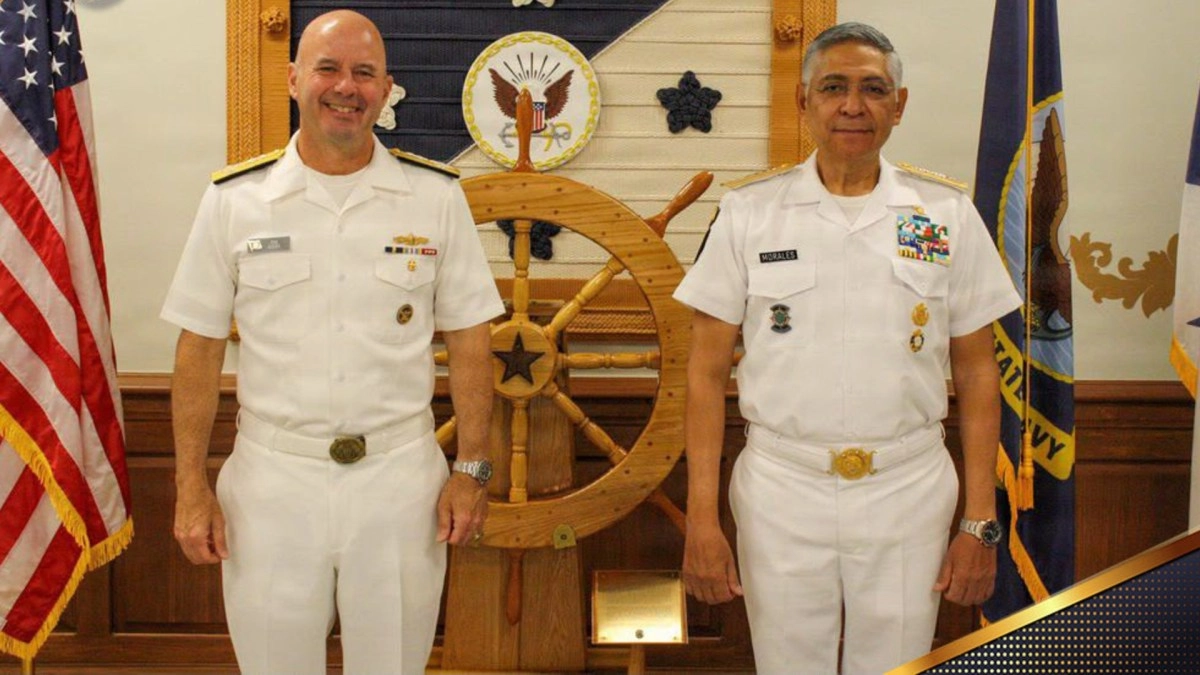

The United States reaffirmed this week the importance of its maritime alliance with Mexico by concluding a series of working meetings between senior commanders of the US Navy, the Coast Guard and the Secretary of the Navy of Mexico, Admiral Raymundo Pedro Morales Ángeles, meetings that were focused on strengthening regional security, combating transnational organized crime and expanding operational cooperation between both nations.
As announced, Admiral James W. Kilby, acting chief of Naval Operations of the United States Navy, and Admiral Kevin E. Lunday, acting commander of the US Coast Guard, held meetings with the Mexican delegation to review bilateral maritime coordination mechanisms and define new areas of collaboration.
The US authorities highlighted that the maritime environment has become one of the strongest pillars of the bilateral relationship due to its relevance for security, trade and the protection of supply chains that connect both countries.
According to the United States Navy, cooperation with Mexico is essential to confront shared threats such as drug trafficking, human trafficking, smuggling and other illicit activities linked to transnational criminal organizations.
During the meetings, the US commanders recognized the operational capacity of the Mexican Navy and its role in monitoring the coasts, maritime routes and strategic areas of the Pacific and the Gulf of Mexico.
In particular, they highlighted the effectiveness of the Mexican model of naval operations that integrates vessels, helicopters and interceptor patrols, in addition to the growing use of unmanned systems for surveillance and reconnaissance tasks.
One of the main topics addressed was the strengthening of the North American Maritime Safety and Security Initiative (NAMSI), a cooperation mechanism between the United States, Mexico and Canada established in 2008 to improve the exchange of information, coordinate maritime operations and strengthen regional security.
For Washington, NAMSI has become a strategic tool to increase maritime domain awareness in North America and improve the ability to respond to threats that transcend national borders. The initiative allows the sharing of intelligence information, the development of joint exercises and the coordination of actions against illicit activities, while respecting the sovereignty and jurisdiction of each country.
The US Coast Guard also highlighted the progress made in maritime search and rescue. Both nations agreed to reactivate binational SAREX exercises, expand specialized training and improve interoperability between their naval forces to respond more efficiently to emergencies at sea.
As part of this cooperation, the authorities are promoting the implementation of the SAROPS 4.5 system (Search and Rescue Optimal Planning System), a technological platform developed by the United States Coast Guard that uses advanced simulation models to calculate trajectories and optimize search and rescue operations. The tool allows you to reduce response times and increase the chances of locating missing people, boats or aircraft.
In addition to security issues, the meetings addressed the protection of critical port infrastructure, cooperation in cybersecurity, academic training of naval personnel and participation in multinational exercises aimed at strengthening the operational readiness of both institutions.
The maritime collaboration between Washington and Mexico City takes on special relevance at a time when US authorities maintain as a priority the fight against drug trafficking networks that use maritime routes to transport cocaine, fentanyl and other drugs to US territory. Various Coast Guard reports indicate that a significant portion of narcotics seizures occur in the Eastern Pacific, an area where cooperation with Mexico is considered essential to intercept shipments before they reach consumer markets.
Likewise, in recent years the United States has increased its interest in combating illegal, unreported and unregulated fishing, an activity that Washington considers a threat to global economic and environmental security. In this context, US authorities valued Mexico's commitment to protect marine species and strengthen surveillance in sensitive areas such as the Gulf of California.
At the conclusion of the meetings, officials from both countries agreed that bilateral maritime cooperation continues to be one of the most successful examples of security collaboration in North America. For the United States, the partnership with Mexico not only strengthens the fight against transnational organized crime, but also contributes to protecting regional trade, strategic infrastructure and the stability of one of the most important economic regions in the world.