

Bob Packwood, senator forced to resign over sex scandal, dies at 93
For more than two decades he was one of the most influential figures in the United States Senate, but his career ended abruptly in 1995.
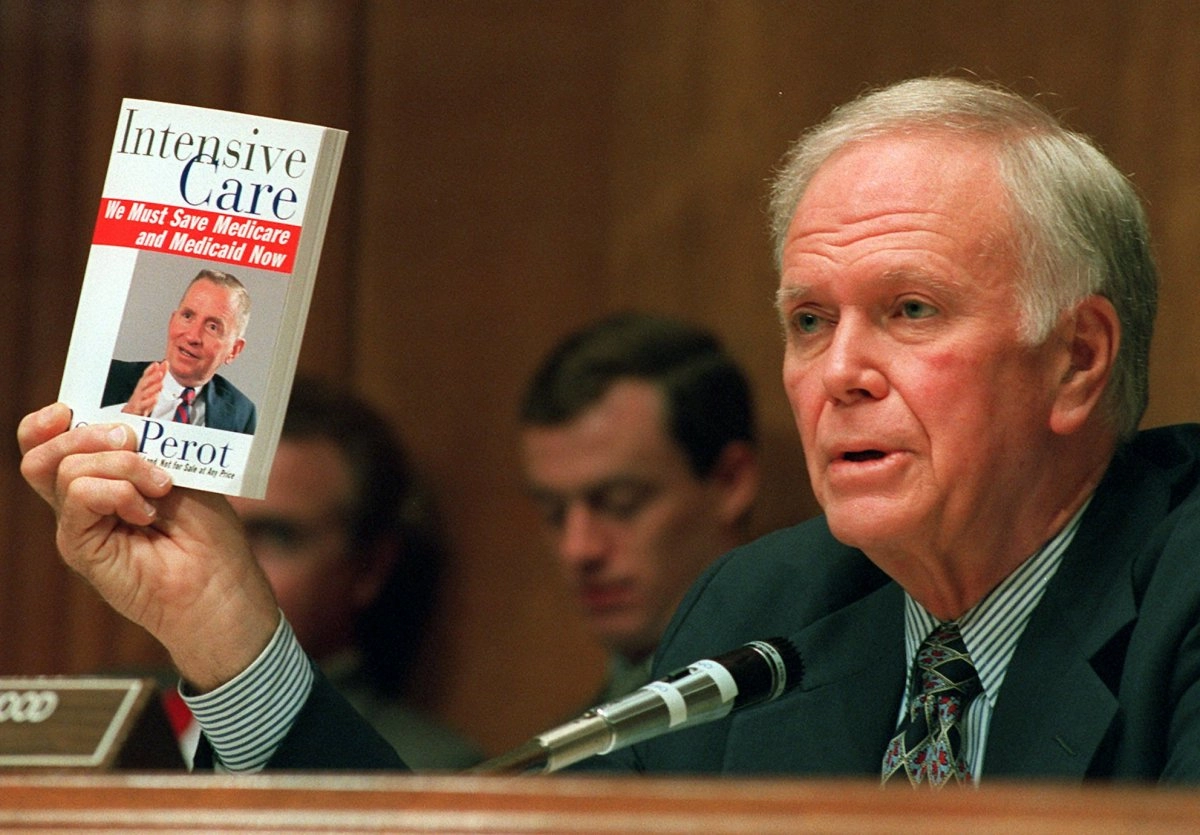

Bob Packwood, one of the most influential politicians in Oregon during the second half of the 20th century and a key figure in important legislative reforms in the United States, died on June 6 at the age of 93 in a care facility, a spokesperson for his family confirmed to The Oregonian newspaper.
His death closes the story of one of the most complex and contradictory trajectories in American politics: a senator recognized for his ability to build consensus and negotiate bipartisan agreements, but whose career ended up involved in accusations of sexual harassment and assault that led to an unprecedented ethics investigation in the Senate.
From young Republican promise to national figure
Born in Portland, Oregon, in September 1932, Robert William Packwood was the son of a utility industry lobbyist. He studied Political Science at Willamette University and later Law at New York University.
His political rise was rapid. After being elected to the Oregon House of Representatives in 1962, he established himself as one of the emerging figures of the state Republican Party. In 1968 he defeated veteran Democratic Senator Wayne Morse and reached the United States Senate at just 36 years old, becoming the youngest senator in the country.
Over the next 26 years, he accumulated influence in Washington and came to chair the powerful Senate Finance Committee, from where he promoted the historic Tax Reform Act of 1986, considered one of the most profound modifications to the US tax system.
An atypical republican
Packwood stood out for positions that frequently clashed with conservative sectors of his party.
He was one of the first Republicans to publicly support the right to abortion and introduced an initiative to legalize it years before the Supreme Court recognized that right in the landmark Roe v. Wade.
He also became one of the first Republican senators to call for the impeachment of President Richard Nixon following the Watergate scandal and later opposed the nominations of Robert Bork and Clarence Thomas to the Supreme Court because of their stances on abortion.
His political independence allowed him to build alliances with feminist groups and environmental organizations, in addition to establishing a reputation as a skilled negotiator on fiscal and budget issues.
His legislative accomplishments also include his role in protecting the Hells Canyon Recreation Area on the Oregon-Idaho border by preventing dam projects on the Snake River.
The scandal that ended his career
Packwood's public image began to crumble in the 1990s, when several women reported being victims of inappropriate behavior, sexual harassment and assault by the senator.
The accusations gained notoriety after a journalistic investigation that collected testimonies from women who claimed to have been kissed, groped or approached in a non-consensual manner by Packwood both in his offices and in the Capitol facilities.
As the months passed, new allegations emerged and the Senate Ethics Committee began a formal investigation.
During the trial, Packwood attempted to defend himself by attacking the credibility of his accusers and even used fragments of his personal diaries to justify his actions. However, the strategy ended up aggravating their political situation.
In September 1995, the Ethics Committee concluded that he had engaged in sexual misconduct and obstruction of the investigation. The committee members voted unanimously in favor of his expulsion.
Hours before the Senate formalized the measure, Packwood submitted his resignation.
The later years
After leaving politics, Packwood stayed away from the national prominence that had marked much of his public life.
He married Elaine Franklin, who had been one of his main collaborators, and worked for several years as a consultant and lobbyist in the private sector.
Although he continued to occasionally participate in debates on fiscal policy and remember his role in the 1986 tax reform, he never regained the relevance he had during his time in the Senate.
His legacy remains divided between those who highlight his legislative contributions and those who consider that the accusations that precipitated his fall constitute the most significant aspect of his public career.
Packwood is survived by his wife, Elaine Franklin; his children, William Packwood and Shyla Moeller; and a political history that continues to be the subject of debate three decades after his departure from the Senate.