

What changes for Colombia with the closeness that Trump maintains with De la Espriella after the tensions with Petro
A new chapter opens in Bogotá-Washington relations, the most important alliance for Colombia in the world
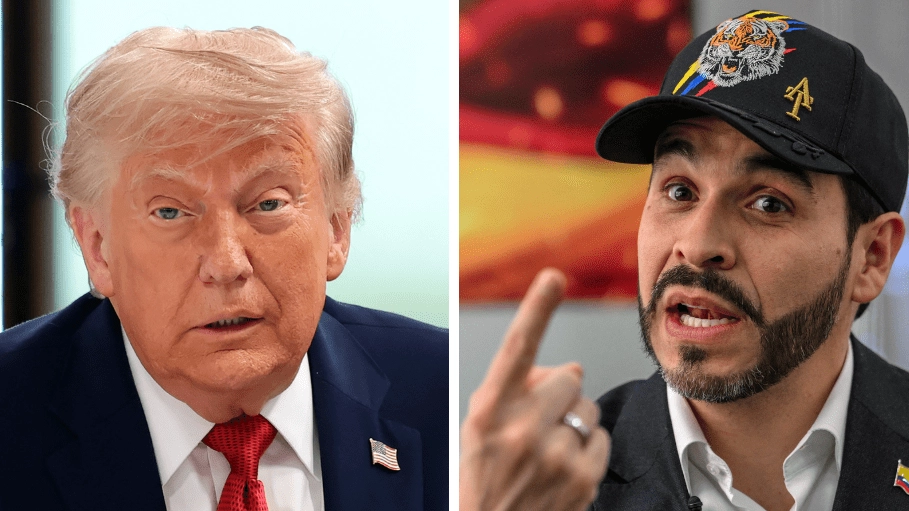

Donald Trump's government in the US closely followed the presidential race of Abelardo de la Espriella in Colombia.
He openly supported his candidacy and the Secretary of State, Marco Rubio, was one of the first world leaders to congratulate the right-wing “outsider” after winning the elections on Sunday, June 21.
“The Trump administration looks forward to working closely with your next administration to advance regional security cooperation, end illegal migration to the U.S., and tighten our economic ties,” Rubio said on X.
De la Espriella has American nationality and has said that he wants a close relationship with Trump, of whom he declares himself an admirer.
He also seeks a tough-on-crime strategy that aligns with that of the US president.
During the four years of Gustavo Petro's progressive government, relations between Washington and Bogotá were turbulent.
After Trump arrived at the White House in January 2025, there were diplomatic crises and disagreements on security, drug policy and migration.
Relations eased in February of this year after a friendly visit by Petro to Washington, but the mistrust between the Colombian and the American remained latent.
De la Espriella's victory opens another chapter in US-Colombia relations, which despite losing steam in recent years, remains the most important alliance for the South American country.
“A victory of his own for Trump”
“This feels like a victory for Trump,” Sergio Guzmán, director of the geopolitical analysis consultancy Colombia Risk Analysis, analyzes for BBC Mundo.
Colombia was one of the few countries in South America with a left-wing government, Petro's, that functioned as a firewall to Trumpist aspirations in the region.
With the victory of De la Espriella, according to the pre-count, and what also seems like a victory for Keiko Fujimori in Peru, only Uruguay and Brazil (the latter country with elections in sight in November), retain left-wing presidents, more distant from the US under the Republican mandate.
The reluctance of the governments of Brasilia and Bogotá has somewhat limited Trump's efforts to take military action against drug trafficking and crime in the region.
De la Espriella has been emphatic in his intentions to bomb “narcoterrorist” camps and drug shipments in Colombia, the main producer and exporter of cocaine in the world and the scene of an armed conflict with multiple actors that has lasted more than 60 years.
This coincides with the US military strategy, which since September 2025 has attacked dozens of alleged drug vessels, leaving more than 200 dead on the South American coasts, has captured an acting president, Nicolás Maduro, and has carried out joint operations with Venezuela and Ecuador against organized crime.
With Colombia, despite the disagreements with Petro, the transnational and intelligence cooperation that has characterized the relations between both countries for decades continued.
“De la Espriella's victory is part of the US priorities in the Western Hemisphere, which in addition to anti-drug policies and pursuing criminal organizations, also involve controlling and repatriating migrants,” explains Elizabeth Dickinson, from the International Crisis Group analysis center.
“The challenge for the next Colombian president will be to ensure that his priorities and what is best for his country coincide with that agenda (that of the US) while protecting its civilian population in a context of political division and internal conflict,” adds the expert.
Almost 13 million Colombians voted for De la Espriella, while 12.7 million voted for his rival, the Petrismo candidate Iván Cepeda, according to the pre-count.
With these data so tight, it is expected that there will be active resistance to some of the policies that the president-elect wants to implement, although in his celebration speech he was more conciliatory than in the campaign and promised to govern "for all Colombians."
The Colombia that De la Espriella receives
Four years of “total peace” by Petro, a strategy that prioritized negotiation over the fight with armed actors, leaves a Colombia that is unable to stop the expansion of these groups that began in 2018, two years after the demobilization agreement between the State and the FARC guerrilla.
The South American country today has the second highest homicide rate in the region after Ecuador and a historical record of coca leaf crops. These are data that, however, have slowed their growth rate in recent years.
Not so that of armed groups, which today have more than 27,000 members after doubling the number in the last five years.
Now De la Espriella proposes favoring the confrontational path, disarming the talks and increasing military spending.
It is not something new in Colombia. Different governments follow one another with strong-arm and extended-hand recipes to put an end to the armed conflict. None have demonstrated absolute success.
There does seem to be a certain consensus that Plan Colombia, a million-dollar package of military and economic aid from Washington to Bogotá in early 2000, together with the “Democratic Security” strategy of former President Álvaro Uribe starting in 2002, weakened the FARC militarily.
And that facilitated the position of the subsequent government of Juan Manuel Santos (2010-2018) to force them to negotiate and lay down their weapons.
The problem, several analysts agree, is that after this peace process, challenges such as inequality, the strength of illicit economies and the limited state presence in remote areas have not been resolved.
All of this has been a breeding ground for the proliferation of crime, new armed groups and income such as drug trafficking and illegal mining.
De la Espriella has spoken about the possibility of reviving a “Plan Colombia 2.0.”
History has not shown that a strong hand resolves the armed conflict and drug trafficking. Perhaps that is why the president-elect has also promised to bring investments to the regions most affected by violence and crime.
The challenge is huge and a double-edged sword.
Confrontational initiatives such as Plan Colombia and Uribe's Democratic Security, apart from military successes, are attributed with empowering paramilitary groups that ended up involved in massacres against the civilian population.
The questions
Right now the US would have the governments of Ecuador and Venezuela, surely Peru and soon Colombia, aligned with its security vision. There are four countries facing major security and organized crime challenges.
For Dickinson, a positive view of this situation is that there is more regional cooperation.
But there are also risks: “Washington pursues its agenda more than the local interests of those most affected by the violence that has spread throughout the region.”
It is one of the several balances that De la Espriella will have to play in his relationship with the United States.
The president-elect has already been accused by his rivals of supposedly prioritizing the interests of that country over those of Colombia.
For Guzmán, another of his concerns is that, despite De la Espriella's victory, the US does not have the generosity that it previously had with the country.
"There is an expectation that the US will return to Colombia the military and social assistance it had received. I find that difficult, given that Trump is not a particularly generous leader," says the analyst.
Colombia was one of the countries most affected by cuts to USAID, the US cooperation agency that allocated millions of dollars for social and development projects in the South American nation and that the Trump government dismantled.
In recent years, while the US seemed to be distracted from its interests in the region, Colombia, like other Latin American countries, has moved closer to China, Washington's biggest geopolitical rival.
Today the Asian giant disputes the United States for the position of Bogotá's largest trading partner, with experts predicting that it could surpass it in the coming years.
“I think it is likely that the US will ask Colombia to split its relationship with China, which was strengthened with Petro, but it will not be that simple because China occupies an important investment space that De la Espriella will not be able to ignore and the US will not be able to occupy,” analyzes Guzmán.
Just over two months before De la Espriella takes office, his foreign relations with the most powerful country in the world seem more complex than what he has conveyed in the campaign.