

How to know if you need a water filter in your home
Utility companies treat water with disinfectants like chlorine to kill harmful germs before it reaches homes

Most tap water in the United States meets the standards set by the Environmental Protection Agency (EPA). According to the Safe Drinking Water Act, more than 90 contaminants are monitored in public systems, ensuring that the water is suitable for human consumption. Despite the high quality of tap water, a market for water filters has emerged, ranging from simple models to complex systems. Experts, however, caution that many households do not require a comprehensive filter. The decision to purchase one should be based on local water quality, not trends, experts say. Utility companies treat water with disinfectants like chlorine to eliminate harmful germs before it reaches homes, reports the Associated Press (AP). “Unless your health is affected, you’ve received a notification from your water system, or there’s a credible news report stating that your water is not safe to drink, you shouldn’t feel the need to use a filter,” says Gregory Pierce, director of the Human Right to Water Solutions Lab at UCLA. How to Assess Water Quality Consumer Confidence Reports provided by utility companies are an essential first step in assessing water quality. These reports are usually available on the city or utility company website.
Water systems are generally only responsible for the water until it reaches a private property, meaning water quality can vary from building to building, they warn.
For added peace of mind, homeowners can opt for test kits that analyze for specific contaminants, though this does come at an additional cost.
Filter Selection and Efficiency
When choosing a filter, it's important to consider which contaminants you want to remove.The filters reported by NSF and the American National Standards Institute offer useful information about their capabilities, including 42 for taste or odor problems, 53 for health effects, and 401 for emerging compounds. Experts suggest that a basic filter may be sufficient if the primary goal is to improve the taste of the water and not necessarily its safety. “Not all filters are suitable for all purposes,” Sydney Evans, a scientific analyst who led a water filter testing project at the Environmental Working Group, told the AP. “And even if there were a filter that did it all, you might not need it.”
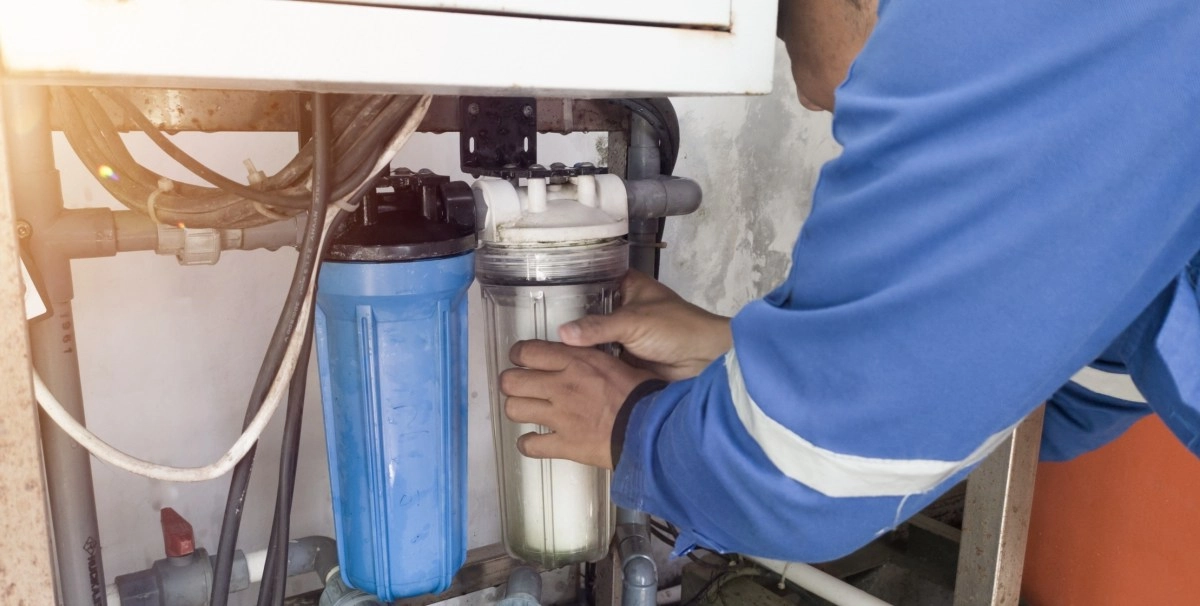
In addition, attention must be paid to the correct installation and maintenance of the chosen system to guarantee its effectiveness.
The Environmental Protection Agency (EPA) states that filters can reduce PFAS levels, and also lead, although the latter often exceeds the capacity of filtration systems, so using these devices is always a good idea.
Criteria for deciding on the type of filter
To choose the most suitable water filter for your home, first assess the specific water quality in your area, such as common contaminants (chlorine, sediment, bacteria, or heavy metals), and your daily consumption needs.
Water quality. Analyze the water from your source (municipal, well, or cistern) to identify problems such as excess minerals, microorganisms, or chemicals; A basic test will guide you to the right type of filter.
Capacity and Use. Consider your family size and daily flow; choose point-of-use (under-sink) systems for drinking/cooking or point-of-entry systems for the whole house. For large homes, prioritize models with high production (e.g., 3,000 L/day).
Cost and Maintenance. Evaluate the initial price, filter replacement (every 6-12 months), and energy consumption; simple filters are cheaper, but reverse osmosis requires a larger investment. Check certifications such as NSF for proven effectiveness.
Installation and Reviews. Check ease of installation (faucet, pitcher, or professional) and user reviews for actual durability. Opt for systems resistant to pressure variations.