

Israel has already met more than half of its objectives in the war in Iran: Netanyahu
Despite optimism over military advances, Netanyahu avoided committing to a specific timeline for a cessation of hostilities
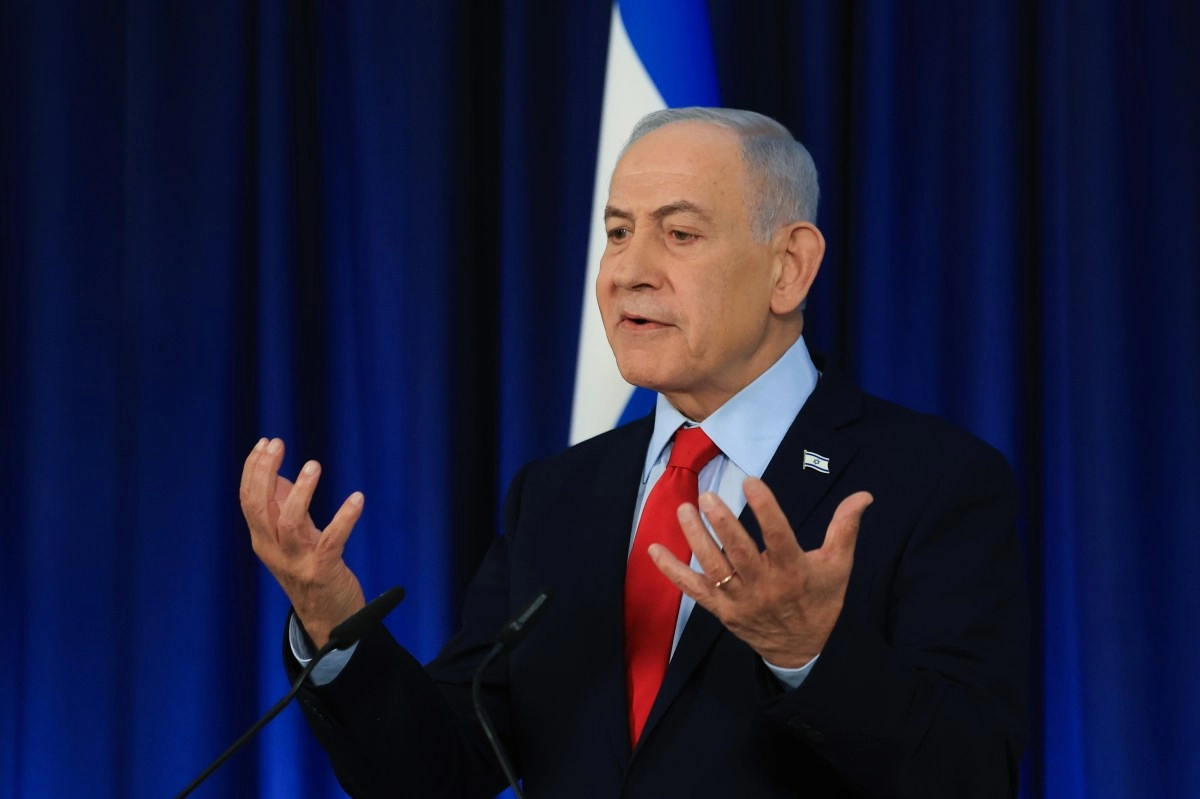

Prime Minister Benjamin Netanyahu asserted that Israel has achieved “more than half” of the objectives set in the military offensive against Iran, launched on February 28 in coordination with the United States. The operation, according to official figures, has left more than 2,000 dead in Iranian territory. In an interview with Newsmax TV, Netanyahu emphasized that the Israeli and Washington war machine is systematically dismantling the operational capacity of the ayatollahs' regime. "We are about to destroy their arms industry, their entire industrial base, razing everything, entire plants, and their nuclear program itself," the Israeli leader stated firmly. Military advances without defined deadlines: Netanyahu avoided specifying a date for the end of the offensive, stressing that progress should be measured by objectives achieved, not by established timelines. "We are past the halfway point in terms of goals, but not necessarily in terms of the schedule," he pointed out. The Israeli leader highlighted the strikes against the Iranian Revolutionary Guard, as well as the elimination of key figures in the regime. Furthermore, he asserted, without providing evidence, that a large majority of the Iranian population desires a change of government. “The regime will eventually collapse from within,” he predicted. According to Netanyahu, the joint strategy with Washington seeks to degrade Iran's military, missile, and nuclear capabilities, while fostering internal pressure to weaken the regime. Regional Escalation and International Pressure: Amid the conflict, US President Donald Trump warned that he could intensify attacks against critical Iranian infrastructure if a peace agreement is not reached in the short term. For his part, Secretary of State Marco Rubio asserted that military objectives could be achieved “in weeks, not months.” The tension has also impacted energy markets, with the price of Brent crude oil exceeding $115 per barrel.Driven by fears of supply disruptions, especially in the strategic Strait of Hormuz.
In parallel, Israel has expanded its operations in southern Lebanon, ordering evacuations in several locations, increasing concerns about a possible expansion of the conflict in the region.
Netanyahu defended the offensive against international criticism, rejecting the notion that it constitutes an escalation. “It is not an escalation, it is prevention,” he stated, warning of the risk of allowing Iran to develop nuclear weapons. As the offensive spreads to southern Lebanon, Netanyahu has had to contend with diplomatic challenges. Following a wave of international condemnation, the prime minister recently revoked the ban on Latin Patriarch Pierbattista Pizzaballa entering the Church of the Holy Sepulchre, granting him “full and immediate” access after the controversial veto initially imposed for security reasons. Meanwhile, the international community remains divided over a war that continues to escalate geopolitical tensions and whose effects are already being felt far beyond the Middle East.