

Concern about the World Cup? Six matches interrupted by storm at the Club World Cup
The Benfica-Chelsea match, the longest of the tournament, once again raised alarms about climate safety in the United States
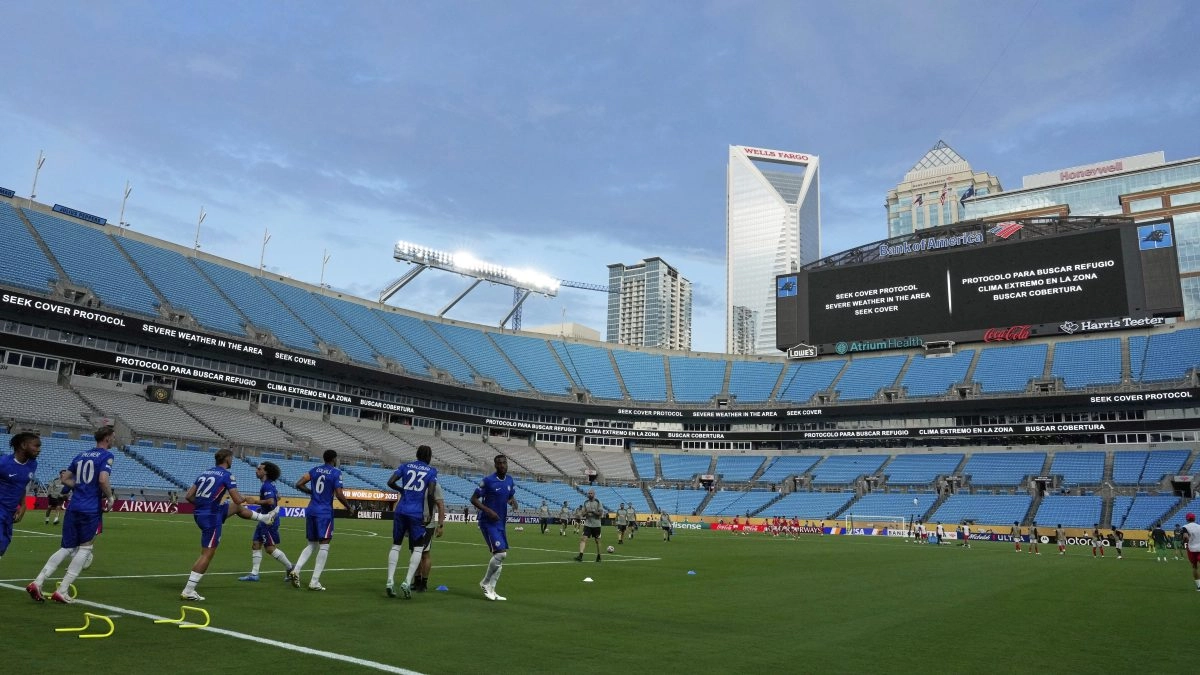

The threat of a thunderstorm once again impacted the progress of the 2025 FIFA Club World Cup. This time, it was the turn of the duel between Chelsea and Benfica, played at the Bank of America Stadium in Charlotte, where a forced interruption halted the match with five minutes left in regulation time.
The score at that point was 1-0 in favor of the English team, thanks to a goal from Reece James in the 64th minute. However, the match ended up turning into a true football marathon.
Between the suspension and the subsequent restart, more than two hours passed. Upon returning to the field, a handball by Malo Gusto inside the box allowed Angel Di Maria to equalize from the penalty spot in the 90+8 minute, sending the game into extra time that ended in a 4-1 rout for the Londoners.
Beyond the result, the match went down in history as the longest in the tournament: it lasted four hours and forty minutes from the first whistle to the end.
Six matches affected: the logistics of the World Cup, in question
The most alarming thing is that this has not been an isolated case. The clash between Chelsea and Benfica was the sixth match of the tournament to be interrupted due to thunderstorms. Already in the group stage, Benfica themselves had experienced a similar suspension against Auckland City, which was extended by two and a half hours.
Other matches were also affected: Pachuca vs. Salzburg was stopped for one hour and 40 minutes; Ulsan vs. Mamelodi Sundowns for an hour; Boca Juniors vs. Auckland City for 60 minutes, and Palmeiras vs. Al Ahly for 45 minutes.
The US protocol for electrical discharges at outdoor events is clear: any lightning strike near the stadium requires immediate evacuation of the field of play. Although these measures seek to safeguard the safety of players and fans, the recurrence of suspensions is beginning to cause concern.
With the 2026 World Cup looming, the string of interruptions at the North American venue is putting the spotlight on logistical and meteorological planning.
While storms are unpredictable, their frequency at this year's Club World Cup sends a clear message: alternative scheduling plans, more covered infrastructure, and preventative strategies will be essential if we want to prevent matches of this magnitude from once again becoming drawn-out episodes under the threat of weather.