

Bielsa says goodbye to Uruguay saying that the result in the 2026 World Cup was “unjustifiable”
'El Loco' Bielsa closed his time at La Celeste after being eliminated in the group stage of the World Cup
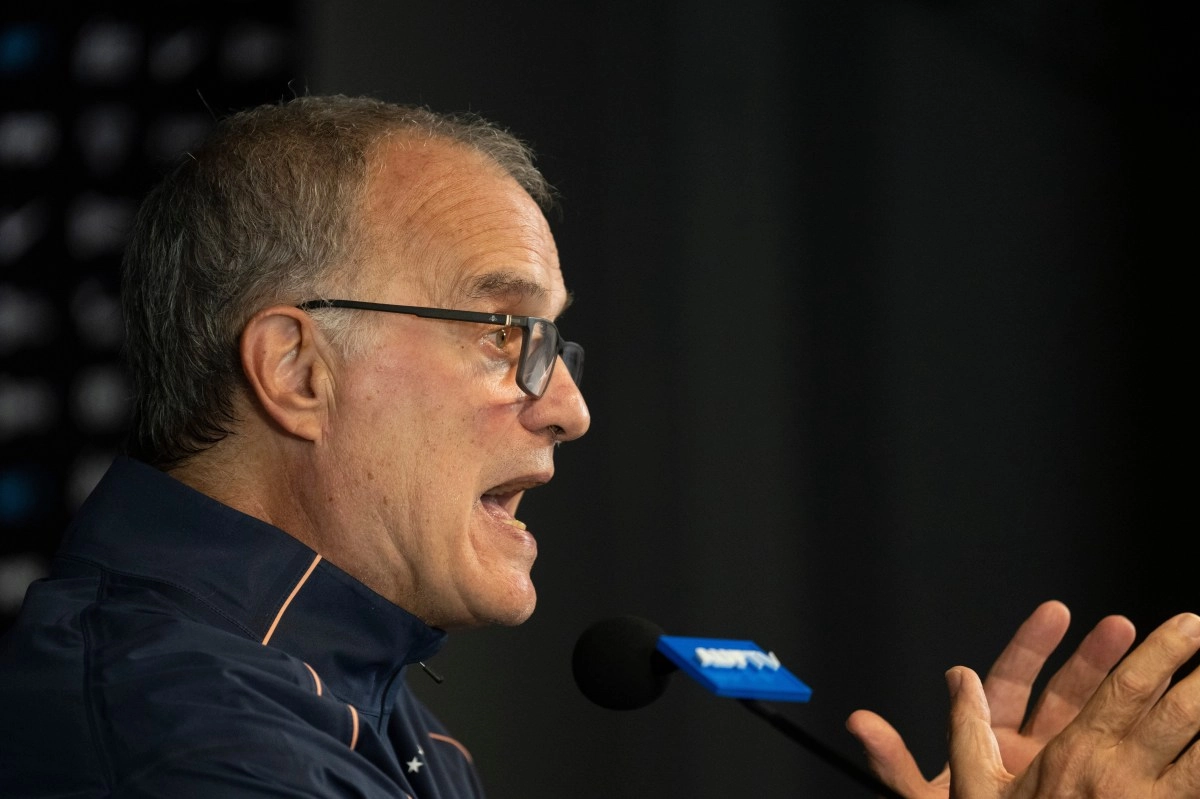

Marcelo Bielsa confirmed this Tuesday the end of his time at the head of the Uruguay national team and personally assumed the sporting failure that meant elimination in the group stage of the 2026 World Cup. During a press conference marked by the balance of the process, the Argentine coach described the outcome as an "unforeseen" situation, acknowledged a "very great frustration" and maintained that the place reached by the team does not have a sufficient sporting explanation.
The coach noted that he feels he was indebted to the fans and admitted that the collective performance did not live up to the expectations generated around the project.
Bielsa expressed that he does not find arguments to justify the final result and recognized that the administration of the team's potential did not produce the expected performance. Even so, he clarified that both the coaching staff and the footballers carried out the work to the maximum of their possibilities.
During the appearance he also rejected that there were any tactical changes imposed by the group before the decisive match against Spain. “It was played according to my ideas, which were always the same,” he said. He added that accepting modifications of this type would imply transferring responsibilities that do not correspond to the players.
The relationship with Valverde and the internal changes in the process
One of the central points of the conference was dedicated to Federico Valverde, after versions that pointed to an alleged tension between the two. Bielsa denied any conflict and explained that he even made more concessions with the midfielder than with any other member of the squad.
According to him, at the beginning of the qualifying rounds he told the Real Madrid player that he would need to use him in different functions on the field. Among those possibilities he mentioned performances as a winger, left winger or interior midfielder.
The coach recalled that Valverde accepted each scenario proposed with “absolute generosity” and total willingness.
During the World Cup, Bielsa recognized that the Uruguayan captain acted in sectors of the field far from his ideal position, especially as an offensive midfielder in the first matches. Even so, he defended his contribution and assured that the performance was better than what was externally perceived.
"If there is any conflict, I don't know the origin. I have never had a problem with Valverde and he has always known the enormous respect I have for him," he declared.
Bielsa also revealed that before the tournament he held meetings with members of the locker room. He explained that the footballers requested changes in the work dynamics and that he accepted some adjustments, including going from training sessions divided into two groups to unified sessions and reducing the frequency of technical talks.
He indicated that these technical meetings never lasted more than ten minutes and were aimed at studying rivals, arbitrations, corrections and motivational aspects. Regarding having accepted the requests, he maintained that "the recipient of the message has the right to say what he prefers."
In the final stretch, the coach addressed the decision to replace Fernando Muslera during halftime of the match against Spain. He explained that the goalkeeper, affected by the mistake made in the rival goal, told him that he felt emotionally beaten and preferred to leave the game so as not to harm the team's chances. Bielsa described that reaction as something unusual in football.
With this public intervention, the closing of a cycle that ended earlier than expected for Uruguay in the World Cup was formalized.