

Julián Quiñones, the ounce that moves all of Mexico
Julián Quiñones has become the naturalized player with the most impact on the Mexican team and the goal against Ecuador reaffirmed his great moment
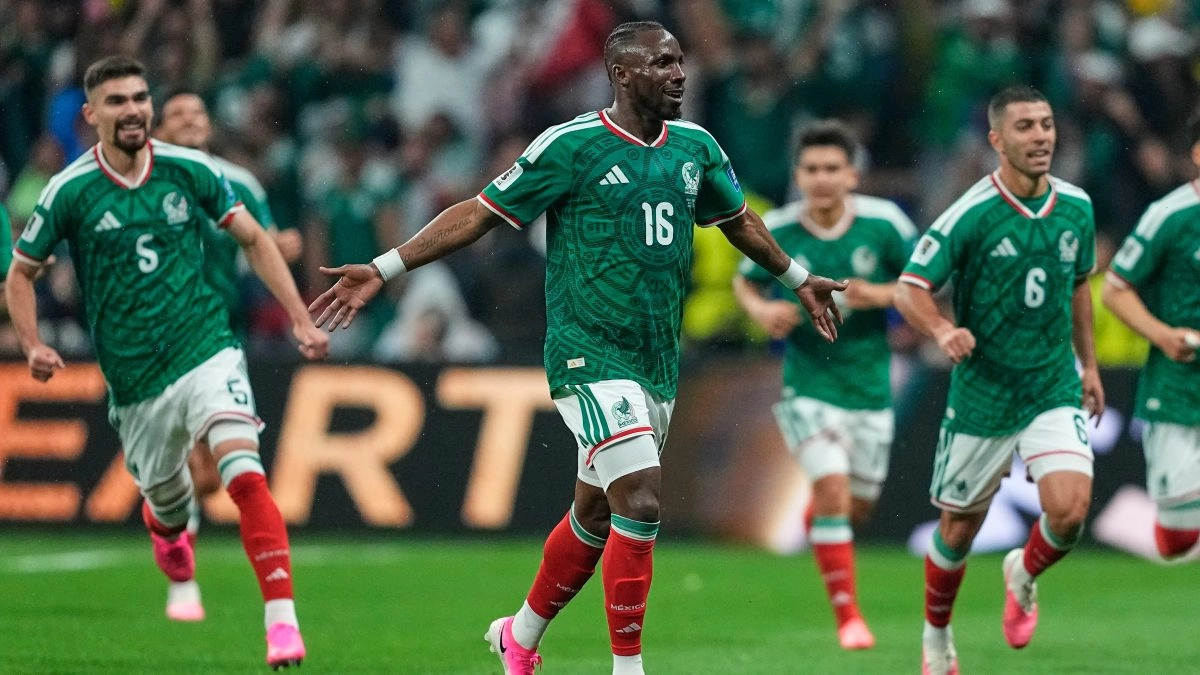

At the beginning of 2026, Julián Quiñones was the most discussed player in the Mexican national team, especially due to his limited performance with the national shirt and even more so because of what seemed like a soccer exile in Saudi soccer, but in six months and just fifteen days he has transformed criticism into praise at the FIFA World Cup.
Without exaggeration, his performance has made him the ounce that has moved an entire country hoping that its team will change history for the first time in a World Cup tournament. The facts favor him: three goals in four games to put him just one behind Luis “Matador” Hernández, who in France 1998 managed to score four goals.
Quiñones has contributed to changing criticism into praise, rejection into acceptance and, above all, a recognition of a fan base that has questioned too much the incorporation of naturalized players and where the experience in World Cup tournaments has not been as productive as could be expected.
But the one born Magüí Payán, department of Nariño, 675 kilometers from the capital of Colombia, Bogotá, finally found the niche of opportunity to pour all the soccer experience acquired in Mexican soccer eleven years ago, when he was not even of age he embarked on the adventure of accepting an offer from the Tigres to join their basic forces.
The bet proved him right and after a career from less to more with the northern cats, Atlas, América and Al-Qadsiah of Saudi Arabia, which have allowed him to finally find his footballing zenith with goals against South Africa, the Czech Republic and Ecuador, he suddenly became the best naturalized player in the history of the Mexican national team.
History indicates that so far Quiñones has placed himself at the top of the 19 naturalized players who have worn the shirt of the Mexican national team and who are distributed as follows: Argentina: 10 players: Gabriel Caballero, Guillermo Franco, Matías Vuoso, Rogelio Funes Mori and Germán Berterame).
Spain: 4 players (including Carlos Blanco, José López Herranz and Álvaro Fidalgo).
Brazil: 2 players (Antonio Naelson “Sinha” and Leandro Augusto).
Peru: 1 player (Julio Lores, the first naturalized player to play for Mexico in 1935).
Colombia: 1 player (Julián Quiñones)
Perhaps the closest thing to success in a World Cup was in 2006 when Antonio Naelson “Sinha” had flashes of his quality against Iran and later against Argentina, where Mexico was left out due to a great goal from Argentine Maxi Rodríguez in extra time.
Quiñones' performance
The success of Julián Quiñones in the Mexican team in the 2026 World Cup is simply summarized in the fact that “Vasco” Aguirre found him the ideal position as a left midfielder, moving towards the center of the area, but without keeping a fixed position in that area.
That is to say, his performance has been flexible, coming from behind and taking advantage of his great cannon to establish the difference in three matches in Mexico that have made him the current figure of the Mexican team.
The rest have had to deal with the excess of criticism and questioning that has even gone beyond the sporting field and has affected their private lives, with the case of Guillermo Franco, who after the 2010 World Cup was harshly questioned, while a group of fans tried to attack his wife in the boxes of the stadium where Mexico was eliminated by Argentina.
The reality is that Quiñones, with his performance in the 2026 World Cup, has transformed those questions for those naturalized into praise and that the Mexican fans hope will continue to exist.