

Jeremy Doku left the Belgium camp due to the birth of his son
There are mixed opinions about Jeremy Doku's decision. Belgium's chances of progressing to the next round are complicated and Doku will not be with the group
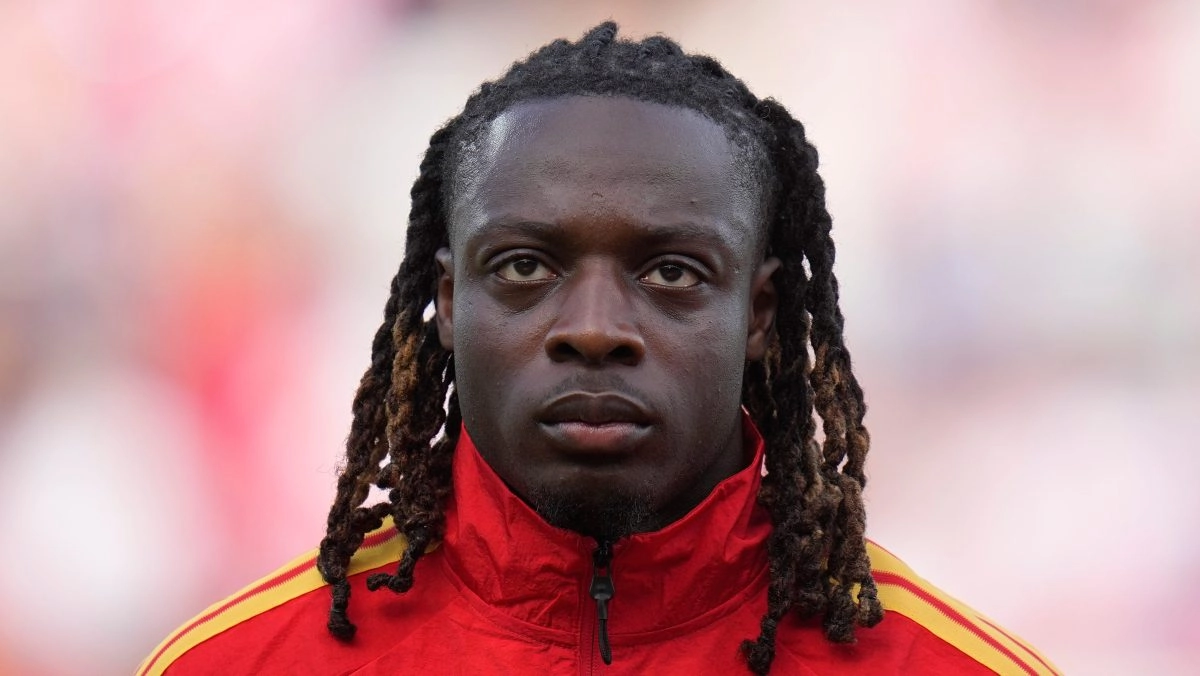

Manchester City winger Jeremy Doku made it clear that for him family comes first. The player became a father this weekend and left Belgium's World Cup camp to be present at the birth of his son.
Doku traveled to London from the United States after being informed shortly before the start of the match between his team and Iran on Sunday (0-0) in Los Angeles that the birth of his son was imminent, according to a statement from the Royal Belgian Football Association.
The player had been ruled out of the match due to a respiratory illness, but received permission to travel with a team doctor to accompany his wife, Shireen, at the birth of their son, Praise, "after having received adjusted medication for several days."
Although the winger was expected to return to the Belgian camp this Tuesday, his decision to leave it to attend the birth of his son sparked some criticism, to which numerous messages of support have quickly responded.
France Pierron, presenter of the L'Equipe channel, criticized him on air and said that a father is "completely useless" in the birth of his child, describing childbirth as a "disgusting" moment.
In a statement, L'Equipe apologized and stated that Pierron's statements are "very far" from its values.
The presenter also apologized, and French media indicated that she had been suspended from her duties at least until July 3, while L'Equipe analyzes the situation.
The reaction in the world of football—and outside of it—has been unanimous.
Players, “like gladiators in the Colosseum”
Doku played 86 minutes in Belgium's 1-1 draw with Egypt in their Group G debut, but sat out the 0-0 draw against Iran due to illness.
Initially the birth was scheduled for the second week of July, which would have meant that Doku could miss the quarterfinals if Belgium qualified.
“If you ask me what I want, my answer is that no one wants to miss the birth of their first child,” Doku told Reuters about that possibility, which is now ruled out.
England striker Ollie Watkins, who has two children, supported Doku.
“I think someone called it disgusting, and that's no way to describe a birth in the first place,” she said.
“I saw what my wife had to go through and it was relatively easy, but I know family and friends who have not been that lucky,” he added.
"Welcoming your first child into the world is a one-time thing and it's a blessing. There are a lot of times during the season when you're away from family and friends, and it's very difficult, so missing that would be tough and I understand where you're coming from."
The Professional Footballers' Association (PFA) of the Premier League, the English league, said that the demands placed on players should not come at the expense of "fundamental family moments."
“While every situation is different, we believe players should be supported to balance their professional responsibilities with important life events,” a PFA spokesperson said.
“Supporting players as people, not just athletes, is an important part of creating a healthy professional environment.”
The Fatherhood Institute, which promotes the active role of men in caring for their children, also endorsed Doku.
“This reminds me of the gladiators in the Colosseum,” deputy director Jeremy Davies told BBC Sport.
"We want these men to be heroic figures who exist for our entertainment. They make a lot of money, but there are things that are worth much more."
Regulation and precedents
FIFA rules establish that maternity leave for female footballers must be “a minimum period of 14 paid weeks”, of which eight must be taken after giving birth.
There is no specific regulation on paternity leave, forcing men's soccer players to manage their responsibilities on their own.
One club even had a car ready outside the stadium for a player whose partner was about to give birth, while a coach of a team in Europe's top flight did not travel to a match to accompany his wife, who was expecting their second child.
Instead of being on the bench, he followed the game on television and transmitted instructions to his coaching staff.
“She had a headset connected to the bench and, ten minutes after the match started, she started having labor pains,” explained the coach, who now works in the Championship.
"We were leading 2-1 at halftime, but the labor was progressing. I called the hospital to say that we were on our way, but I had to stop because they gave us a penalty," he said.
"We scored, I knew we had won the game and we left immediately. Our daughter was born two hours later.
“It is less common in coaches because they are usually older, but football doesn't stop... you have to win the next game,” he said.
Doku would not be the first player to put the birth of his child before football.
In 2018, Fabian Delph left England's World Cup camp in Russia to return to the United Kingdom and attend the birth of his daughter.
David Silva, for his part, missed two Manchester City games after the premature birth of his son in 2018.
And former Manchester United goalkeeper David de Gea took extended leave during the Covid pandemic, when his partner Edurne gave birth to their daughter in 2021.
Others, however, have not been able to be present.
This same weekend, Norwegian defender Leo Østigård watched the birth of his son via FaceTime while he was with his team at the World Cup.
Rúben Neves experienced a similar situation in January 2021, following the birth of his third child on his phone from the Wolverhampton bus after a 1-0 loss to Crystal Palace.
His wife had returned to Portugal because her doctor was there, but Neves' plans to join her were thwarted by travel restrictions due to the pandemic.
The really important things
When Roy Keane was assistant manager of the Republic of Ireland, he joked that Robbie Keane should be available to play in a game against Germany after the birth of his son “unless he is breast-feeding”.
Former Brentford and Tottenham manager Thomas Frank, who now commentates on the World Cup for the BBC, has handled similar situations.
“Football is the most important of the things that are not important, so it is not important at a time like this,” he said.
"Watching your wife or partner give birth is one of the most important experiences you'll ever have, and I think it's also very important to be there. It's always been a priority for me to tell my players. I told them, 'It's up to you, but I recommend you be there.'"
Frank stated that if Doku returned home for the birth of his child it would be “the right thing to do,” adding: “When he comes back, he will be on top.”
What has happened in other sports
Last week, cricketer Jamie Smith missed England's loss in a match against New Zealand following the birth of his daughter.
Basketball player Anthony Edwards left a game at halftime in 2024 so he could attend the birth of his daughter.
And British tennis legend Andy Murray said in 2016 that he would leave the Australian Open early if his wife, Kim, went into labor.
“I would feel much more disappointed winning the Australian Open and not being at the birth of my son,” he said at the time.
But English darts player Rob Cross missed the birth of his third child in 2017 in order to qualify for the World Matchplay tournament.