

World Cup 2026: everything you need to know about the World Cup in the United States, Mexico and Canada
The 2026 World Cup will be the largest and longest in the history of the championship. These are the keys to follow in the 43rd edition of the World Cup.
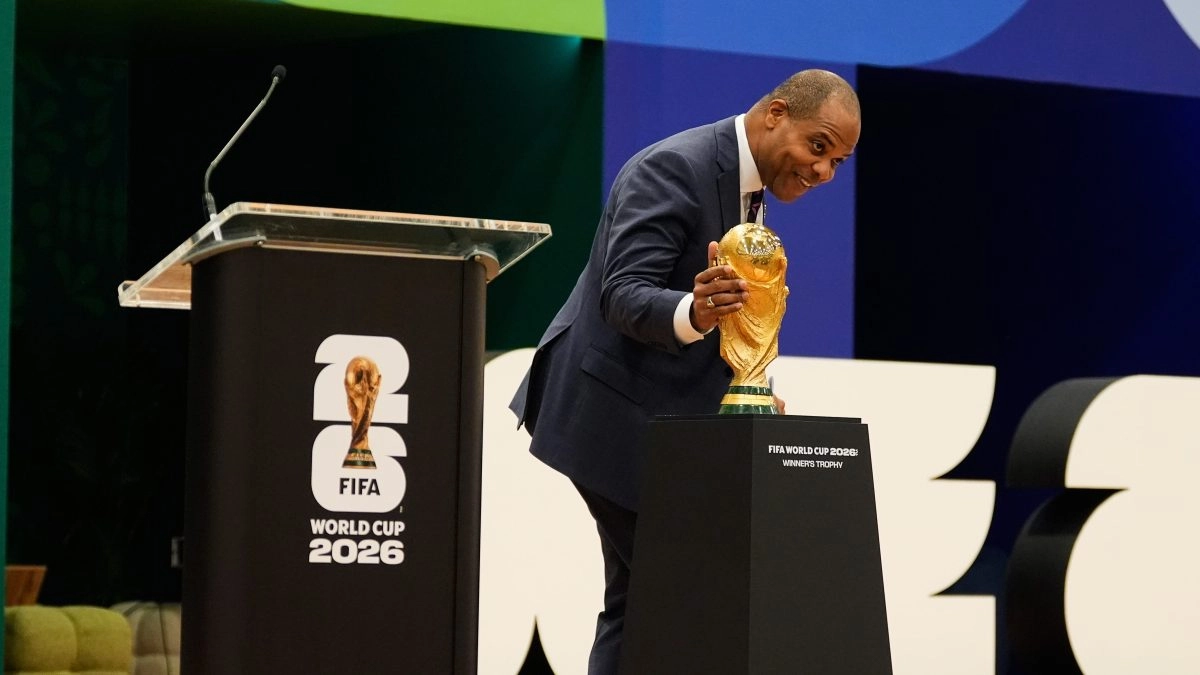

The countdown is already underway for the 2026 World Cup, a championship that will have 48 participating teams and more than a hundred matches for the first time.
This 23rd edition of the World Cup will be held in the United States, Mexico and Canada from June 11 to July 19.
A record number of 48 teams - 16 more than those that participated in Qatar four years ago - will seek the 2026 trophy.
This will make the championship the largest in history and will expand the number of matches to 104 games, which will be played for the first time in three countries.
Here we review what you need to know about the World Cup held in North America.
What are the 12 groups?
This World Cup will have a new format of 12 groups of four teams.
The top two finishers from each of the 12 groups, as well as the eight best third places, will advance to a knockout phase.
In the case of the best third places, those teams with the most points, the best goal differences and the most goals scored will be the first three criteria for their classification to the final round.
When is it played?
The championship will be played between June 11 and July 19.
This means that it will have a record duration of 39 days, ten more days of football compared to the 29 that Qatar lasted and the 32 in the 2014 and 2018 editions.
The opening on Thursday, June 11, will be at the historic Azteca Stadium in Mexico City, with the Mexico vs. South Africa.
In total there are 72 group stage matches in 17 days, from the opening until Saturday, June 27.
Then will come the round of 32 (June 28-July 3), followed by the round of 16 (July 4-7), quarterfinals (July 9-11), semifinals (July 14-15) and third place match (July 18).
The new world champion will be crowned at MetLife Stadium in New Jersey on Sunday, July 19.
What are the headquarters?
This World Cup will be held for the first time in 16 cities in three countries: 11 in the United States, three in Mexico and two in Canada.
Since FIFA restricts pre-existing commercial names of stadiums, for the 2026 World Cup the venues will be called by the name of the host city.
In Mexico the inauguration will be at the Mexico City Stadium - a venue that will make history as the first to have hosted three editions of the World Cup - as well as Guadalajara and Monterrey.
In Canada there are two headquarters: Toronto and Vancouver.
The USA will be the majority host of the championship: Atlanta, Boston, Dallas, Houston, Kansas City, Los Angeles, Miami, New York/New Jersey, Philadelphia, San Francisco/Santa Clara and Seattle.
Game schedules
Given that the matches will be played in four time zones and at venues separated by up to 4,500 kilometers, there will be a total of 13 different match start times.
America will be the continent with the greatest relative comfort to enjoy the World Cup, as all matches will be held at times ranging from the official whistle at 1:00 p.m. to the end at midnight at their respective venues.
But in the case of Argentina, Uruguay and a good part of Brazil, if they want to watch the last games of the day, in some cases they will have to stay up until after four in the morning.
For other continents, the schedules will imply other types of schedules. For Europe, most matches will take place between 18:00 and 05:00 the next day. In East Asia and Oceania you will see them mainly in the early morning and early morning hours.
Who are the favorites?
The Spanish team, European champion, is the favorite to win the 2026 World Cup, after having completed a practically flawless qualifying phase.
Their squad is full of talent, with players like Pedri, Fabián Ruiz, Martín Zubimendi, Rodri -winner of the 2024 Ballon d'Or- and Lamine Yamal, one of the best young footballers in the world.
Just behind Spain, the current generation of England players are expected to challenge for the title, having finished runners-up in the last two European Championships.
German Thomas Tuchel's English team qualified for the World Cup with a perfect record, winning all their games without conceding a goal. They have a squad full of big names, including Jude Bellingham and Harry Kane.
France is also a strong contender. Didier Deschamps' team has a fearsome attacking line, featuring Michael Olise, Kylian Mbappé and Ousmane Dembele, current Ballon d'Or winner. The 2022 runners-up finished undefeated in the European qualifying phase.
Reigning world champions Argentina won the South American qualifying group by a wide margin, finishing nine points ahead of second-placed Ecuador. With two Copa América and a World Cup won in just four years, the Albiceleste appears very strong.
Finally, despite a disappointing qualifying campaign, in which they finished fifth in the Conmebol table after losing 6 of their 18 matches, and winning the last of their five World Cups 22 years ago, who would safely rule out Brazil?
Other selections to follow
Norway has not participated in a World Cup since 1998 and has never gone beyond the round of 16, but with Manchester City's Erling Haaland, scorer of 16 goals in the qualifying phase, it could spring a surprise.
Their record in the qualifying phase was impeccable, as they won all eight matches played, including victories, both home and away, over four-time world champions Italy.
Morocco was another team that won all of its qualifying matches and is ranked eighth in the world rankings. They reached the final of this year's Africa Cup of Nations and, despite losing 1-0 to Senegal, were controversially awarded the title. He is probably confident of progressing in a group that includes Brazil, Scotland and Haiti.
Egypt, with Mohamed Salah in its ranks, also hopes to overcome a group that it shares with Belgium, New Zealand and Iran.
Japan is the strongest team in Asia and made it through qualifying with ease, conceding just three goals in 16 games. In addition, they achieved their first victory over England by winning 1-0 in a friendly match played at Wembley at the end of March. They will face the Netherlands, Tunisia and Sweden.
Colombia is confident of doing well after a good South American qualifying campaign in which it beat both Brazil and Argentina and finished third in the overall standings.
And what about the host nations? Well, Canada, in its third participation, could surprise. It has lost its six previous World Cup matches, but a favorable draw has paired it with Qatar, Switzerland and Bosnia-Herzegovina.
The World Cup debutants
Four countries will debut in the World Cup.
The small Caribbean island of Curacao will become the smallest country (150,000 inhabitants and an area of 444 square kilometers) to participate in a World Cup when it faces Germany, Ivory Coast and Ecuador in Group E.
For its part, Cape Verde is the third smallest nation, after Curacao and Iceland, to qualify for the World Cup. It is an archipelago of 10 islands in the Atlantic Ocean with a population of less than 525,000 inhabitants. They will face Spain, Saudi Arabia and Uruguay in Group H.
There are two debutants from Asia: Uzbekistan and Jordan.
The Uzbeks, who were semi-finalists of the Asian Cup in 2011, ended their long wait for qualification under the technical direction of Fabio Cannavaro, captain of the Italian team that won the 2006 World Cup.
The White Wolves boast the likes of Manchester City defender Abdukodir Khusanov and former Roma striker Eldor Shomurodov, and will be hoping to make a splash in a group that also includes Portugal, Colombia and the Democratic Republic of the Congo.
Jordan, meanwhile, finished behind South Korea with four wins and four draws in 10 matches in the third round of the Asian qualifiers.
They are ranked 64th in the world ranking and their progression has been constant, reaching the final of the 2023 Asian Cup, where they were defeated by the host, Qatar. Argentina, Algeria and Austria await them in Group J.
This World Cup will have a new format of 12 groups of four teams.
The top two finishers from each of the 12 groups and the eight best third teams will advance to an expanded knockout phase that will begin with the round of 32.