

Your smartwatch will now be able to know if you are dehydrated to power alert you
Garmin’s new patented sensor allows the device to constantly measure your hydration levels
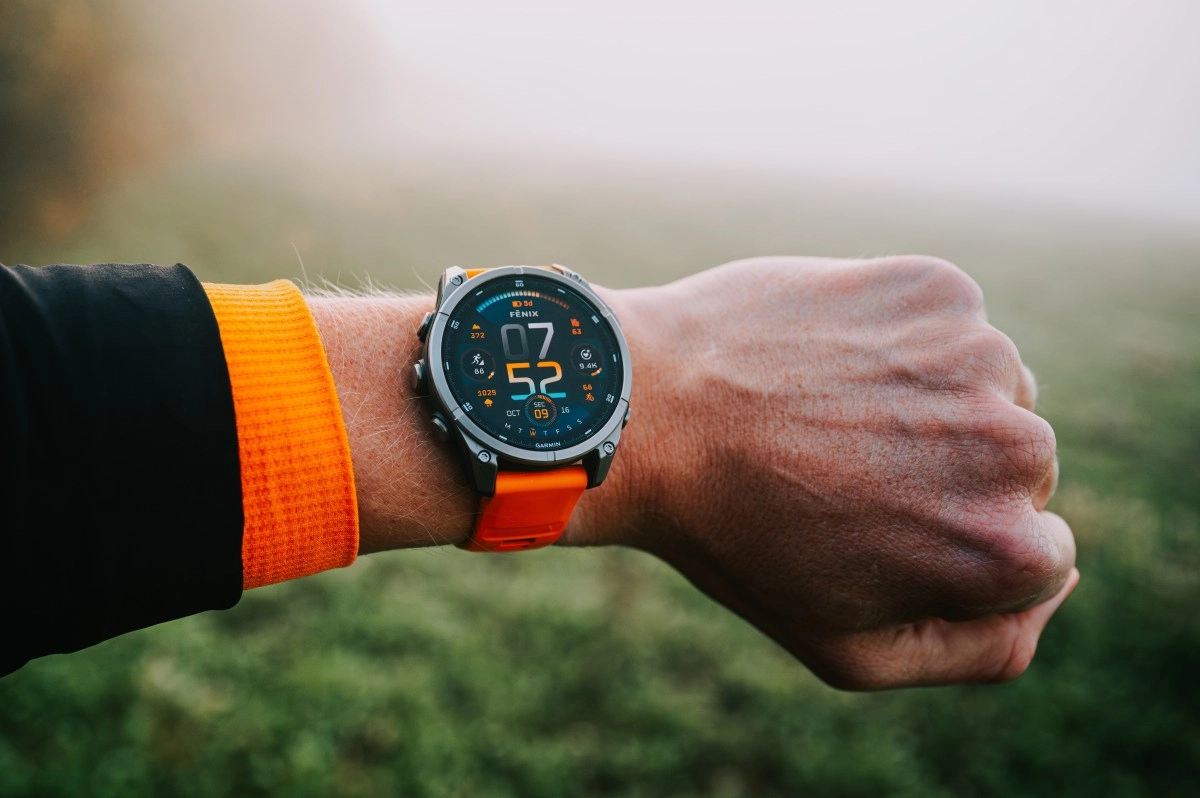

What if your watch could know exactly when you are dehydrated, instead of just giving you these scheduled notifications that you ignore while you work? Garmin has just patented a sensor capable of detecting real hydration levels, and no, it's not another marketing gimmick: it's based on measuring your hematocrit, something that until now was only a laboratory domain.
Until now, most wearables provide "drink water" type alerts based on algorithms that consider your activity level, ambient temperature, or your heart rate. Garmin summed it up well in its patent, pointing out that this isn't a real measurement, just "nagging."
But this new sensor uses infrared light at two wavelengths (~850 nm and ~1,000 nm) to analyze the number of red blood cells in your blood, something that changes when you become dehydrated. This is exactly what the term “pulse spectroscopy” describes, along with that key value, hematocrit.
How does this hydration sensor work?
The key is to apply a technique derived from one already used in watches to measure pulse and blood oxygen (SpO?). In this patent, Garmin plans to use light pulses with two specific lengths and capture how that light is absorbed. When you become dehydrated, your plasma decreases and the proportion of red blood cells increases, which is reflected in these optical signals.
This system also adjusts for factors such as skin tone, skin thickness, or movement. Garmin describes it as “pulse spectroscopy,” capable of separating out noise (like motion) and isolating real-world data on hydration, hematocrit, and even tissue oxygen saturation.
The reason this could be a game-changer is that you’d no longer be relying solely on activity-based algorithms or sweat estimates—you’d get an alert like “your body is 3% dehydrated,” which can trigger your attention far more effectively than a generic notification.
Why is Garmin’s new sensor a game-changer?
For those who play tennis, cycle, or run for distance, this could be a game-changer.Imagine if, right when you're halfway through a marathon, your watch alerts you: "Hey, hematocrit level is rising, slow down and drink water." That can mean the difference between staying healthy or suffering from cramps or extreme fatigue.
But it also applies to the majority of people who carry a smartwatch and spend hours in an office without drinking enough water. According to some studies, 75% of Americans are chronically dehydrated despite having bottles and watches that alert them periodically. With a sensor like this, the alert would stop being “drink water because it’s the third day of the day” and would become “drink water because your body needs it right now.”
And it doesn’t stop there: measuring hematocrit could also reveal more subtle imbalances, such as overtraining or underperforming metabolism, or even detect when you’re actually being efficient in HIIT sessions or strength exercises.
When will we be able to see the new feature in practice?
For now, it’s a patent (US 12,343,124 B2), but that doesn’t guarantee that we’ll see the feature in the next Forerunner or Fenix. Many patents remain on paper and require medical authorizations or certifications.
However, the idea is part of a broader strategy. Garmin already has other patents for measuring things like blood sugar or HbA1c, which shows that it's really aiming for devices that understand our physiology much better. Personally, I think it could make it into the next generation of Fenix ??or Forerunner watches, where advanced health is key. We certainly won't see it launched in a few months, but we could see it in future models with updated chips and firmware ready. Can you imagine a world where your watch not only counts steps, but also lets you know when you need to hydrate? Well, that's exactly what this patent promises. And if they actually implement it, athletes will no longer be left relying on their thirst alone: ??they'll have a real physiological sensor backing them up.