

Apple killed the $599 Mac Mini and now the cheapest costs $200 dollars more
The entry model of the Mac Mini with M4 chip disappeared from the Apple Store in the mid of the processor crisis that is going through the market
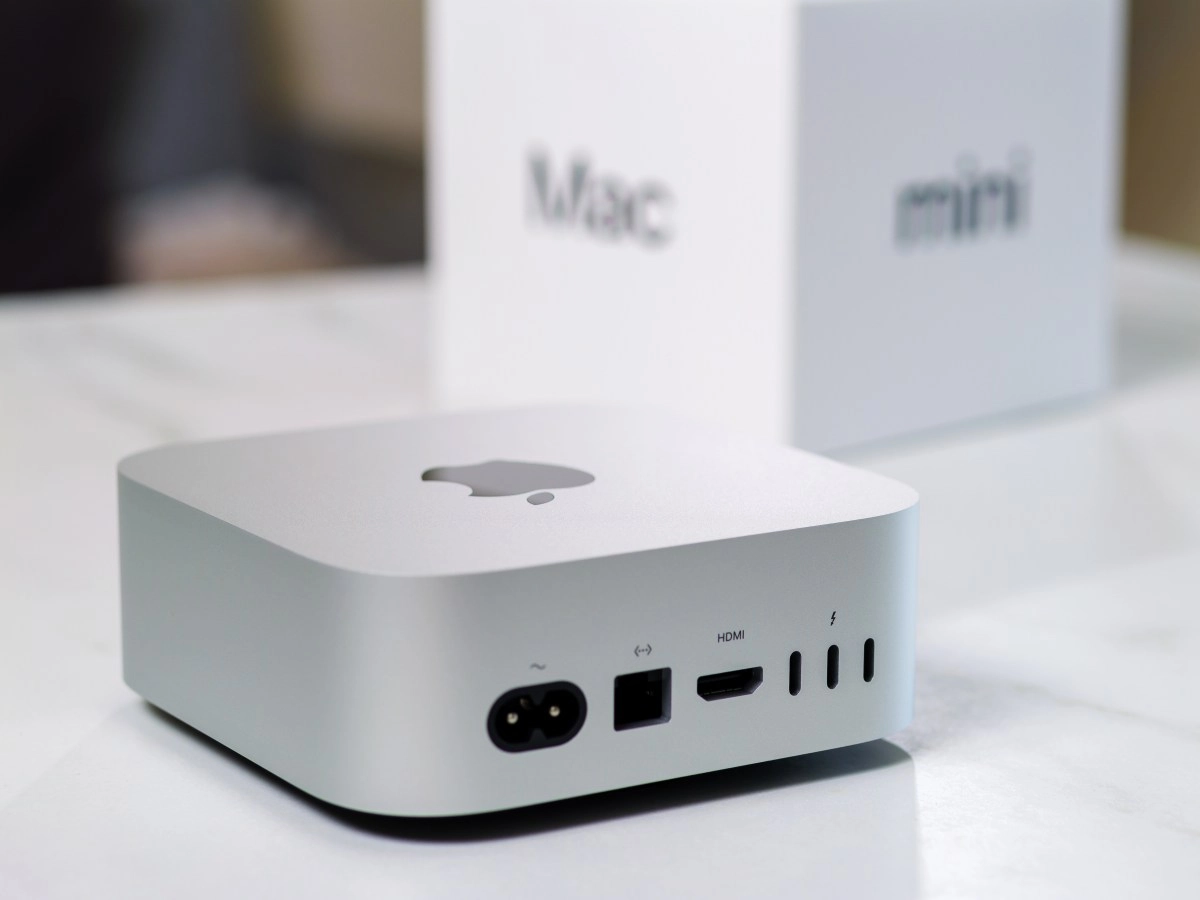

As of May 1, 2026, the $599 Mac Mini no longer exists. Apple quietly removed the base version with M4 chip, 16GB of RAM and 256GB of storage, and with that move redef started how much it costs to enter the desktop Mac ecosystem. It wasn't announced in a special communication, there was no event, there was no formal explanation. It just disappeared from the catalog as if it had never been there.
The result is concrete for anyone who is thinking buying one right now. The cheaper model available is the 512 GB version, which starts at $799 dollars, which implies a 33% increase in the entry price without changing any other components. No more RAM, no additional port, no chip upgrade. Only 256 GB of storage and $200 dollars on the invoice.
The chip shortage is behind all this
Apple hasn't been completely opaque about what's going on. Tim Cook, during the last call with investors, warned that the global shortage of memory chips was going to press the m margins of the company for several quarters. That was the context that many ignored, but that now translates into a decision that directly touches the end consumer's pocket.
The problem has several layers. On the hand, demand for Mac Mini and Mac Studio has been noticeably higher than anticipated, overflowing the p internal projections of Apple and those of its suppliers. On the other, the fever for artificial intelligence executed locally has turned the Mac Mini in a highly-coveted computer for semi-professional workloads, precisely because its unified memory architecture makes it id eal for running AI models without reliance on the cloud. Said another way, the Mac Mini became so popular for AI that it sold out its own stock.
Added to that is a third variable that journalist Mark Gurman has pointed out in his newsletter. Apple could be preparing new models with M5 chips and would have begun to reduce production of the devices. of the current before the new generation is ready. That is to say, the shortages would not only be accidental, but also part of inventory management calculated to facilitate the technological transition.
What the user pays isn't a price increase, but it feels the same
Here comes the most interesting part of the matter, and also the most uncomfortable for Apple. Technically, the company hasn't raised the price of the 512GB Mac Mini. That model v It was $799 before and it's still worth $799 dollars now. What it did was eliminate the cheaper option, which was the $599 option, and let the market's logic do the rest.
Whoever wants a new Mac Mini today has to spend a minimum $799 dollars. There's no way back. And even though on paper that isn't a “price increase” in the accounting sense of the word, in practice the effect is exactly the same for the user who arrives for the first time at the store. The entry point went up $200 dollars from one day to the next, without prior notice and without any additional benefit beyond the extra storage.
The curious thing is that Apple hasn't confirmed whether the disappearance of the 256 GB model is permanent or temporary. That ambiguity gives the company a comfortable margin to reintroduce it additionally It is expected that supply conditions improve, but in the meantime, consumers who were hoping to take advantage of that entry price no longer have that option available in the official store.
Is the 256 GB model still available?
The short answer is yes, but with nuances. There are still units of the $599 base model available on Amazon and other third-party stores, where existing stock before the sale continuation hasn't been sold out. So if someone has been contemplating purchasing and wants to take advantage of that original price, the window is still open, although it's closing fast.
Apple, for its part, is accelerating Mac Mini production at its Houston, Texas, plant with a view to having full manufacturing in the United States by the end of 2026. The company also well acquired more than 100 million chips from TSMC to attempt to mitigate the shortage, which suggests that the overall equipment availability could improve towards the fourth quarter of the year.
What is not so clear is whether this improvement in supply will be accompanied by the reactivation of the $599 d model dollars, or if Apple's strategy is simply keeping the entry threshold at $799 dollars indefinitely For now, the most affordable Mac Mini in Apple's recent history is no longer part of the active catalog, and those who are considering this device as a desktop option must adjust their budget to that new reality.