

Elon Musk, the eccentric genius for whom being the richest man in the world was not enough
Musk is the richest man in the world, according to the Bloomberg index. How did he amass his enormous fortune and reach the highest echelons of power?
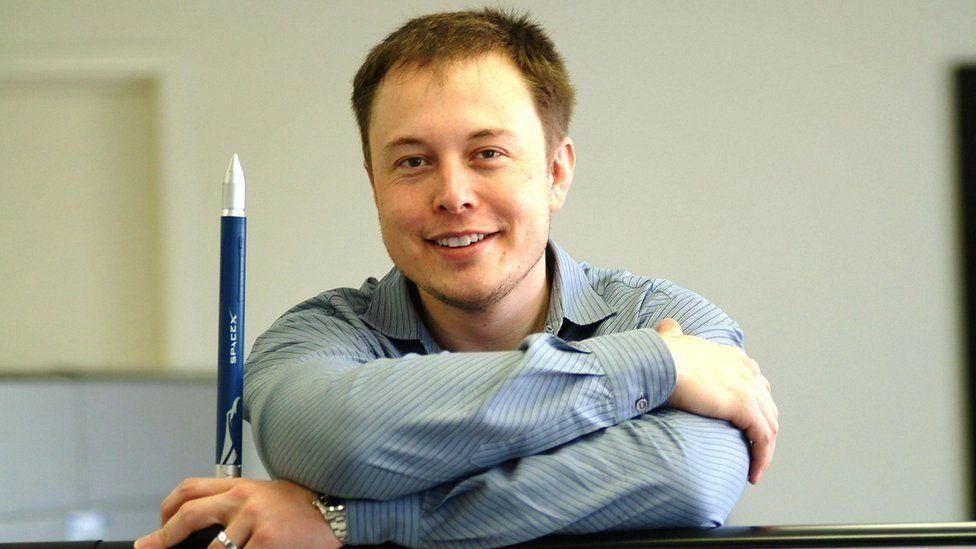

“Three years ago I was washing in a public restroom. Now I have my first $3 million car.”
In 1999, Elon Musk said this in a television report, marking the launch of his figure. Today as well-known as it is controversial, shrouded in myth, politics, and money—lots of money.
Not for nothing is Musk the richest of all the world's billionaires, according to the Bloomberg index. His current net worth is estimated to be around $386 billion.
Owner of Tesla, SpaceX, and the social network X, his fortune didn't grow overnight. Nor did it appear out of nowhere or originate in a garage, as the founding myth of so many technology companies tells us.
If economic power wasn't enough for him, in 2024 he actively and monetarily promoted the campaign of now US President Donald Trump.
The movement earned him entry into government as head of the Department of Government Efficiency, known as DOGE, created this year with the aim of reducing public spending.
But just a few days ago, he left his post and decided to publicly criticize Trump and his proposed budget, leading to a crossfire of accusations pitting, in the words of BBC correspondent Anthony Zurcher, "the richest person in the world and the most powerful politician on the planet in a fight to the death."
This is the latest chapter in the complex biography of Elon Musk.
A childhood marked by bullying
Musk was born in 1971 in Pretoria, South Africa, into a more than wealthy family. His father, Errol Musk, worked as an electromechanical engineer and his mother, Maye Musk, was a model and dietician. Musk's father claimed on more than one occasion that the family's wealth came from extracting emeralds in the mines of Zambia, but Elon denies this. The biography written by Walter Isaacson describes Musk's complex childhood, marked by his difficulty in picking up on social cues due to his Asperger's syndrome.to bullying and his parents' divorce.
But although social skills, as he himself says, were never his thing, entrepreneurial ability was. With his brother, he sold homemade Easter eggs door to door and developed his first computer game at age 12.
At just 17, he emigrated to Canada, where his mother is from. From there he went to the United States, where he studied economics and physics at the University of Pennsylvania, an Ivy League university.
At university, he met his first wife, the writer Justine Musk, who wrote in a 2010 essay for Marie Claire magazine that even before he began amassing a fortune, Musk “was not a man to take no for an answer.”
“The will to compete and dominate, which made him so successful in business, did not magically turn off when he returned home,” she recalled, adding that he told her while they danced at their wedding: “I am the alpha in this relationship.”
The rise of the .com companies
He was going to continue his studies in physics in a graduate program at Stanford University, but dropped out.
And it was in the 90s that he began his path in the technology world, during the “dotcom boom” and with the founding of two companies. The first, Zip2, was a sort of digital business phone book. The second, x.com, was an online bank.
It was around this time that he bought his "first $3 million car."
He sold the first for $300 million. The second was the germ of Paypal, the global secure online payment service that he sold in 2002 for $1.5 billion.
Far from resting on his laurels or, in this case, on his fortune, he followed his bet and invested in a new rocket company, SpaceX, with the aim of creating an efficient and private alternative to NASA, and on the other hand, in Tesla, the then new electric car company.
In both cases, they are companies that are credited with having transformed their industries, even when they were sometimes close to financial collapse.
SpaceX was born with the idea of ????developing space tourism and already in 2018 it marked a milestone as cinematic as it was eccentric: they sent a Tesla car into space. But the company's ultimate goal is something Musk is also obsessed with: that humans will one day colonize Mars, a planet where Musk has said he would like to die.
In fact, in an interview with the BBC, the entrepreneur said he believes most of his money will be spent on building a base on Mars.
Obsession with the X
Possibly Elon Musk's most talked-about and controversial acquisition was his purchase of the social media platform Twitter in October 2022.
He renamed it with the letter that seems to have brought him luck from the start: X.
Although his employees were less lucky: he drastically reduced the size of his workforce, including, controversially, cuts to the teams responsible for keeping the platform secure. He also introduced new premium subscriptions to ensure the business didn't rely solely on advertising for revenue.
Musk said at the time that he invested in Twitter because he believes “in its potential to be the platform for freedom of expression around the world.”
“I believe that freedom of expression is a social imperative for a functioning democracy,” he said.
However, he didn't hesitate to block several journalists from outlets such as the New York Times, CNN, and the Washington Post after accusing them of sharing their location data.
Following the suspensions, which he later revoked, organizations such as the EU and the UN, as well as governments and journalists, condemned the measure.
“Press freedom is not a toy,” declared UN Under-Secretary-General Melissa Fleming. “A free press is a cornerstone of democratic societies and a key tool in the fight against harmful misinformation.”
Musk implemented numerous changes to X’s moderation practices.
Some analysis indicates that hate speech has been on the rise on the social network under Musk’s leadership. And this caused many companies and users to abandon the platform in what has become known as “the great éX-odus.”
As a result, to date, the company’s value has plummeted from the $44 billion it initially paid to as little as $9.4 billion, according to some estimates.
Musk also has ambitions in the AI ????sector, being an early investor in ChatGPT’s parent company before splitting in 2018 and creating his own company in 2023, xAI, “to understand the true nature of the universe.”
In February 2024, he sued OpenAI and its boss, Sam Altman , claiming that the company he helped found had renounced its non-profit and open-source origins by joining Microsoft.
A year later, Musk led a takeover bid that was firmly rejected by Altman.
“I’m never entirely convinced he knows what he wants to do tomorrow,” says journalist Chris Stokel-Walker of Musk’s broad interests. “He goes by instinct.”
From a “moderate” ideology to an “anti-woke” spokesperson
Musk long defined himself as “politically moderate” and “independent.” In fact, he said he voted for Barack Obama, Hillary Clinton, and, reluctantly, Joe Biden, all Democrats.
But recently, he has become very critical of the Democratic Party and has transferred his support to Trump and the Republican Party, something he officially did after the assassination attempt on the then-candidate in the summer of 2024.
He criticizes the Democrats’ economic, immigration, and gun control policies, and denounces many of them as “woke” policies, a term used in this case in a derogatory way to refer to left-wing or liberal policies.
In fact, at one point Musk gave his opinion on transgender people and some called him anti-gay due to several disputes he was involved in. He also complained about people using their own pronouns and in 2020 wrote on Twitter that “pronouns suck,” before deleting the post.
He later posted: “I absolutely support trans people but all these pronouns are an aesthetic nightmare.”
At the same time, his daughter, now recognized as female and under the name Vivian Jenna Wil, said she did not wish to be related to her biological father “in any way.”
Pronatalism and Musk’s offspring
The father of more than 10 children with different women, the future of humanity is one of Musk’s concerns, according to him.
Despite his interest in the development of artificial intelligence, he has been one of the most prominent figures to express his concern about the supposed threat that superintelligent AI could pose to humans.
He stated that the rise of AI, combined with an falling birth rate, could result in “not enough people” in the world.
This undoubtedly marks one of the keys to his biography and brings him closer to the pronatalism movement, a movement that considers the falling birth rate to be a serious problem for the world and sees large families as the solution.
“Know-it-all, overflowing ego... but shy speaker”
In a 2015 biography, author Ashlee Vance described Musk as a “conflictive know-it-all with an overflowing ego.” He also said he was “a clumsy dancer and a timid speaker.”
In the press, he’s been called a mad genius and Twitter’s biggest troll, known as much for his lofty ambitions as his petty fights—not to mention the more serious lawsuits he and his companies have faced from regulators, investors, and others over issues like racial profiling and the reliability of his claims.
But Musk is open about his flaws.
“If you list my sins, I look like the worst person in the world,” he said in a 2022 TED interview. “But if you compare it to the things I’ve done right, it makes a lot more sense.”
And, following his latest dispute with Trump, he declared on X that he was here to stay: “Trump has three and a half years left as president, but I will be here for more than 40 years.”
*With information from Tom Espiner, Tom Gerken, Liv McMahon, Natalie Sherman and Dearbail Jordan.
Click here to read more stories from BBC News Mundo.
Subscribe here to our new newsletter to receive a selection of our best content of the week every Friday.
You can also follow us on YouTube, Instagram, TikTok, X, Facebook and on our new WhatsApp channel.
And remember You can receive notifications in our app. Download the latest version and activate them.