

ICE raids destabilize the economy of families
Local leaders talk about the economic consequences of immigration operations in Los Angeles
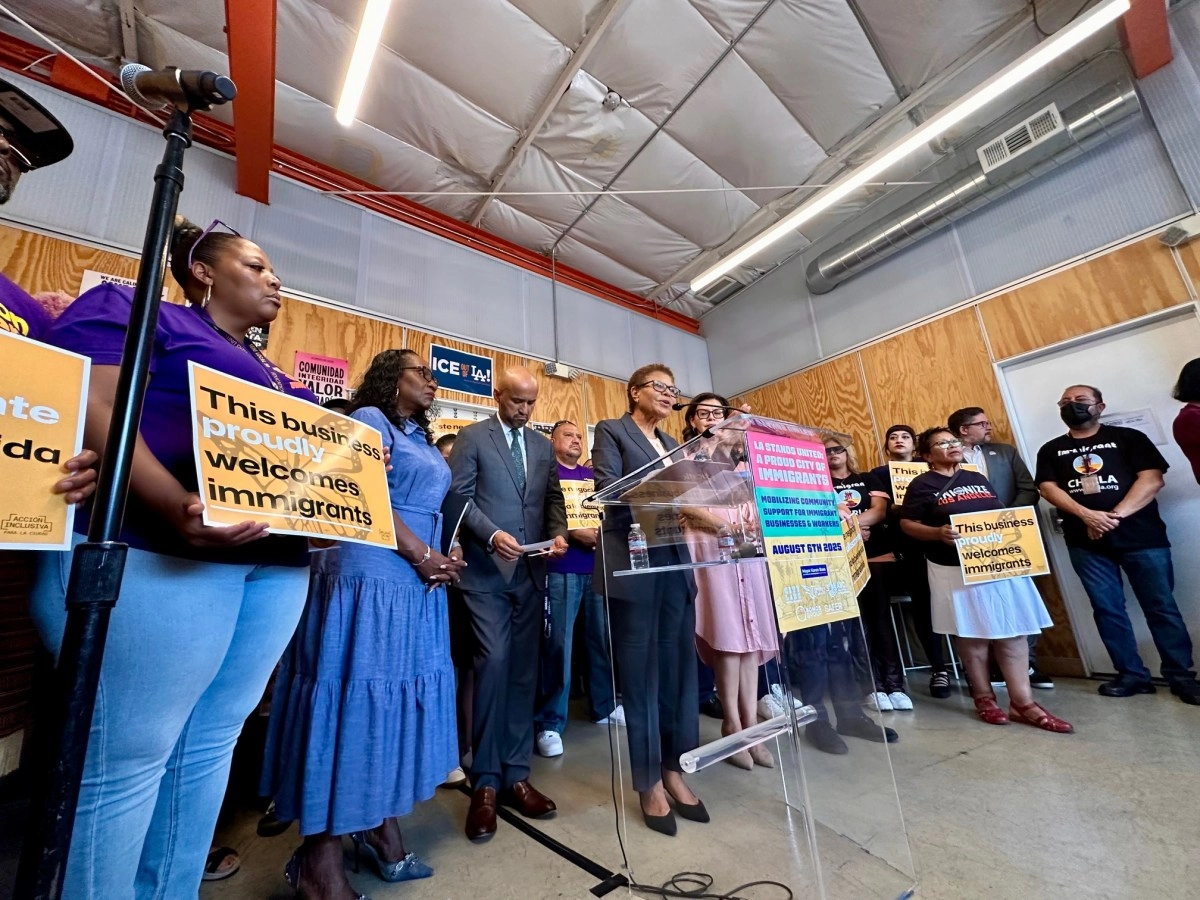

Four hours after the raid carried out by federal immigration agents in the parking lot of the Home Depot store on Wilshire and Union streets in Los Angeles, the mayor Karen Bass said these operations not only destabilize the economy of families but also that of neighborhoods, businesses, and the community.
We are not going to let this Administration destabilize our great city. We will continue together.
During a press conference in the Boyle Heights neighborhood with local leaders, she addressed the economic consequences of the Immigration and Customs Enforcement (ICE) raids, and acknowledged being concerned for the families impacted when their provider disappears and they don't know what to do to survive financially.
I have visited families and businesses affected by this assault on our city in Boyle Heights, West Lake, Pico Union, and Little Tokyo.
She said she is sure of one thing: most of those arrested are not violent criminals or drug dealers, and have been taken off the streets without arrest warrants; and reiterated that with funds from philanthropy, not taxpayers, economic support is on the way to families affected by the immigration operations.
The raids not only generate fear but also have real economic and serious social consequences, local leaders agreed.
According to the UC Merced Community and Labor Center, California experienced a drop of more than 3% in the number of private sector workers who showed up to work between the end of May and the beginning of June.
This trend has not been seen since the COVID-19 pandemic and the confinement, when people started staying home, said Vanessa Aramayo, president of the Alliance for a Better Community (ABC).
This impact is especially severe among undocumented women, who face a nearly 9% drop in their labor force participation. This means that approximately one in 12 undocumented women did not show up for work during the week of June 8 alone.
But that's not all, Aramayo said that approximately 465,000 workers across the state of California left the workforce just as the raids were implemented.
"Undocumented workers are essential to the economic engine of Los Angeles. When immigration enforcement is ramped up, the repercussions are felt across the city and state.
What's more, workplaces in Los Angeles and across the state, including the Fashion District, are experiencing a 30 percent decrease in foot traffic.
"Many of these businesses in the area are small businesses, and we know that small businesses are the backbone of our local, state, and national economies," Aramayo said.
He emphasized that immigration enforcement threatens more than jobs, jeopardizing families' ability to feed themselves, pay rent, and make ends meet. basic.
The impact is for everyone
Max Arias, executive director of the Service Employees Union (SEIU) Local 99, which represents more than 50,000 education workers, and a Salvadoran immigrant who became a naturalized citizen in 2018, said that no matter where you live in the city, we have all been impacted by the injustice of the past months.
We have seen the concern of children, afraid that their parents will be detained. We've heard from parents concerned about the arrival of immigration agents to schools.
He said that as they prepare for a new school year, families are debating whether their children should return to school or not.
We are firmly committed to keeping ICE out of our schools. Today, we remind Trump that our sanctuary city is united and unstoppable because together we will fight.
The health repercussions
Juan de la Cruz, president of the Adventist Health White Memorial Hospital Charitable Foundation, said that one of the things we don't talk about is the impact of the raids on health care, especially in immigrant communities.
Something that we see frequently is the misinformation that prevents our immigrant community from seeking medical care. In recent months, misinformation has circulated on social media about federal agents who have been on our hospital campus and in emergency rooms, disrupting services and arresting patients.
De la Cruz denied those rumors and said that false information on social media only increases anxiety, fear, and anger among the community and patients.
“Because of this, we have seen a dramatic decrease in the number of patients coming to the hospital and their scheduled medical appointments, and this is happening all across Los Angeles County, not only at our hospital, but at several others as well.”
He noted that the biggest concern is that delaying treatment puts lives in danger and leads to health complications.
“We fully understand the fear, but ICE agents have not raided our hospital.”
Open Doors
Efrain Escobedo, president of the Los Angeles County Economic Development Corporation (LAEDC), said that over the past few months, while immigration raids have continued in communities, the nonprofit sector has kept its doors open.
“While the federal government has cut millions of dollars in human services and targeted nonprofits to intimidate their leaders, close their doors to immigrants, and leave them with no way out, our services are available to everyone.”
Support for the LGBT Community
Cian Andrade, community manager for El Centro, an organization that advocates for equality for the Latino LGBT community in Los Angeles, said that they not only condemn the raids but have been able to provide a variety of trauma-informed services, including presentations for the trans community to learn about their rights.
Our clinics have helped hundreds of people access legal resources through asylum and work permit clinics, and have supported survivors of violence in their applications for humanitarian assistance, such as U visas, T visas, and protections under the Violence Against Women Act.
She said they will continue to advocate, be present, and stand in unwavering solidarity with the communities.