

They didn’t lose a suitcase in 30 years: the incredible story of this Japanese airport
Three decades without losing a suitcase: this is how Kansai operates, the Japanese airport that made precision its trademark
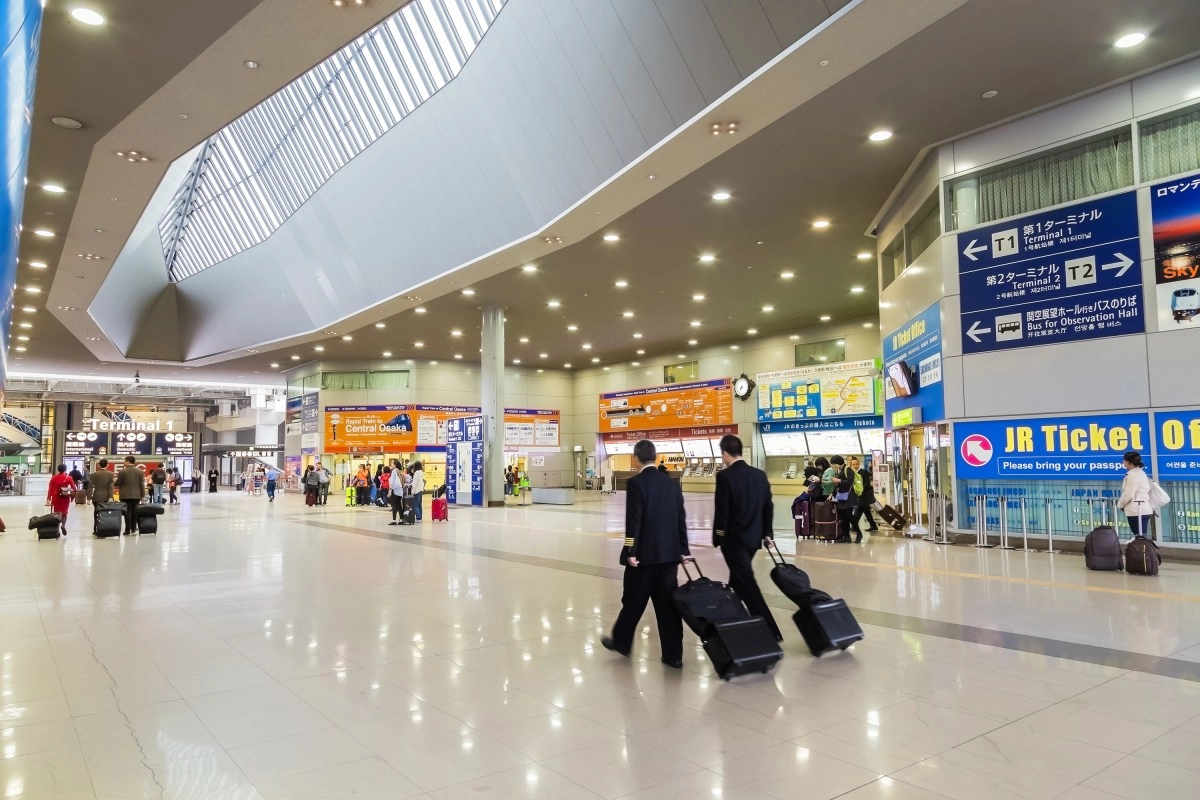

In a world where losing luggage is part of the trip, Kansai International Airport in Japan breaks the mold. Since its opening in 1994, it hasn’t lost a single suitcase, not a baby stroller, not a pair of skis. Nothing. In thirty years and with more than 30 million international passengers per year, its record remains unbroken. Serving the Osaka and Kyoto regions, Kansai is neither a small nor a slow airport. Its secret lies not in futuristic technologies or hidden tricks, but in something simpler: extreme attention to detail and a work ethic based on respect, consistency, and precision. How does Kansai International Airport operate to avoid losing bags? Every step of the baggage handling process at Kansai is designed to prevent errors. From manually aligning bag handles for easy collection to delivering fragile items directly to the passenger. Every little bit counts. According to Tsuyoshi Habuta, a supervisor at an airport handling company, it's not magic or special training. It's about doing what needs to be done well and treating each bag with care, like an emotional extension of the passenger.
The team handles around 3,000 pieces a day with a meticulous protocol: bags are checked upon arrival, during the flight, and upon deplaning. If there's a discrepancy, the search begins immediately.
An unwritten rule guides the workers: all luggage must be available to passengers within fifteen minutes of landing. This consistent speed has been recognized with eight international awards, consolidating Kansai as a global benchmark in baggage delivery.
The value of 'omotenashi'
But behind these achievements lies something deeper: the Japanese philosophy of 'omotenashi'. That is, hospitality taken to the level of art. For Kansai workers, doing their job well isn't just an obligation, it's an act of pride.
It's not about avoiding mistakes for fear of punishment,but to represent Japanese excellence in the eyes of the world.
Perfection here is not a goal, but a daily practice. Constant improvement is part of the organizational DNA, fueled by humility and collective will.
The Sea, a Silent Threat
Kansai is also an engineering marvel. Built on an artificial island in Osaka Bay, it cost around $14 billion to build, and over time its value exceeded $20 billion. It has runways designed to withstand earthquakes and an adjustable terminal with hydraulic jacks to deal with ground settlement. It even withstood the 1995 Kobe earthquake without closing.
But there is a deeper problem, literally. The ground on which it was built continues to sink. Since its opening, the airport has dropped 11.5 meters and could sink another four by 2056. The base, composed of soft clay, continues to compact under the weight of the artificial island.
Typhoon Jebi in 2018 left one runway completely flooded, setting off alarm bells. Since then, the containment dike has been raised by 2.7 meters, but experts warn that such measures only buy time. The underlying geological problem has not been resolved.
Although the airport can adjust to compensate for certain movements, each additional centimeter of subsidence brings its infrastructure closer to sea level, and with it, to an uncertain future.