

Volkswagen bets on the ID. Cross to conquer the market
The Volkswagen ID. Cross promises more space, up to 436 km of autonomy and a family approach to expand the brand's electric range
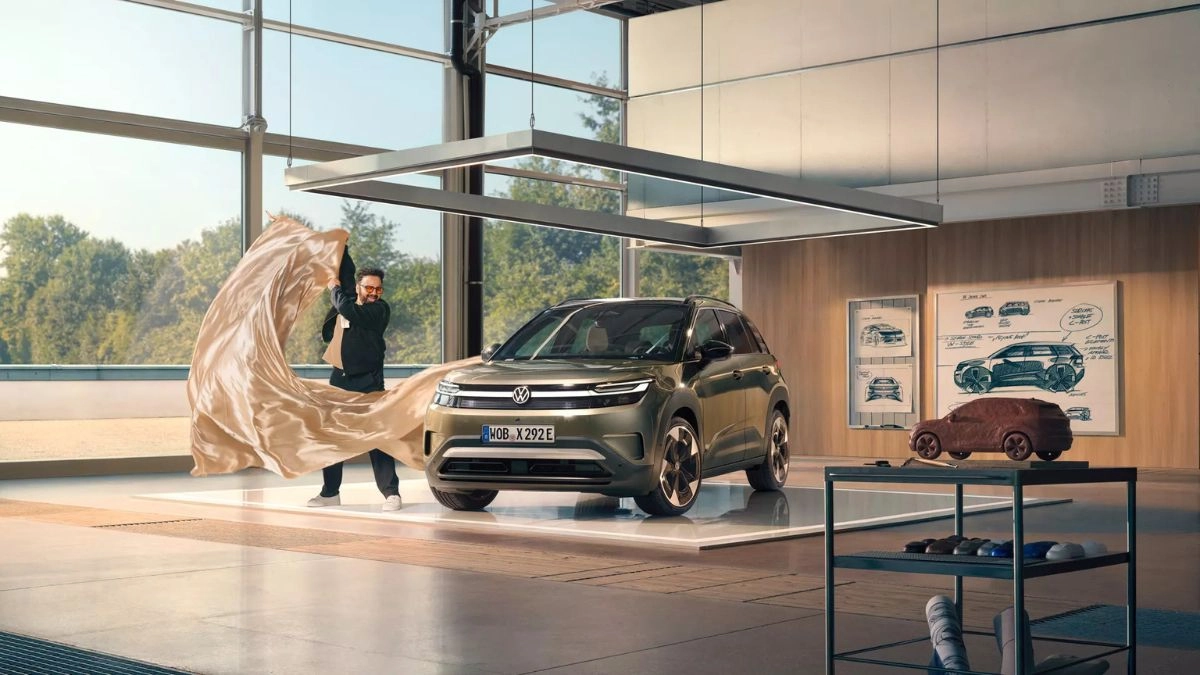

Volkswagen is preparing a new offensive in the compact electric SUV segment and the ID. Cross will be one of its main protagonists. The German brand wants to attract those looking for a practical vehicle for everyday use, but one that can also respond reliably on long trips without giving up technology.
Read also: Volkswagen begins to say goodbye to the diesel Golf in Europe
The new model is not intended to be simply the electric version of the T-Cross. Its development is based on a specific platform for electric vehicles, which allows it to offer better use of interior space and a different proposal within the ID family.
You can read: Xiaomi expands its strategy and enters the hybrid segment
Volkswagen also seeks to strengthen its presence in one of the segments with the highest demand worldwide, where competition is constantly growing with the arrival of new manufacturers.
More spacious and designed for daily life
The Volkswagen ID. Cross is 4,153 millimeters long, 1,794 millimeters wide and 1,581 millimeters high, as well as a wheelbase of 2,601 millimeters. Thanks to the electric architecture, the space available to occupants exceeds that offered by the T-Cross with a combustion engine.
The trunk capacity reaches 475 liters, a figure higher than that of its gasoline equivalent. Added to this is a 22-liter front compartment located under the hood, designed to store charging cables or other small objects.
Another notable aspect is its contained weight. From 1,539 kilograms, the ID. Cross seeks to combine efficiency with balanced dynamic behavior.
Three power levels and up to 436 kilometers of autonomy
The initial offer will be made up of three versions. The first develops 116 horsepower and uses a 37 kWh battery. The next step increases the power to 135 horsepower, maintaining the same battery capacity.
The most equipped variant delivers 211 horsepower and uses a 52 kWh battery. All configurations use front-wheel drive, a decision with which Volkswagen intends to optimize interior space and improve efficiency.
The autonomy also varies depending on the version chosen. Models with a 37 kWh battery promise to travel up to 316 kilometers under the WLTP cycle, while the 52 kWh option raises that figure to 436 kilometers.
In terms of recharging, all versions support 11 kW alternating current charging. In direct current, the smallest battery supports up to 90 kW and the largest capacity reaches 105 kW, allowing 10 to 80% of the charge to be recovered in approximately 24 or 27 minutes, depending on the configuration.
Equipment to compete with higher models
Volkswagen wants the ID. Cross is differentiated by more than just its propulsion system. The cabin incorporates the Innovision multimedia system with a 12.9-inch central screen and materials designed to offer a higher quality feel.
Among the available elements are a 425-watt Harman Kardon sound system, panoramic roof, electric front seats with massage function and advanced driving assistants such as Connected Travel Assist.
The SUV also incorporates V2L technology with a power of up to 3.6 kW to power external devices. In addition, the version equipped with the 52 kWh battery can tow up to 1,200 kilograms on slopes of 8%.