

Trump accuses China of intervening in US elections in 2020 and announces declassification of documents
Without presenting conclusive evidence, the president assured that Beijing perpetrated "the largest leak of electoral data in history"
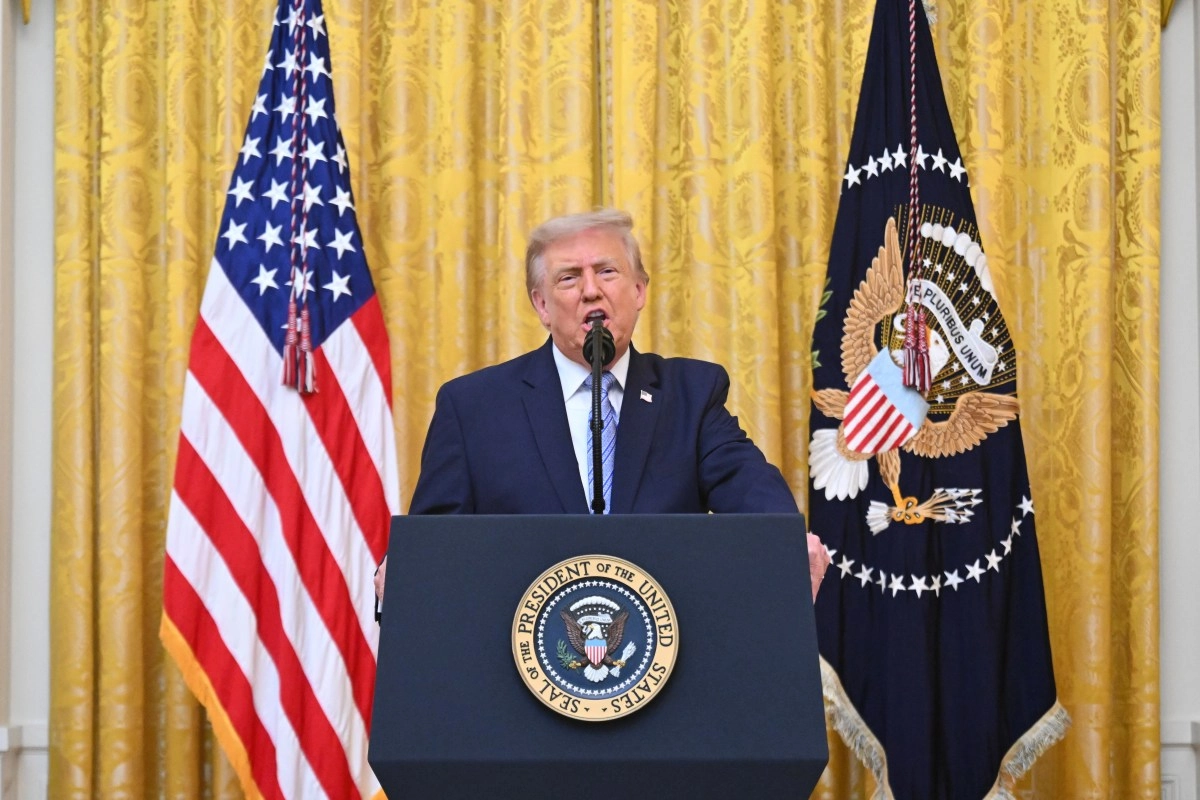

President Donald Trump once again questioned the integrity of the United States electoral system by claiming that China intervened in the 2020 presidential election through an alleged operation to obtain data on millions of American voters. During a televised message from the White House, the president claimed to have ordered the immediate declassification of reports that, he said, show “electoral vulnerabilities” hidden from the American people.
“These vulnerabilities must be faced,” he said, and indicated that the documents can be consulted on the page https://www.whitehouse.gov/election-integrity
Less than four months before the midterm elections, Trump alleged that the People's Republic of China had illegally obtained information from approximately 220 million voter records, an accusation he presented as part of the "largest leak of electoral data" in the history of the United States. Without offering public evidence to support his claims, the president noted that the alleged operation was carried out by a specialized unit of the Chinese government and assured that the compromised files would include names, addresses, telephone numbers and political affiliations of American citizens.
Trump also claimed that intelligence agencies detected vulnerabilities in electoral records in at least 18 states since 2020, but maintained that officials of the so-called “deep state” hid the information from the public. The president indicated that he ordered the immediate publication of classified reports so that Americans know, he said, the risks facing the electoral system.
Trump insists on questioning the 2020 elections
The president's statements revive a narrative he has maintained since his loss to Democrat Joe Biden almost six years ago. Trump has never officially recognized the result of that election and continues to maintain that there were widespread irregularities that altered the outcome.
However, more than 60 lawsuits promoted by his campaign and his allies were rejected by state and federal courts because they did not find sufficient evidence of fraud capable of modifying the electoral result. Likewise, independent audits, vote recounts and reviews by state authorities and the Department of Justice itself found no evidence of massive electoral fraud.
During his message, Trump also claimed that other countries such as Russia, Iran and North Korea have the technological capacity to compromise US electoral infrastructure, although he did not present specific evidence regarding these claims. The president took advantage of the speech to reiterate his support for electoral reforms that include stricter requirements for voter registration, such as the obligation to prove US citizenship before being able to vote.
He also attacks the media
At another point in his speech, Trump criticized the television networks that decided not to broadcast his message in its entirety in prime time. The president claimed that some media companies are part of an alleged conspiracy to hide information related to the elections.
He even proposed that the broadcast licenses of the networks that, in his opinion, fail in their responsibility to inform the population should be reviewed, specifically mentioning ABC and NBC.
The statements occur in a context of growing political polarization and when various analysts anticipate that the debate on electoral security will once again occupy a central place heading into the legislative elections in November.
Meanwhile, civil rights organizations and former election officials have expressed concern about repeated challenges to the voting system, believing they may weaken public confidence in the democratic process. At the same time, the Department of Justice is in litigation with several states related to access to electoral records, in the midst of an intense national debate about the rules that will govern the next elections.