

The Israelis who support the attack on Iran in a Tel Aviv neighborhood hit by missiles
Bat Yam, south of Tel Aviv, is a bastion of support for Israel’s right-wing ruling coalition

Bat Yam, south of Tel Aviv, has long been a bastion of support for Israel's right-wing ruling coalition.
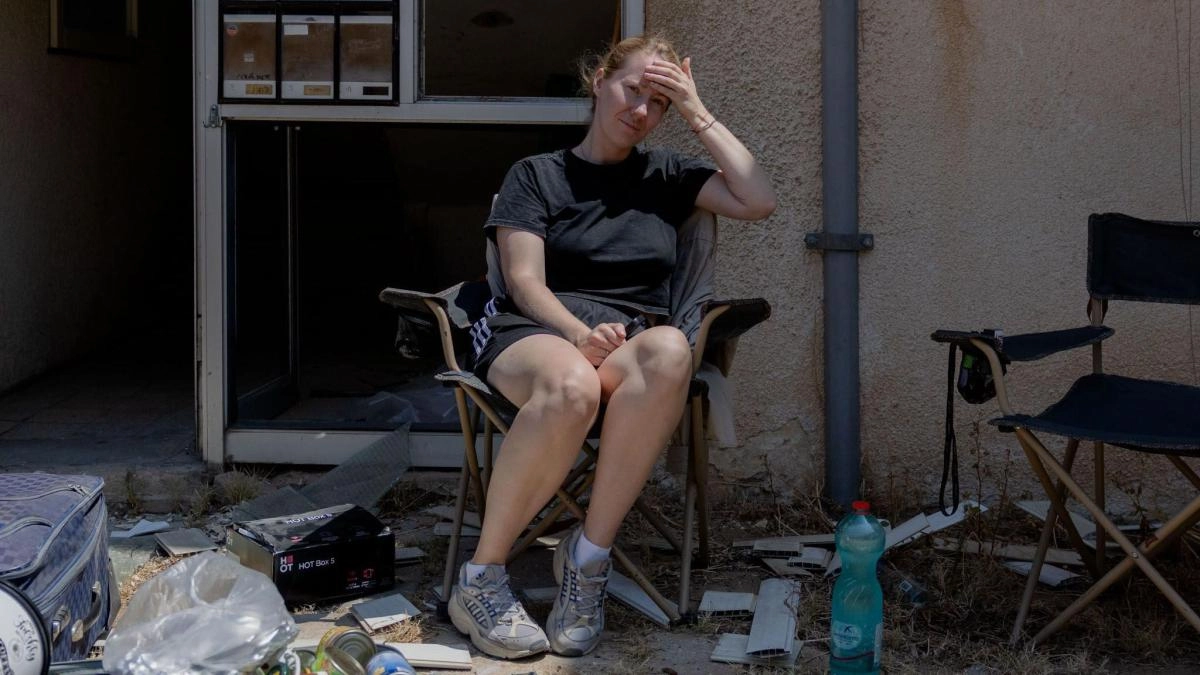
Early on Sunday, an Iranian missile struck a 10-story apartment building, killing at least eight people and trapping dozens Despite the extensive damage, local residents strongly support Israel’s attack on Iran, which began Friday and has targeted nuclear facilities, missile sites, air defenses, an airport and other infrastructure, as well as nuclear and military personnel. “It was necessary to do it,” says Veronica Osipchik, 33, who lives about 200 meters from the site of the attack. “But we didn’t expect it to hit us like this.” The windows and shutters of her apartment were blown out. Nearly every building in the surrounding area suffered similar damage.
“We were in shock,” she said, sitting on a camping chair next to a suitcase full of food and toiletries.
The ballistic missiles that caused the damage in Bat Yam are far more powerful than the rockets fired by Hamas and Hezbollah over the past year and a half, most of which are intercepted by Israel’s sophisticated air defense system.
The first people trapped under the rubble were pulled out within hours. As of late Sunday, at least three people remained unaccounted for. “I saw fear in their eyes,” said paramedic Ori Lazarovich. “People were coming out all gray, covered in soot, ash, and debris.”
Avi, a 68-year-old man who did not want to give his last name, was born and raised in Bat Yam. “We have to keep attacking (Iran),” he says. “Of course we have to continue. Otherwise, they'll drop an atomic bomb on us.”
“They're weak. We're much stronger,” he adds. “Israel is number one in the world.”
Emil Mahmudov, 18, agrees: “We should have done it earlier. That's what most Israelis think.”
Popular and political support
Israel's justification for attacking Iran is to end its nuclear program. For more than a decade, successive governments have sounded the alarm about the possibility of the Iranian regime acquiring nuclear weapons, something Iran denies it seeks.
Even as Benjamin Netanyahu has been criticized within Israel for the conduct of the war in Gaza, his main political rivals—Benny Gantz, Avigdor Lieberman, and Yair Lapid—have expressed support for an attack on Iran.
Professor Yossi Mekelberg of the Middle East Program at Chatham House says that “there has always been support for preventing Iran from acquiring a nuclear military capability.”
But, he says, “this is much bigger than fighting Hamas in Gaza, even Hezbollah in Lebanon, or a very limited direct confrontation with Iran.”
“This is evolving into a full-blown war. And there is fatigue in Israel after 20 months of war.”
“If there are more casualties, if people spend a lot of time in shelters and if it turns into another endless war,” then support, he says, could erode.
In mid-afternoon on Sunday, the far-right National Security Minister, Itamar Ben Gvir, recently sanctioned by the British government for “inciting violence against Palestinians,” arrived in Bat Yam to meet with those affected.
Flanked by a cohort of armed security personnel, he shook hands with shop owners along a street where the blast shattered many storefronts.
One of them, who did not want to give his name, sat on a plastic chair outside his bakery, which he had run for 29 years. He said he was there to prevent looting.
Do you support opening a new front against Iran? “Of course,” he says, waving his hands. “What kind of question is that?”
Netanyahu also visited Bat Yam on Sunday, to chants of “Bibi, King of Israel,” a play on a popular song about the biblical warrior king David that many Jewish children learn in school.
Hours later, in an evening address, he lamented the deaths, telling the nation: “This is a difficult day. I told you, there will be difficult days.”
Even with broad support for the conflict, if it continues to escalate—and civilian deaths continue to rise—it will be hard to ask how many more difficult days the Israeli public will tolerate.
Click here for more stories from BBC News.
Sign up here for our new newsletter to receive a selection of our best content of the week every Friday.
You can also follow us on YouTube,Instagram, TikTok, X, Facebook, and our WhatsApp channel.
And remember, you can receive notifications in our app. Download the latest version and activate them.