

California Conservation Corps Celebrates 50 Years of Supporting Youth and Protecting Nature
JP Patton, director of the CCC, highlights his organization's work in the civic and professional development of its young members and in its service to the community
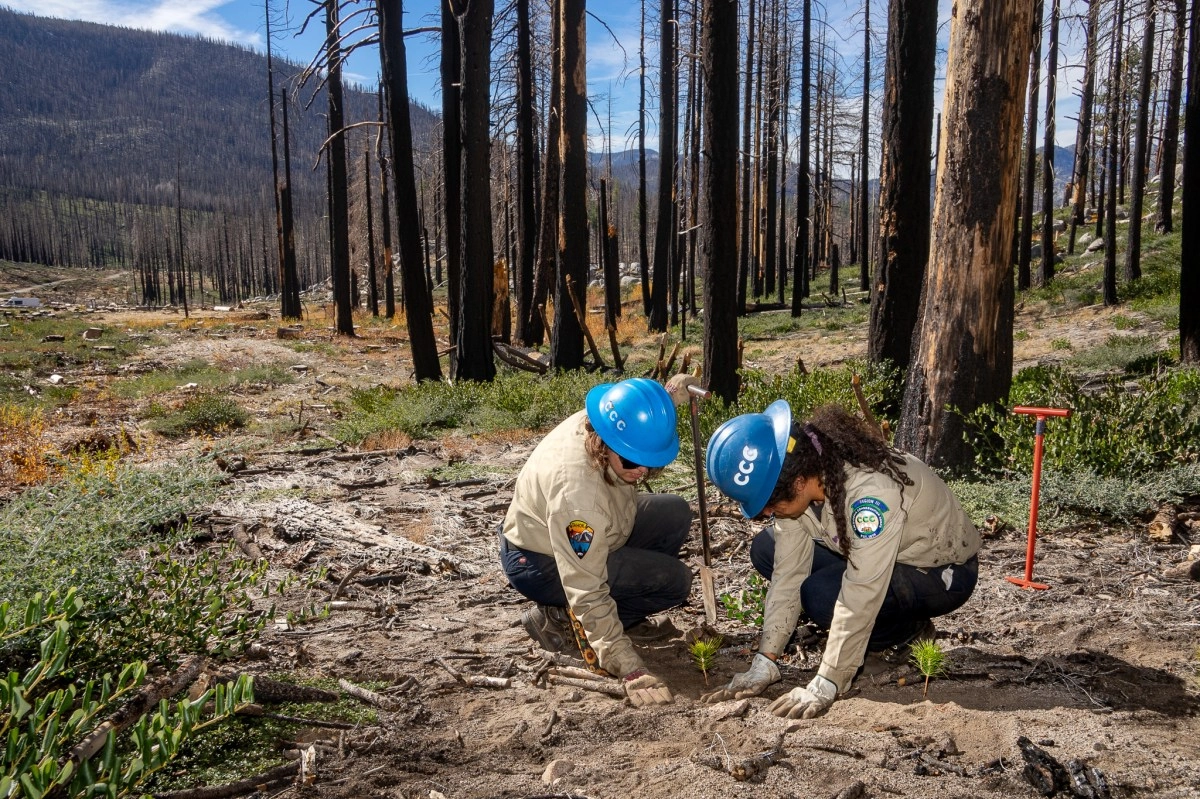

The California Conservation Corps (CCC) is not simply a state agency: it is an institution dedicated to protecting nature and serving the state's communities and is also an engine of personal, civic and professional development for those who are part of it.
CCC is a California state agency that, says its director, JP Patton, "is part of what are called natural resource agencies... like CAL FIRE and state parks, but we have the special mission of transforming the lives of young adults. We do it through conservation work that protects communities and their homes. We are truly unique."
This year, under Patton's leadership, the CCC is proud to celebrate its 50th anniversary, a half-century of providing development opportunities to young adults and protecting California's wilderness. Over these five decades, the CCC has helped its members gain job skills, education and practical training while serving communities and protecting California's natural resources.
“We are the largest and longest-established conservation body of our kind in the nation,” Patton said of the CCC, an organization that has served as a role model both nationally and internationally.
The commitment it requires is clear and profound: young people who decide to enroll in the CCC dedicate an entire year of paid service to the state, focused on improving and protecting the natural environment.
The requirements to be a member of the CCC are few, although the commitment to fulfill is intense. “Any young Californian between the ages of 18 and 25, or up to 29 if you are a military veteran, can choose to serve California for one year” in the CCC, Patton says. “In exchange, you receive opportunities to achieve industry-recognized credentials, thousands of dollars in scholarships, and incredible work experience.”
"We currently have about 1,600 people in the CCC throughout the state... And in the past 50 years at least 138,000 members have contributed to our program. So our reach, our scope and our impact are great," Patton explained.
In exchange for their efforts, CCC members receive a stipend of $2,814 each month and participants can also earn scholarships, earn their high school diploma, and take college-level courses through partnerships with community colleges. In the end, the benefits of a year in the CCC build confidence, leadership ability and teamwork skills that will accompany young members throughout their lives.
"When [members] finish their work here at the CCC and go back to their communities, they get good jobs, they continue their education. My job is to protect that and be good stewards so that those young people have a multiplier effect in their world back home."
A historical legacy in numbers and actions
The impact of these five decades of work is significant, with more than 86 million hours of service in work dedicated to natural resources, in addition to another 14 million hours in emergency response work.
In half a century of service, "now is the time to consider our impact and the fact that when the CCC was born in 1976, the world was very different. Of course, there are young people going outdoors to do more work, but today's demands are more acute. The scale and complexity of today's climate problems are urgent and I think the CCC fits at the heart of that, we are able to evolve and respond quickly and we are a powerful solution to climate emergencies," Patton said.
By joining the CCC, young adults become actively involved, working outdoors and making a difference in their communities. The CCC provides them with world-class hands-on training in wildfire suppression, forestry, trail construction and maintenance, culinary arts, energy conservation, habitat construction and restoration, among other topics.
The success of the CCC lies in its effects on life trajectories. For example, hundreds of these youth have been hired directly by partner agency CAL FIRE.
"I met a young woman who came with us and didn't know what to do with her life... She discovered the fire service. This young woman was trained by CAL FIRE and is learning to protect her community, her family, her friends, her homes, she earned her high school diploma and is becoming a firefighter. The sky is the limit for her," Patton said.
The CCC in times of emergency
In times of crisis, the presence of the CCC has been essential. Since 1976 it has responded to nearly every major natural disaster in California.
In the Los Angeles area, the CCC provided crucial support in the response to the Eaton and Palisades fires. "I think January 2025 really changed everything for us with the Eaton and Palisades fires... We deployed almost our entire department there. Our members went to help, fought the fires themselves or supported the firefighters doing that work. And we had members protecting our watersheds to ensure that the toxins created after the fires didn't get into our sensitive water systems," Patton explained.
Previously, following the devastating 1994 Northridge earthquake, CCC crews were on hand to secure homes and businesses, removing damaged brick walls and chimneys.
Half a century of service and more
To mark its 50th anniversary and look to the future, the CCC is holding a series of events. One of the most notable is the “Golden State Bus Tour,” which takes place this summer with visits to San Diego, Los Angeles, Fresno, Monterey, the East Bay of San Francisco and Chico.
"Everything will culminate on July 7 in Sacramento at the CCC expo at the California Natural Resources Agency building. There we will welcome our sister agencies, the public, our partners to showcase all the programs that make the CCC incredible," Patton noted.
The CCC serves as a great springboard for young people to find their passion and build meaningful careers while protecting the natural environment and their communities.
Even for those who age out for membership, there are CCC job opportunities in human resources, information technology, field team leadership, and more, where professionals can help shape future conservation leaders.
For 50 years, the California Conservation Corps has shown that it is possible to transform lives while protecting the environment. Those interested in joining, supporting or learning more about the CCC can visit its official portal at ccc.ca.gov.
In the Los Angeles area, CCC has centers in Los Angeles, Norwalk, Pomona, San Bernardino and Lake Elsinore.
"The people who join the CCC have always impressed me. They are people who are looking for opportunity, structure, and a purpose in their lives. And since there are many young people, we are trying to meet the demand that this entails for the future. I am looking forward to seeing what the future holds, I think we are well positioned and the CCC will continue to exist for at least another 50 years," Patton concluded.