

California to the rescue of public health
Unions announce new bill initiative that would enact an emergency one-time tax on approximately 200 billionaires
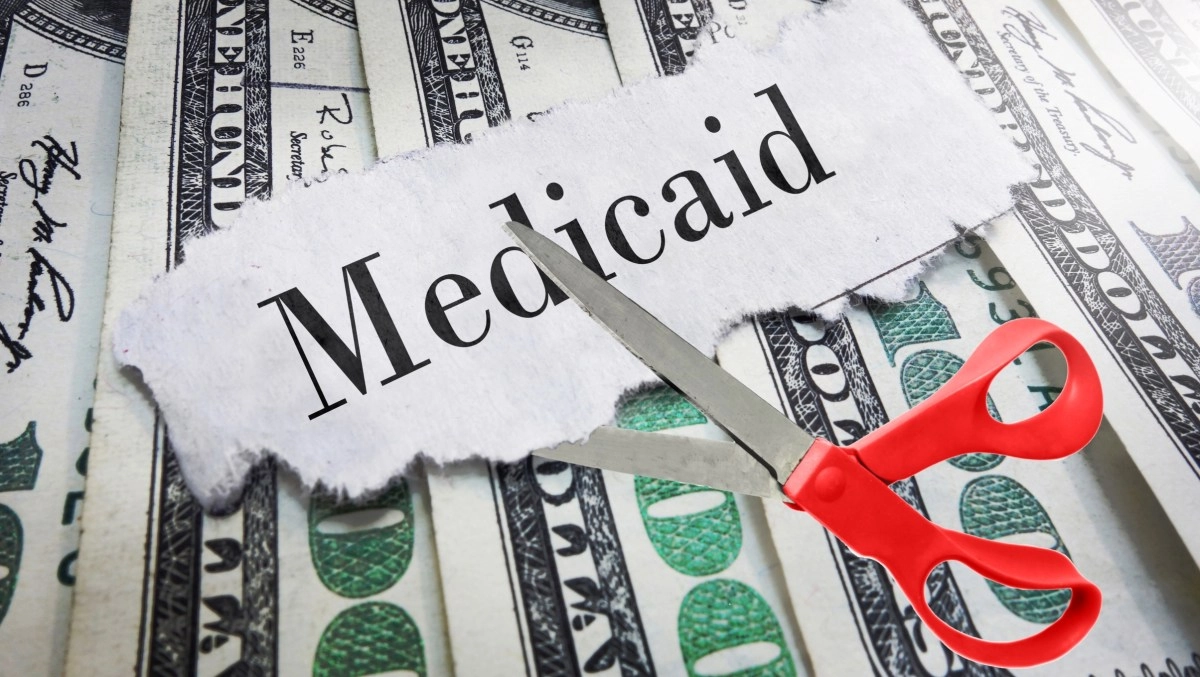

With the goal of preventing the collapse of California's healthcare system and the closure of emergency rooms, health experts and leaders of SEIU-United Healthcare Workers West (SEIU-UHW) launched a new bill initiative that would enact an emergency one-time tax on approximately 200 billionaires who have seen their fortunes grow exponentially in the "Golden State."
To qualify for the November 2026 ballot, measure backers will need to collect some 874,000 voter signatures at least three months before the election.
The so-called “Billionaire Tax Act of 2026,” a 5% tax on California billionaires, will replace $100 billion in cuts to federal health care funding over five years.
“15 million Californians rely on Medicaid, making it the largest health insurance program in the country,” he said SEIU-UHW President Dave Regan, offering context for the impact of the $100 billion cut in Medicaid funding.
The funding reductions announced over the summer will lead to higher health care costs, facility closures, and reduced services, hitting rural and suburban populations particularly hard. marginalized, said Regan, who noted that more people rely on Medicaid than Medicare, programs that cover people 65 and older.
“The problem we're facing now is that we're facing a total collapse of our health care system,” the union leader warned. “Both in California and elsewhere, we're facing higher health care costs: higher premiums, higher deductibles, higher co-pays, and we're already seeing insurance companies planning to offset this massive funding cut by shifting the burden onto the middle and working class.”
The cuts are also projected to eliminate 145,000 frontline health care jobs in California.
The proponents of the initiative in California - the first of its kind - believe that more states will quickly follow suit and it will become a national model.
They did so at a time when the federal government has diminished the Medicare program and put the health of millions of Americans at risk by not approving - yet - the extension of the Affordable Care Act (ACA) or Obamacare.The ACA was signed into law in March 2010 by former President Barack Obama.
The cuts proposed by Republicans who control Congress were part of a broader political effort to protect existing tax breaks for billionaires.
However, these politicians, led by Mike Johnson, the Republican speaker of the House of Representatives and a member of Congress, have shifted the tax burden onto patients, health care providers, and the poorest and most vulnerable communities.
“California is facing an artificial crisis. These federal cuts were not accidental; they were designed to protect billionaires, while the consequences fall on patients and workers,” said Robert Reich, former US Secretary of Labor under Bill Clinton.
“A time-limited emergency tax on the ultra-wealthy is a practical way to keep the health care system running,” he added.
Experts warned that the The resulting state budget deficit could trigger a cascading collapse in access to health care.
The grim outlook includes service closures, longer patient wait times, loss of medical staff, and a reduced ability for working families to obtain health coverage. At risk are the care of 15 million people.
The initiative would replace lost funding through a one-time 5% emergency tax on Californians with net worth over $1 billion (about 200 people statewide).
The measure's proponents and supporters hope to stabilize the state's health care system, although they caution that it doesn't alleviate the need for other long-term fixes to MediCal.
“At least it avoids really devastating cuts,” said Darien Shanske, a professor of law and political science at UC Davis School of Law.
If the initiative qualifies for the ballot and passes, a smaller portion of the initiative's revenue would be used to bolster K-12 public education funding, where it is expected to suffer direct and indirect impacts due to impending federal cuts. Ninety percent of the funds would be allocated to Medicaid.
However, without the necessary funds, hospital and clinical services would close or contract; Long-term care capacity would be reduced, there would be limited access to health care for working families, and an estimated 145,000 health care jobs would be lost.
“We already have staffing shortages, and more patients are coming into our facilities every week with fewer options. If these [federal] cuts go into effect without replacement funding, it will not only mean longer lines, but people won't be able to get care when they need it,” said Mayra Castaneda, an ultrasound technician in Lynwood.
And if patients die who don't get care,who would be held responsible for their deaths?
“Basically [to] society and the decisions that our government makes,” responded Emmanuel Saez, a French-American economist who is a professor of economics at the University of California, Berkeley.
“If we don't agree with what the federal government is doing, here in California, this vote It's our chance to make a different choice so that those who truly need this critical treatment can live.”
Dave Regan agreed, noting that "we are all responsible, and we'll be able to answer this question next November. The people of California will have the chance to make this decision, and we are responsible for it. But we have faith in the good judgment of tens of millions of voters here in California."
Unable to hold back tears, Josephine Rios, a nursing assistant at the Kaiser Permanente Surgical Center in Irvine, California, shared her fear for the fate of her grandson Elijah, who relies on Medi-Cal for his medical care.
Elijah has multiple disabilities and requires $5,000 a month in medications, which Medi-Cal covers.
“It's a lot [money] beyond the reach of families like ours,” she said. “Without access to medical care, I just think his life could be in danger.”
The grieving grandmother recounted that Elijah suffered from a hemorrhage at birth that left him quadriplegic, with cerebral palsy, epilepsy, autism, and developmental delays.
“These challenges are part of his life, but they don't define Elijah,” she said. "Elijah is a bright light in our family. His smile can melt the heaviest heart."
According to Josephine Rios, her grandson receives 19 hours of behavioral therapy, occupational and physical therapy a week, and health professionals help him develop his new skills.
She revealed that, day after day, the seven-year-old takes several medications to control seizures, some of which have lasted more than 24 hours.
“For a brief moment, we thought about everything Medicare makes possible; without it, we wouldn't have Elijah. His fighting spirit inspires me every day to fight for access to health care for all,” she said.
As a nursing assistant, Josephine Rios stated that she sees the same difficulties at the hospital: patients who come in with knee replacements, pacemakers, and heart surgeries often rely on Medi-Cal to pay for their medical care.
Because of this, she expressed that the “Billionaires Tax Act of 2026” is important to her.
“I didn't become a health professional for the funding. I didn't become a health professional because it's a job well paid. That's who I am. That's who our colleagues are. We have empathy. We love our patients,” Elijah's grandmother emphasized.“We need to fight for our patients.”
She also questioned the consequences of federal cuts to the healthcare system:
What would happen to some of these patients if we didn't provide them with surgery? Would they be forced into nursing homes? They work their whole lives to be independent, they live on a limited budget, but unfortunately, some of their medications, treatments, and physical therapies are beyond their means. And that small benefit they receive from Medi-Cal and the clinics helps them.”
She added that “not only as a grandmother, but speaking on behalf of my patients, I also ask myself: what happens to me and my coworkers? Will I become another statistic? Will I be out of a job?”