

Hurricane Genevieve: what danger it now represents for Mexico and the United States
Due to its rapid intensification, the cyclone became the most powerful in the eastern Pacific since 2024. What happened in the last hours
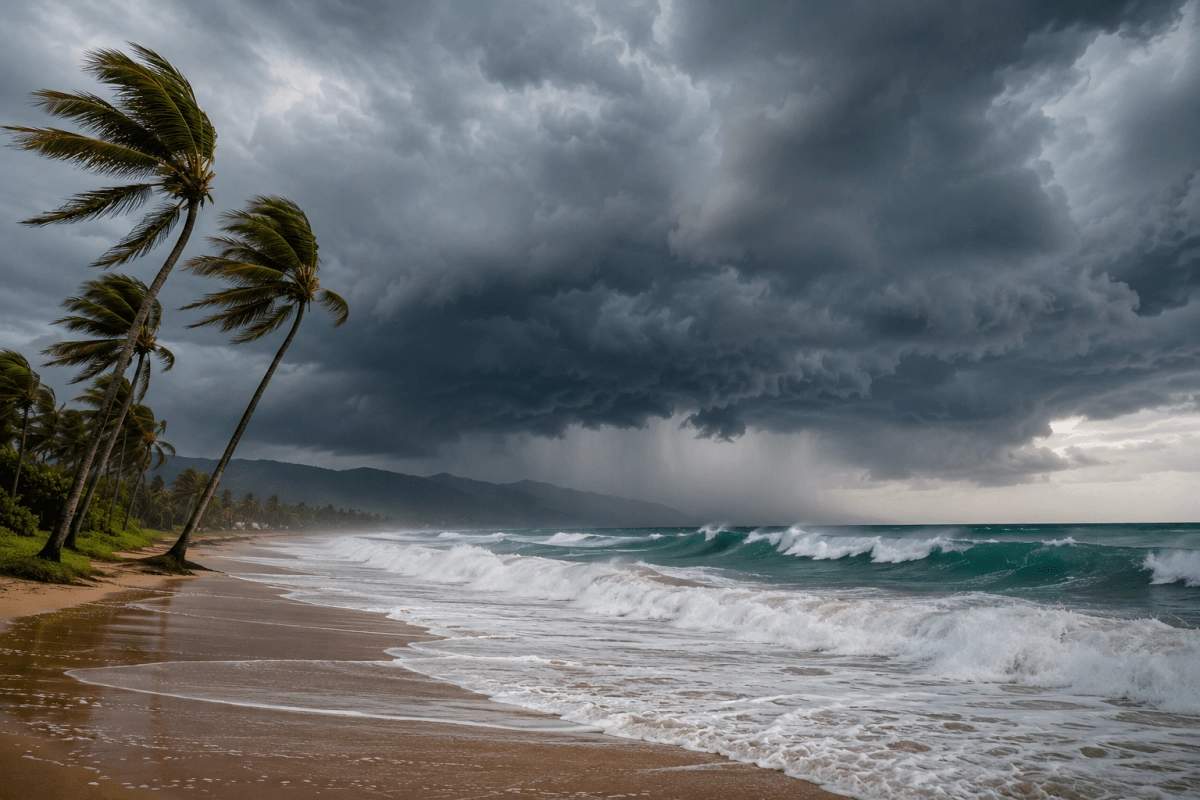

Genevieve became a Category 5 hurricane for a few hours, the maximum intensity on the Saffir-Simpson scale, before beginning to weaken over open waters of the Pacific.
The cyclone reached sustained winds of 160 miles per hour, equivalent to about 260 kilometers per hour, and became the most powerful system of the 2026 season in the eastern Pacific.
The good news is that, according to the expected trajectory, it is not heading towards a direct impact on Mexico or the United States. However, its passage will not be completely harmless: the storm surge generated by the hurricane can raise waves and create dangerous rip currents in several coastal areas.
Genevieve escalated in a few hours
The strengthening of the hurricane was especially rapid. Genevieve went from a tropical storm to a Category 5 in approximately a day and a half, favored by very warm waters, abundant humidity and atmospheric conditions that allowed the system to quickly organize its core.
After reaching its maximum intensity, it began to lose strength. The cyclone moved northwest and encountered less favorable conditions, including colder waters and drier air.
Although it was downgraded, that doesn't immediately eliminate its effects on the ocean. Swells can travel great distances and reach the coast even when the center of the hurricane remains far away.
Can it make landfall in Mexico?
For now, the forecasts do not show a direct impact on Mexican territory. Genevieve advances over the Pacific, on a parallel route away from the coast. This reduces the risk of the eye of the hurricane or its most destructive winds reaching Mexican cities.
The main concern is at sea. Sectors of the western coast of Mexico and the Baja California peninsula may experience higher than usual waves, rip currents, dangerous conditions for small boats, and restrictions on beaches and maritime activities.
Southern Baja California, including the Los Cabos region, does not appear within the direct path of the cyclone. Even so, beaches open to the Pacific could experience a significant increase in waves.
Danger may be far from the eye
One of the most common mistakes during a hurricane is to think that there is no risk when the system will not make landfall. Swells can arrive long before wind or rain and affect beaches located hundreds of miles from the center of the cyclone. They can also generate rip currents that are difficult to detect from shore.
These currents carry water out to sea and can surprise even experienced swimmers. For this reason, the authorities recommend respecting the flags and warnings of the lifeguards, in addition to avoiding docks, breakwaters and rocky areas when the sea is rough.
What can happen in the United States
Genevieve is also not headed towards the United States and does not pose a direct threat to the mainland. The most likely effect would be felt on some California beaches, where Pacific swells can result in high waves and increased risk of rip currents.
Its winds are not expected to reach US soil. There is also no threat to Texas or the Gulf of Mexico states, as Genevieve is located in another basin and maintains a trajectory over the Pacific.
Why did it lose strength?
Hurricanes need warm water to conserve their energy. As Genevieve moved northwestward, it began to enter a region with lower ocean temperatures.
Dry air and changes in upper winds can also alter the organization of the cyclone. As a result, the system began to weaken after reaching Category 5.
Forecasters expect it to continue to lose intensity over the next few days. However, the surge may continue even after Genevieve stops being a major hurricane.
What residents and tourists should keep in mind
Those on the Mexican Pacific coast, Baja California or Southern California should check local advisories before entering the water. It is also advisable to avoid maritime activities if there are warnings for waves or rip currents. Just because the sky is clear or the hurricane is far away does not guarantee that the sea is safe.
Genevieve began to lose strength, but it can still leave a dangerous effect on the coasts: not from a direct impact, but from waves and currents generated at a great distance.