

Renee Good's siblings denounce the brutality of ICE agents who shot and killed her in Minneapolis
Good died on January 7 after an ICE agent opened fire on the vehicle she was in, on a residential street in the town
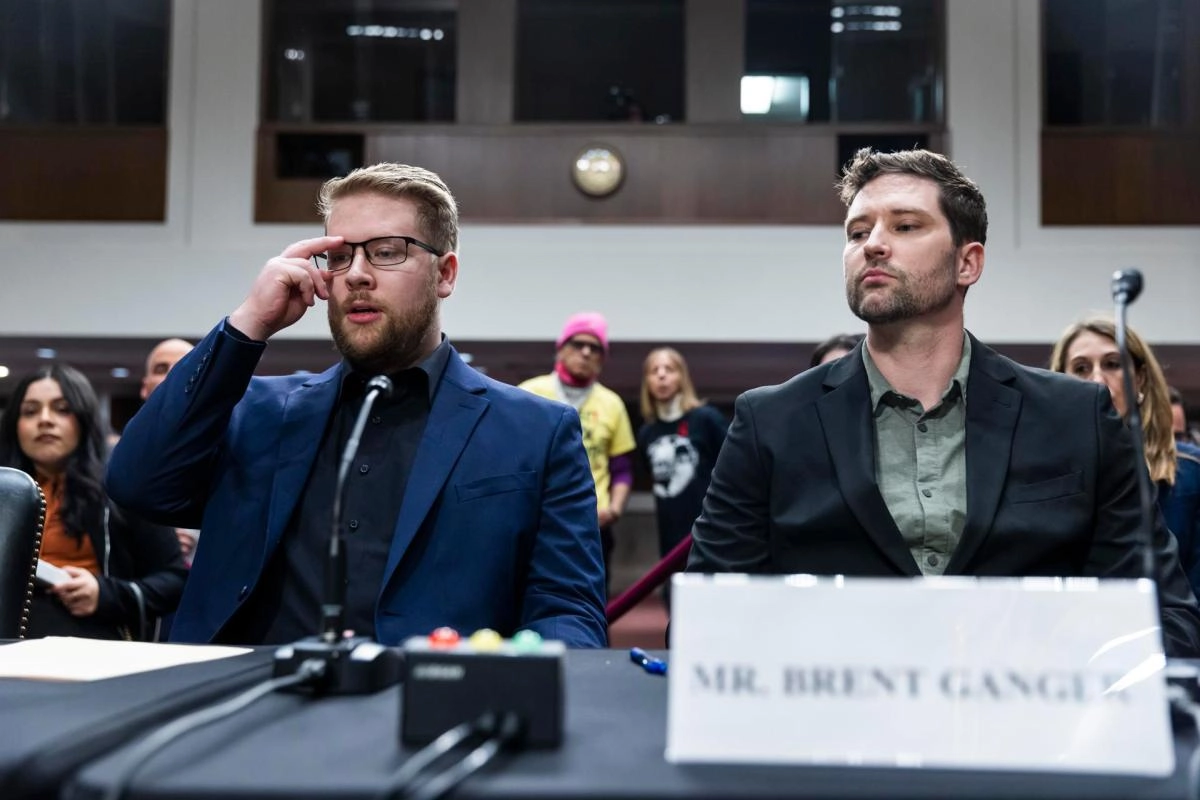

The death of Renee Good, a 37-year-old woman and mother of three, shot and killed by a federal immigration agent in Minneapolis, returned to the center of national debate after the emotional testimony of her siblings before Lawmakers at the Capitol.
Luke and Brent Ganger denounced what they called the excessive and brutal use of force by Immigration and Customs Enforcement (ICE) and demanded urgent reforms to the tactics of federal agencies.
Good's case intensified the protests in Minneapolis, which lasted for weeks and worsened after the fatal shooting of nurse Alex Pretti,which occurred later and also involved a federal agent.
Political Pressure and Disputed Reforms
The Department of Homeland Security has maintained that the agents acted in self-defense, claiming that Good tried to ram them with his vehicle in an act that came to be described as “domestic terrorism.” However, local and state authorities have publicly questioned that version.
During the hearing, other witnesses reported similar experiences with ICE and the Border Patrol. Marimar Martinez and Aliya Rahman recounted episodes of violent arrests, while Martin Daniel Rascon reported an attack against his family in California. Blumenthal asserted that the testimonies represented “the face and voice of thousands of people suffering this inhumanity across the country.” Democrats have responded by partially blocking DHS funding and proposing a series of reforms, including banning ICE agents from wearing masks, expanding training, eliminating qualified immunity, and increasing judicial oversight. Blumenthal called for a complete overhaul of DHS, with mandatory body cameras and increased supervision. The debate intensifies at a crucial moment: President Trump this week signed into law a $1.2 trillion funding package that leaves DHS with resources for only two weeks, anticipating a renewed clash in Congress over the immigration agenda and the use of force by federal agencies. Meanwhile, Martin Daniel Rascon reported an attack against his family in California. Blumenthal asserted that the testimonies represented “the face and voice of thousands of people suffering this inhumanity across the country.” Democrats have responded by partially blocking DHS funding and proposing a series of reforms, including banning ICE agents from wearing masks, expanding training, eliminating qualified immunity, and increasing judicial oversight. Blumenthal called for a complete overhaul of DHS, with mandatory body cameras and increased supervision. The debate intensifies at a crucial moment: President Trump this week signed into law a $1.2 trillion funding package that leaves DHS with resources for only two weeks, anticipating a renewed clash in Congress over the immigration agenda and the use of force by federal agencies. Meanwhile, Martin Daniel Rascon reported an attack against his family in California. Blumenthal asserted that the testimonies represented “the face and voice of thousands of people suffering this inhumanity across the country.” Democrats have responded by partially blocking DHS funding and proposing a series of reforms, including banning ICE agents from wearing masks, expanding training, eliminating qualified immunity, and increasing judicial oversight. Blumenthal called for a complete overhaul of DHS, with mandatory body cameras and increased supervision. The debate intensifies at a crucial moment: President Trump this week signed into law at $1.2 trillion funding package that leaves DHS with resources for only two weeks, anticipating a renewed clash in Congress over the immigration agenda and the use of force by federal agencies.