

Sending ICE agents to voting centers would be a crime, warns Brennan expert
President Trump and Republicans in Congress want to pass the SAVE Act that would affect voter registration
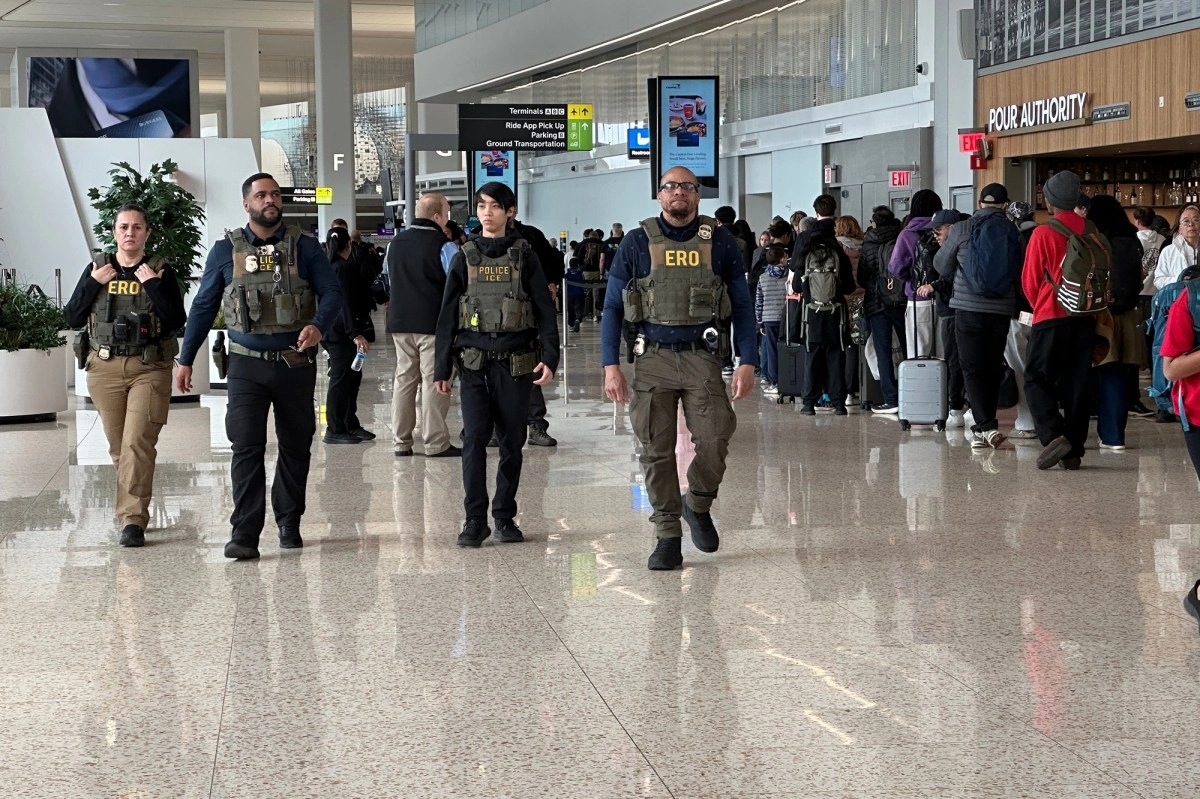

This week Steve Bannon, former advisor to Donald Trump, indicated that the deployment of Immigration and Customs Enforcement (ICE) agents to 14 airports across the nation to “assist” TSA agents due to the partial shutdown of the Department of Homeland Security (DHS) is a “rehearsal” for sending immigration agents to polling places in the November 3 midterm elections.
However, Eliza Sweren-Becker, deputy director of Voting Rights and Elections at the Brennan Center for Justice, explained that “it would be a federal crime for such interference to occur.”
“It is also very clear that it is illegal for the administration to deploy federal troops or armed federal security forces of any kind to a polling place. So there is no authority to deploy federal troops or armed men anywhere voting is taking place. The law is very clear on that,” the expert indicated.
The entire debate stems from the SAVE Act, which seeks to require voters to present passports or birth certificates to register to vote.
“Approximately one in ten eligible American citizens, or more than 21 million eligible American citizens, do not have easy access to those documents. Millions of eligible American citizens will be prevented from voting,” she noted. Sweren-Becker.
The measure, approved in the House of Representatives on February 11, is a priority for Trump, and his insistence on it is such that he conditioned the reopening of the DHS on the Senate passing the SAVE Act, but the 60 votes required to overcome the blockade of the bill were not obtained.
Although they currently lack the votes, this does not mean that Trump will cease his attempts to intervene in some way in the midterm elections on November 3, where everything indicates that the Republicans could lose control of both houses of Congress given the voters' discontent with the direction of the country.
Sweren-Becker explains the risks involved in the Republicans' plan.
Although the SAVE Act currently lacks the votes, should there be a sense of urgency given how close the midterm elections are and Trump's insistence on somehow interfering in those elections?
“Sweren-Becker: “This is certainly an urgent moment for Americans to pay attention to what is happening in Congress, because the Senate is actively considering what would be the first federally enacted voter suppression bill, if it were to become law, and which would prevent millions of American citizens from voting. So yes, it is urgent.
“However, the other thing I will say is that I actually think Americans are paying attention to this. Americans have heard about the SAVE Act, and when they learn what the bill contains, there is widespread opposition to the point that last year, when this bill was being debated in the Senate, it did not advance because Americans all over the country voiced their opposition, and ultimately, the Senate did not pass the bill due to such widespread and vigorous opposition to the measure.”
What are the main risks of this legislation in terms of eroding our right to vote?
“The politics at the heart of the SAVE Act, whether this version or any other, is that it would require documents such as a passport or birth certificate to register to vote. We know that approximately one in ten eligible American citizens, or more than 21 million eligible American citizens, do not have easy access to those documents, and that millions of citizens Americans with the right to vote will be prevented from voting.
“Furthermore, the current version of the SAVE Act has other harmful consequences. For example, this SAVE Act would require states to turn over their complete election records, including sensitive voter information, to the Department of Homeland Security. And that is an issue that more than two dozen states are currently litigating because the Department of Justice has made similar demands regarding voter rolls, and the states are refusing to comply because of the sensitive nature of the information and the fear that this private data will be misused or not adequately protected by this administration. This administration has no legal authority that entitles it to these records or to interfere in the maintenance of voter rolls, which is a responsibility of the states.”
There is an intersection between the SAVE Act and the current immigration debate in that non-citizens are being falsely accused of being unable to vote.The Trump administration insists it will not send ICE agents to polling places, but given its track record, should we be concerned about ICE agents showing up near polling places just to intimidate voters?
“First, I will say that all the evidence, including state investigations and data from this administration, has shown that only U.S. citizens vote, with very few exceptions. State after state, as they investigate this issue, they continue to show that there is no significant problem with non-citizen voting in this country. When Utah investigated it recently, they found a single ineligible non-citizen on the voter registration list and discovered that no non-citizens had voted. When Louisiana investigated it, the Secretary of State publicly stated that the state has no problem with non-citizen voting in that state. So this is consistent. The evidence is very clear.
“As for your second question. It is also very clear that it is illegal for the administration to deploy federal troops or armed federal security forces of any kind to a polling place, and it would be a federal crime for such interference to occur. So there is no authority to deploy federal troops or armed men anywhere voting is taking place. The law is very clear on that.”
And finally, do you have any call to the public on how to get involved in this discussion that has serious implications for our right to vote?
“Sweren-Becker: I would say that, as the debate on the SAVE Act continues, by all means, call and write to your senators and tell them to keep the pressure on and stop this bill. This is a debate that is still alive, and the voices of the people really do make a difference here. I would also encourage people to organize to vote as they go to vote. We are facing this administration's attempts to interfere with and undermine the 2026 midterm elections, and it is incredibly important that Americans overcome these attempts and, despite everything, make their voices heard and participate in our democracy as it is intended.”