

Washington defends its exit from WHO as tension rises over hantavirus
“We were paying $500 million dollars a year and they weren't treating well; they were making wrong diagnoses,” the president noted
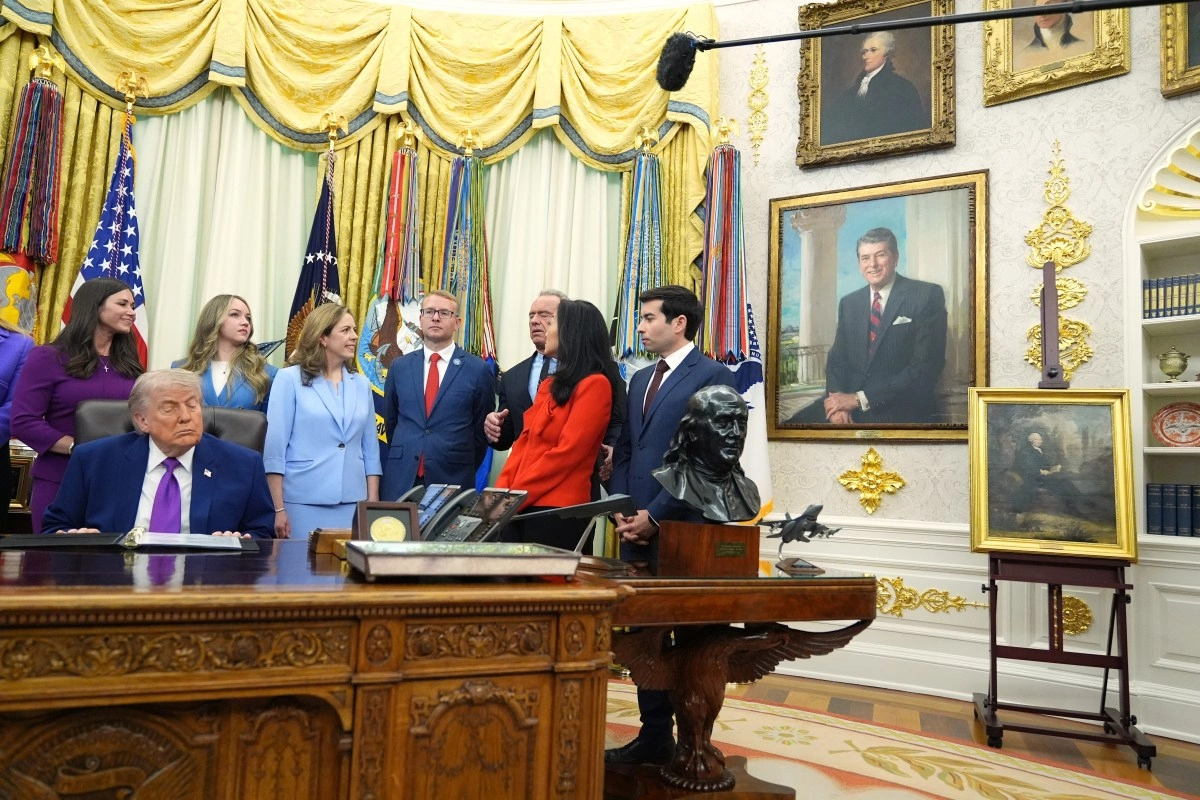

President Donald Trump defended the decision to withdraw the United States from the World Health Organization (WHO) at the moment The country is facing a hantavirus outbreak related to passengers evacuated from the MV Hondius cruise ship from the Canary Islands, Spain.
During a conference in the Oval Office, Trump assured that he does not regret having left the international organization, even when US health authorities are keeping several repatriated travellers under observation.
“No, I'm glad,” the president responded when he was questioned about whether he would reconsider the US's exit from the WHO given the current situation.
Trump once again criticized the international organization's handling of the Covid-19 pandemic and stated that the United States allocated nearly $500 million annually to the WHO without r a fair treatment. He also insisted on his accusations against China and assured, without presenting evidence, that experts from the organization avoided holding Beijing responsible for the origin of coronavirus.
Meanwhile, the hantavirus outbreak remains under close health surveillance. Federal authorities reiterated that the risk for the U.S. population continues to be “very low”, despite the one of the evacuated passengers testing positive and another presenting mild symptoms.
Passengers remain in quarantine in Nebraska
A total 18 passengers, 17 Americans and one British resident in the United States, were transferred from Tenerife to U.S. territory in a special operation coordinated by the Centers for the Control and Prevention of Diseases (CDC).
The majority remains in quarantine at the University of Nebraska Medical Center, one of the few facilities in the country with high-security biocontainment capability. Two patients were sent to Atlanta for further evaluations.
Health officials indicated that the people under observation are stable and without serious symptoms. Specialized medical teams monitor the passengers 24 hours a day.
The hantavirus is a rare disease transmitted mainly by contact with infected rodents. Experts note that transmission between humans is infrequent and generally requires close and prolonged contact.
Even so, the federal response has sparked criticism among public health specialists and Democratic leaders, who believe that the Trump administration has not reacted quickly enough.
Experts question federal response capacity
Various specialists expressed concern about the budget cuts and layoffs that have occurred in federal health agencies during the recent years. Among them Georgetown University public health professor Lawrence Gostin said he had never seen the CDC “so absent” in such a situation.
Questions also arose towards the Secretary of Health, Robert F. Kennedy Jr., due to the reduction in personnel specialized in infectious diseases and health prevention programs.
Senate Democratic Leader Chuck Schumer accused the White House of weakening public health infrastructure and demanded information on the personnel available to respond to the outbreak.
Schumer contended that several CDC port health stations operate understaffed and warned that cuts could affect the country's ability to deal with future health emergencies.
Despite the criticism, Trump insisted that the situation is “under control” and assured that medical authorities work prudently to avoid greater risks.
The federal administration maintains constant monitoring of repatriated passengers while investigations continue to determine the scope of the outbreak and rule out new infections within the United States.