

The “catastrophic shock” that Congo faces at the center of the Ebola crisis, which already leaves more than 200 dead
The director of the World Health Organization warns that the fighting in the Democratic Republic of the Congo hinders efforts to contain the virus
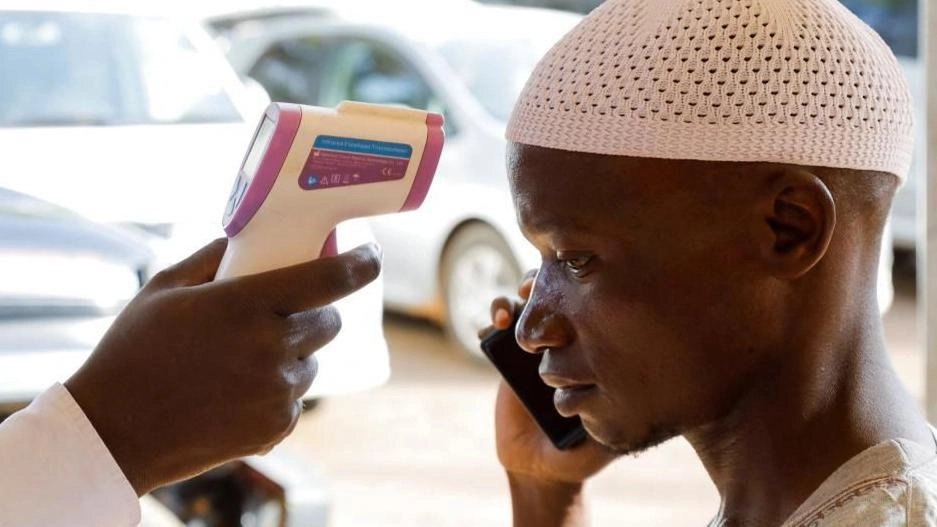

The ongoing conflict in the Democratic Republic of the Congo is hampering the response to the Ebola outbreak, the head of the World Health Organization (WHO) has warned.
Dr Tedros Adhanom Ghebreyesus said the east of the country is at the center of a “catastrophic collision between disease and conflict”, with the Ebola outbreak in Ituri province moving faster than the response.
In a message posted on X, Tedros stated that the WHO “cannot build trust in the community or isolate the sick while bombs fall.”
Tedros is scheduled to arrive in the Democratic Republic of the Congo on Wednesday to push for a strengthening of efforts to contain the virus.
There have been 220 suspicious deaths since the outbreak was declared.
Aid workers face great difficulties, as travel is complicated due to poor roads, while conflict, mass displacement and cuts in international aid have also weakened the health system.
Ituri, where the majority of cases have been recorded, has been under military control since 2021, when civil authority was replaced by an army general in an attempt to neutralize the dozens of armed groups operating in the area.
Tedros noted that stopping transmission in the region “is entirely dependent on humanitarian access.”
“However, ongoing clashes are causing mass displacement, pushing exposed contacts into overcrowded camps and cutting off essential corridors for containment,” he added.
“Frontline workers risk everything, while attacks on healthcare facilities make tracing cases and their contacts almost impossible.”
He called on all parties to agree to an immediate ceasefire to allow medical teams safe access.
Travel restriction
Concern about the possible spread of the Ebola outbreak is leading many countries to impose strict travel restrictions.
Canada announced a temporary 90-day entry ban for residents of the Democratic Republic of the Congo and neighboring countries Uganda and South Sudan. The Bahamas also imposed strict rules requiring foreigners from those countries to undergo quarantine or isolation.
Last week, the United States banned entry to non-citizens who had traveled to those three places.
Congolese health authorities indicate that around 1,000 people currently have symptoms compatible with Ebola.
The director of the medical organization Doctors Without Borders (MSF) in the Democratic Republic of the Congo told the BBC that it will take several weeks to establish the appropriate infrastructure to contain the outbreak.
The current outbreak is a rare variant of Ebola, known as Bundibugyo, for which there are no vaccines or treatments.
Congolese health authorities are finding it difficult to confirm the cases of the 220 registered deaths; So far, only 17 have been confirmed in the laboratory as deaths from the disease.
Medical personnel are working around the clock to trace the 3,600 people identified as contacts of the infected group.
About 2,000 tests have been distributed, and another 4,000 are planned to be sent. Experimental treatments, including an antibody developed in the United States, could also be introduced soon.
Ewald Stals, MSF director in the Democratic Republic of the Congo, said his organization and others are working to bring medical supplies and personnel to the epicenter of the crisis, but insecurity and poor transport connections in Ituri province make that task difficult.
“Little by little there is some activity underway, but overall we are still very far from controlling the situation,” he told the BBC.
“We still don't have a complete picture of what is happening, and that is mainly due to the lack of testing.”
"We need more testing, we need more diagnosis to make sure we have a complete picture of what is happening; for now we don't have it. And as long as that is the case, we can say that we are behind the virus, that the virus is still ahead and that we have to catch up," Stals added.
The European Center for Disease Prevention and Control (Cepce) announced on Wednesday that it will increase its presence on the ground.
With additional reporting from Emery Makumeno in Kinshasa and Barbara Plett Usher in Nairobi