

They launch a campaign to support businesses affected by the raids in Los Angeles
The state and entrepreneurs lose millions of dollars due to immigration operations
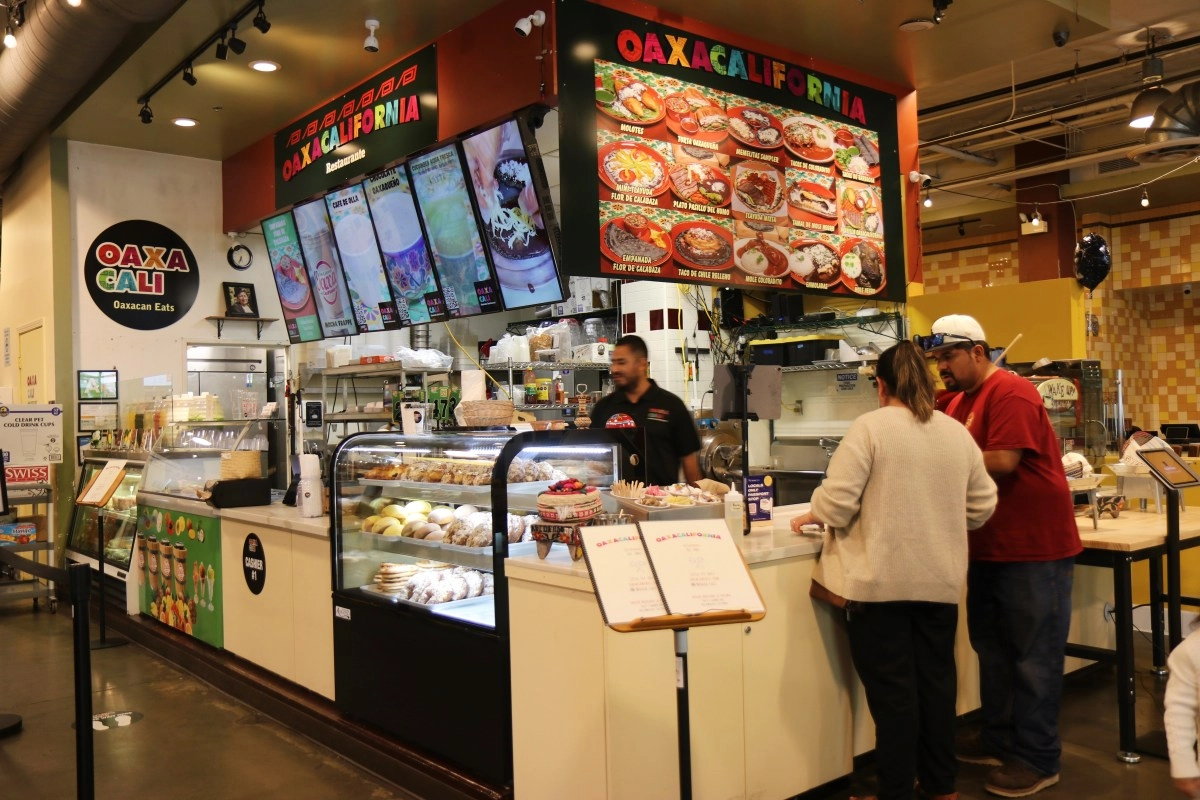

Immigrant entrepreneurs are the lifeblood of Los Angeles, from the restaurants that have fed their neighborhoods for decades, the corner store where they know you by name, to the street vendors who always have a snack ready to offer.
These businesses create jobs, build community, and drive one of the most dynamic economies in the world.
But they are also among the most affected by situations beyond their control, such as the Covid-19 pandemic, the January 2025 fires and the immigration raids, which have left many deciding whether to close their doors or move on.
That's why CA4US yesterday launched Immigrant Small Business Week, a statewide campaign to celebrate immigrant entrepreneurs, who make up a large part of communities.
“There is no better place to launch this campaign than here in South Los Angeles at La Paloma Market, a place that has been home to immigrant entrepreneurs for decades,” said Cielo Castro, director of policy and programs at the California Community Foundation (CCF). “Today, one of the most significant challenges these businesses have faced is the impact of the immigration control measures of the last year, which have had drastic consequences for them.”
The campaign that began on Tuesday at Mercado La Paloma seeks to encourage the community to support these businesses, to go to their stores, buy from them and enjoy everything they offer every day. Immigrant Small Business Week comes after a year in which immigration raids affected communities and local economies across the state.
A study by organizers estimates that ICE raids cost Los Angeles approximately $1 billion in lost productivity.
When control measures affect the lives of immigrants, the effects ripple: businesses lose workers and customers, schools and neighborhoods feel the strain, and local economies suffer.
Immigrant Small Business Week is a reminder of what these communities build: restaurants, shops and service businesses that keep neighborhoods vibrant and resilient.
Businesses like that of Raúl Morales, owner of Taquería Vista Hermosa, which has operated in the market for 25 years, says that they have not had any respite since the pandemic began and then the ICE raids came. He remembers the early days of the raids, when not a single customer came in because people were simply afraid to go out into the street.
"It has been very hard; the pandemic left us with nothing and when we try to recover, this happens. I have 13 families behind me and a triple commitment, imagine," said Morales, originally from Vista Hermosa, Michoacán. “We had to look for different ways to get money, such as offering catering services for events and weddings, because people didn't go out; it was the only way to survive at the beginning of the raids.”
A CA4US and California Community Foundation survey of Los Angeles County businesses revealed that 82% suffered negative impacts due to immigration enforcement measures and that 44% reported losses of more than half their income. Not only that, but 59% of owners expressed concern about maintaining their workforce. While 70% of businesses suffered from staff shortages following the ICE raids, 33% of owners said workers were afraid to show up for work.
Lila Burgos, deputy director of the UCLA Latino Politics and Policy Institute, said they have been documenting the economic impact of the ICE raids on small and micro businesses in Los Angeles County. Their report, set to be released this summer, indicates that immigrants make up about 44 percent of small business owners in Los Angeles. He revealed that dozens of owners expressed having suffered an economic impact due to the ICE raids.
"The damage changed the way people lived, not just the way they worked. One business owner told us that when he looked outside, he didn't see anyone; even his employees, who are citizens, were afraid to go to work," Burgos said. “Street vendors spent months without working and an event organizer showed us a garage full of merchandise that was not used, since all events had been canceled.”
“A restaurant owner lost $30,000 a month in sales and a furniture store had to take out a $100,000 loan just to stay afloat,” he added.
Burgos also noted that they have documented the health effects of these local businesses throughout the raids that are being carried out. He stated that the impact on health is inseparable from the economic impact.
“We learned about a street vendor who was hospitalized for stress, a beauty salon owner who developed colitis, and two people who suffered facial paralysis,” Burgos explained.
The week of action and support for local and state businesses runs from the 21st to the 27th, and CA4US has a website where you can find a list of businesses you can support.
The organizers and owners of these businesses say that the road to recovery is long and they ask their public not to forget them and to continue supporting them beyond this week of celebration.
“The damage caused last summer has not been healed; it has only increased, and I want you to know that the real threat to our safety, our health and our economic well-being is not immigrants, but immigration control measures,” Burgos said.
For more information visit: https://www.ca4us.org/isbw-directory-2026.