

Trump claims that tariffs helped him stop eight wars and defends them as a diplomatic tool
"I stopped eight wars thanks to tariffs," Trump emphasized during the conversation, calling this negotiation strategy “something very American.”
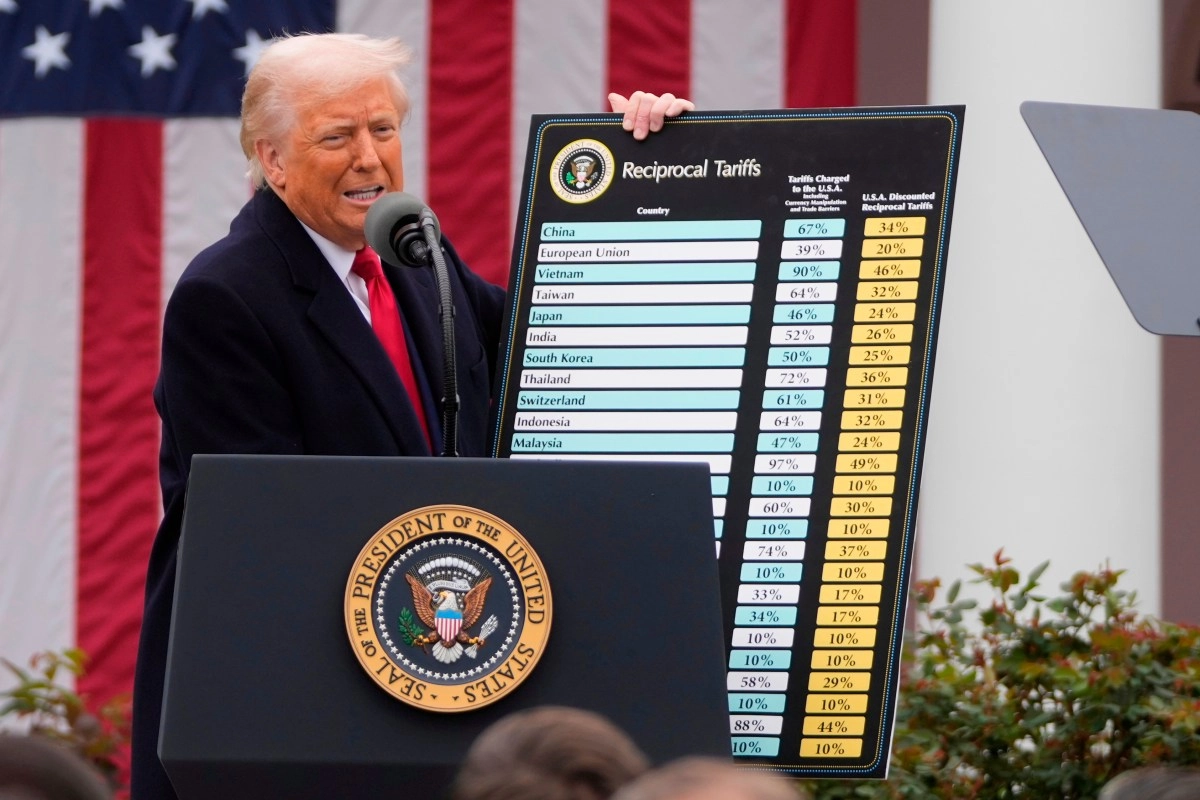

President Donald Trump affirmed this Thursday that his tariff policy has served not only to boost the US economy, but also as an instrument of diplomatic pressure to avoid international conflicts. During an interview with CNBC, the president assured that the trade tariffs imposed by his administration helped stop eight wars, although he did not present evidence or detail all the cases to which he referred.
“I stopped eight wars thanks to tariffs,” Trump declared, explaining that, in several moments of tension between different countries, he threatened to impose tariffs of up to 200% as a pressure mechanism to avoid a military escalation. The president maintained that this strategy was especially effective in the conflict between India and Pakistan, two powers with nuclear capabilities. He reportedly warned both nations that they would face heavy tariffs if hostilities continued, which he claimed helped stop the confrontation.
Trump added that the then Pakistani prime minister credited him with preventing a war that he said could have cost millions of lives. However, the president did not offer additional evidence to support that claim nor did he identify the other conflicts that he claimed to have helped stop.
Courts allow tariffs to be maintained while legal battle continues
The president's remarks come as his trade policy continues to be the subject of litigation in US courts. On June 12, a federal appeals court allowed the administration to continue applying the 10% global tariff imposed this year, while the judicial process that analyzes the legality of these measures progresses.
The decision represented a temporary victory for the White House, as it maintains the collection of tariffs established under Section 122 of the Trade Act of 1974. Those tariffs will remain in effect until the end of July, unless Congress decides to extend their application or the courts issue a final ruling.
Trump again defended the use of tariffs as a central part of his foreign and trade policy, arguing that they constitute a tool to protect the interests of the United States and strengthen its position in international negotiations.
Trump links trade, technology and competition with China
During the interview, the president also addressed other international and economic policy issues, including the situation with Iran, the development of artificial intelligence and the manufacturing of semiconductors.
Regarding Iran, he reiterated that his administration's goal is not to start a war, but to prevent Tehran from obtaining a nuclear weapon. In addition, he defended US military operations in the Strait of Hormuz, ensuring that they protected maritime transit and prevented further disruption of the global energy market.
In technological matters, Trump insisted that the United States maintains an advantage over China in artificial intelligence and considered that maintaining that leadership will be decisive for the country's national security and economic competitiveness. The president also highlighted the growth of domestic semiconductor production and stated that his administration has promoted new investments to reduce dependence on foreign manufacturers.
Finally, he avoided confirming the versions that point to a possible participation of the US government in OpenAI and noted that his administration has explored different mechanisms to strengthen companies considered strategic for the country's economy and security.